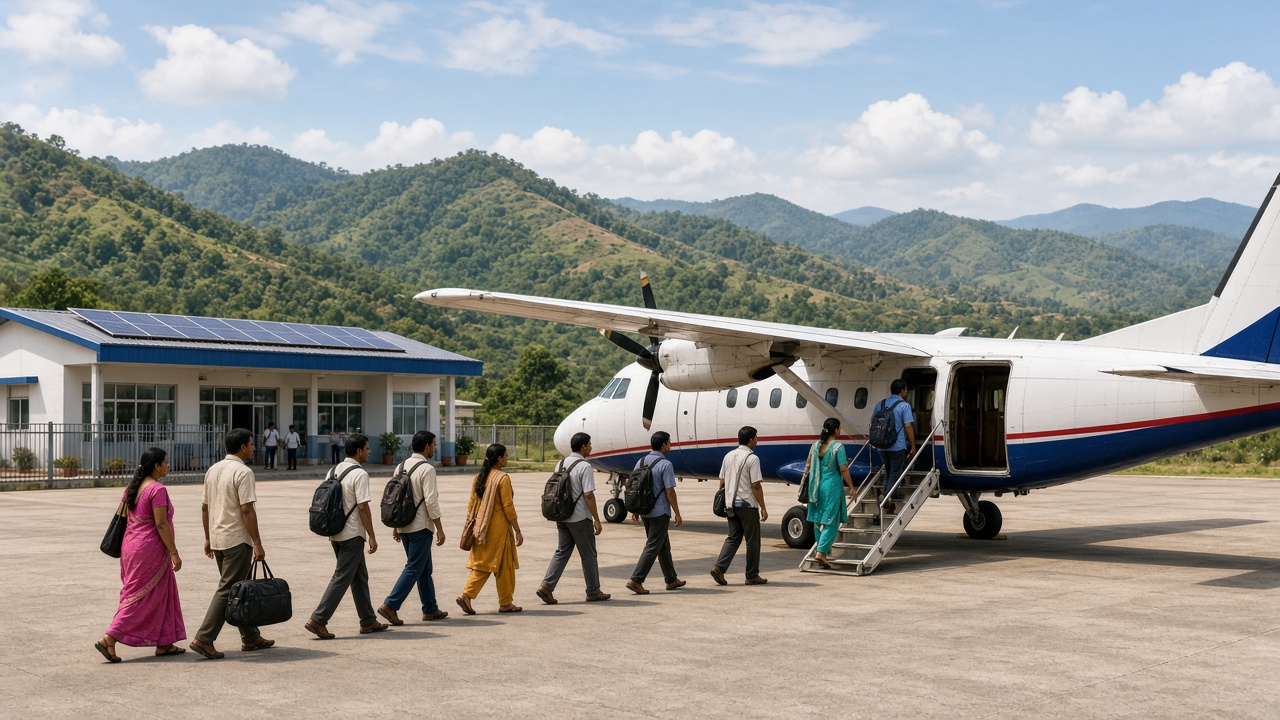
From RD Tata’s first flight and Air India to nationalization, liberalization, the IndiGo era, and UDAN—how India learned to fly at scale.
Mail plane → LCCState & private skiesRegional UDAN
Why Aviation in India Matters
Flying compresses a continental country into hours. India’s aviation story runs from a pioneering mail flight to a glamorous flag carrier, a long state monopoly, a messy return of private airlines, low-cost mass flying, and a policy push to connect smaller towns—shaping tourism, business, migration, and national connectivity.
This timeline follows RD Tata’s first flight, Air India, nationalization, liberalization, the IndiGo era, and UDAN as linked turning points.
Big picture
Aviation India in one view
A 1932 mail flight seeds Tata Airlines; Air India becomes the international face; 1953 nationalization locks flying into state corporations; 1990s liberalization reopens private skies; IndiGo proves low-cost scale; UDAN tries to bring the common citizen to smaller airports.
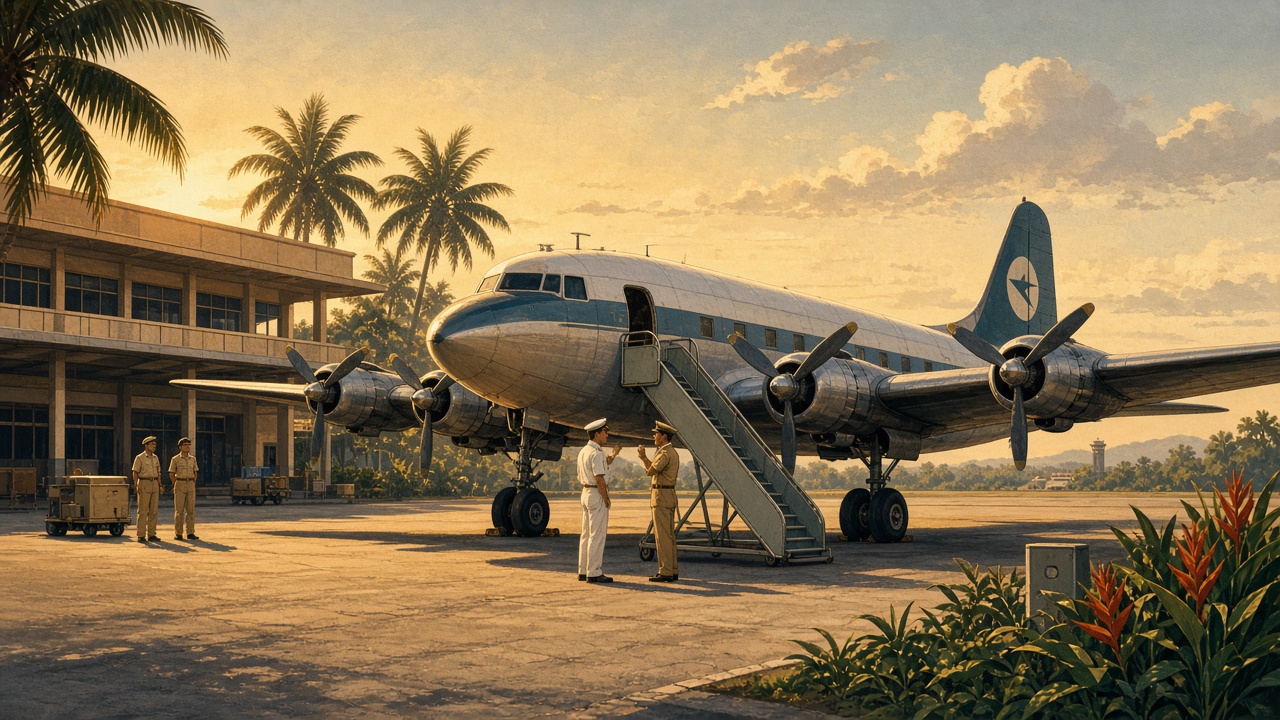
On 15 October 1932, J.R.D. Tata piloted a pioneering scheduled airmail service for Tata Airlines—often remembered as the founding moment of modern Indian civil aviation. Small aircraft, rough fields, and mail bags launched a company that would grow into a national icon.
1932: pioneering scheduled airmail flight.
Tata Airlines begins scheduled mail service.
J.R.D. Tata as pioneering pilot-entrepreneur.
Seed of India’s later flag carrier.
International Flag Carrier1940s
Air India
Tata Airlines was renamed Air India in the mid-1940s and built long-haul international routes as the country’s flag carrier. Service style, global destinations, and national pride made Air India a symbol of newly independent India’s place in the sky—even before full state ownership.
Air India era: flag carrier on the world map.
From Tata Airlines to Air India brand.
International long-haul identity.
Service and prestige as soft power.
State Corporations1953
Nationalization
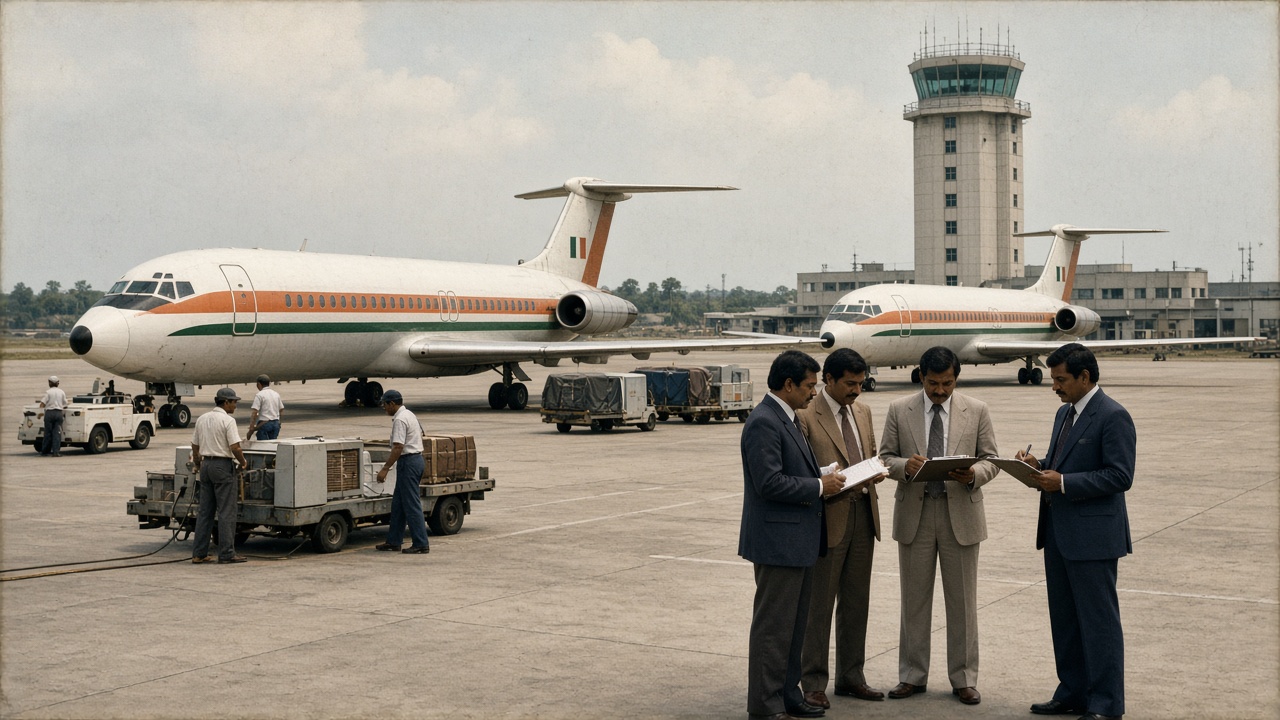
The Air Corporations Act, 1953 nationalized air transport: Air India handled international flying while Indian Airlines covered domestic routes. Private operators were absorbed into a planned, state-run system that dominated Indian skies for decades—stable for policy, less so for competition and customer choice.
1953+: Air India & Indian Airlines monopoly era.
Air Corporations Act creates two state airlines.
International vs domestic split of roles.
Decades of limited private competition.
Private Skies Return1990s+
Liberalization
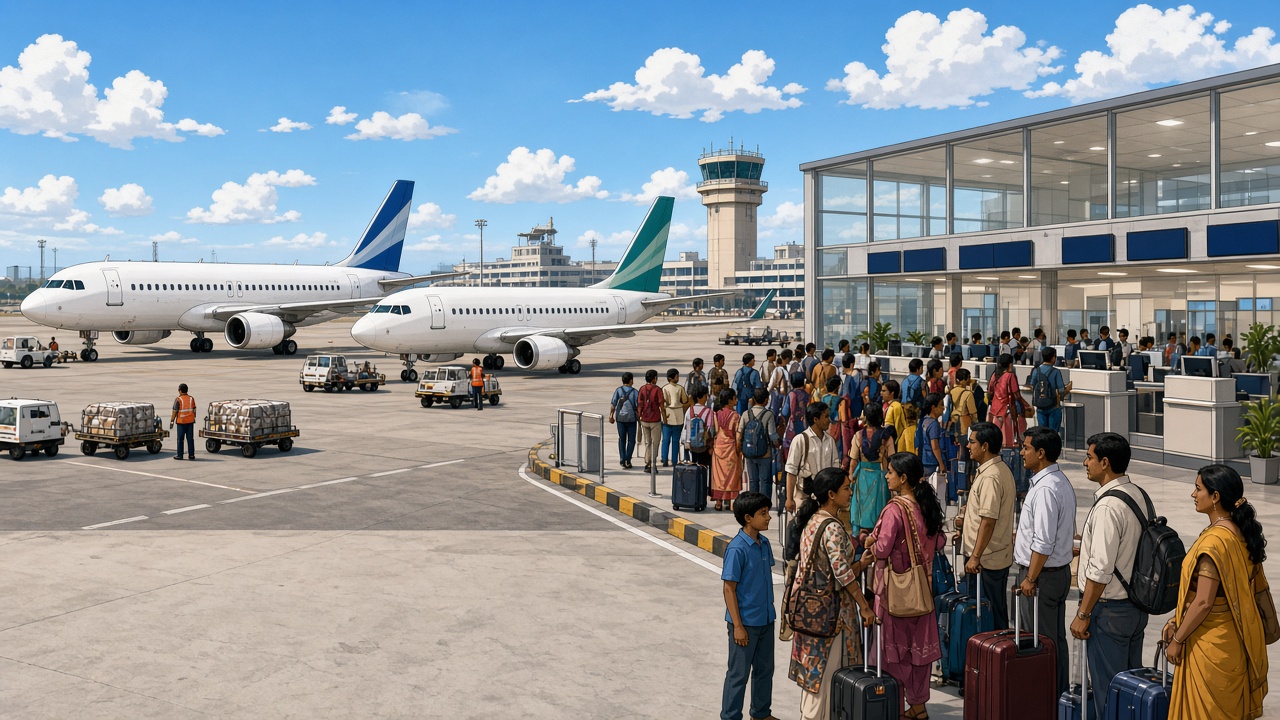
Economic reforms and aviation policy in the 1990s reopened space for private airlines. New carriers fought for routes and passengers; some thrived, many struggled or folded. Liberalization ended the neat dual monopoly and introduced fare competition, branding wars, and the later low-cost wave.
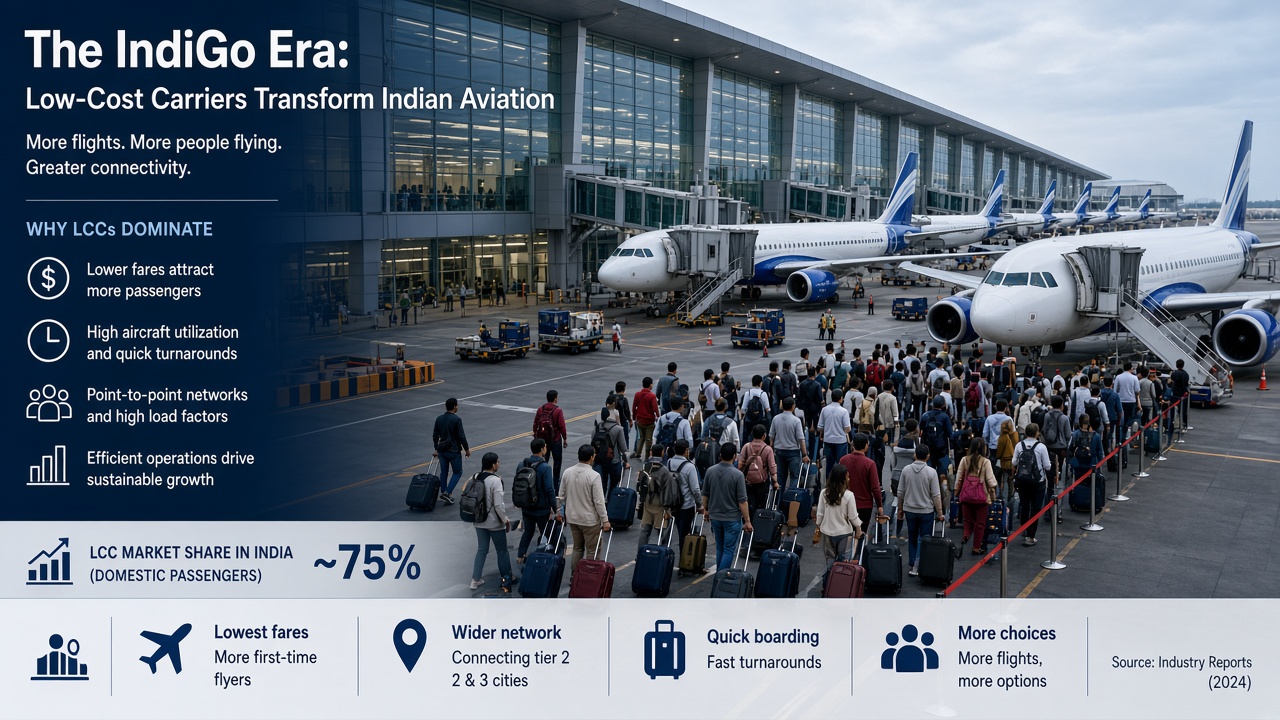
IndiGo, founded in 2006, scaled a low-cost model—simplified fleet, high utilization, and a reputation for on-time performance—into India’s largest airline by market share. The “IndiGo era” means flying became a mass market product on busy corridors, even as rivals rose and fell around it.
IndiGo era: LCC scale on trunk routes.
Low-cost carrier model at Indian scale.
Punctuality and simplified operations as brand.
Market leadership reshapes domestic flying.
Regional Connectivity2016+
UDAN
UDAN—Ude Desh ka Aam Nagrik—is India’s Regional Connectivity Scheme (launched around 2016–17) to put smaller cities and underserved airports on the air map with viability gap funding and policy support. Where IndiGo thrives on dense trunks, UDAN bets that thinner regional links deserve a policy boost so more citizens can fly.
UDAN era: connect smaller towns by air.
Regional Connectivity Scheme for underserved airports.
Subsidies / viability support for thin routes.
Goal: common citizen access beyond metros.
Key Milestones
Milestone
When
Why it matters
RD Tata / Tata Airlines first flight
15 Oct 1932
Symbolic start of modern Indian civil aviation.
Air India name & international growth
1940s
Flag carrier identity takes shape.
Air Corporations Act
1953
Nationalization; Air India + Indian Airlines.
Private airlines return
1990s+
Liberalization ends dual monopoly.
IndiGo founded / rises
2006+
LCC becomes market leader.
UDAN RCS
~2016–17+
Regional connectivity policy push.
Eras at a Glance
Era
Who flies / owns
Typical focus
RD Tata first flight
Private pioneer
Airmail & early routes
Air India
Tata → flag carrier
International prestige
Nationalization
State corporations
Planned monopoly
Liberalization
Private + public mix
Competition
IndiGo era
LCC dominance
Mass trunk flying
UDAN
Supported regional ops
Small-city links
Then vs Now
From rare mail flights to everyday LCC tickets.
Metric
Then
Now
Who can fly
Few, elite / official
Millions on LCCs
Ownership
Pioneer private → state monopoly
Mostly private competition
Network
Limited cities
Dense trunks + UDAN towns
Booking
Counters & agents
Apps & OTAs
Policy goal
Control & prestige
Access, capacity, connectivity
Future Predictions
More seats: Fleet growth and new airports keep capacity rising.
Regional mix: UDAN routes that prove demand may graduate to commercial frequency.
Sustainable fuel: Pressure grows for greener operations and efficiency.
Competition: Market share battles continue; some carriers will still fail.
India spotlight
Aviation & India
India’s aviation arc mirrors its political economy: entrepreneurial pioneers, a nationalist flag carrier, socialist-era corporations, post-1991 opening, consumer-scale LCCs, and a welfare-tinged connectivity scheme. Airports and booking platforms grew with this story—so did debates over fares, safety, and who gets connected.
India spotlight: metros and smaller towns in one sky.
1932
RD Tata flight
Scheduled mail aviation begins with Tata Airlines.
1940s
Air India
International flag carrier identity grows.
1953
Nationalization
State corporations take over civil aviation.
1990s+
Liberalization
Private airlines return to compete.
2006+
IndiGo era
LCC model dominates domestic market share.
2016+
UDAN
Regional connectivity scheme for smaller cities.
Strength: Huge domestic market and growing middle-class flyers.
Need: Airport capacity, skilled crew, and viable regional routes.
Debate: Fares, airline failures, and who benefits from subsidies.
Test Your Knowledge
20 questions from RD Tata to UDAN. Click to reveal answers.
Answer: 1932 (15 October).
Answer: Tata Airlines.
Answer: Air India.
Answer: India’s international flag carrier.
Answer: 1953.
Answer: Air Corporations Act, 1953.
Answer: Indian Airlines (state).
Answer: Air India (state).
Answer: The 1990s.
Answer: Opening aviation to private competition again.
Jump to any other transport timeline on WorldTimelineHub.
Disclaimer: This content is AI-generated for educational purposes and may contain errors or outdated details. For correct and authoritative information, please refer to official and reliable sources such as government publications, manufacturers, museums, and academic references.