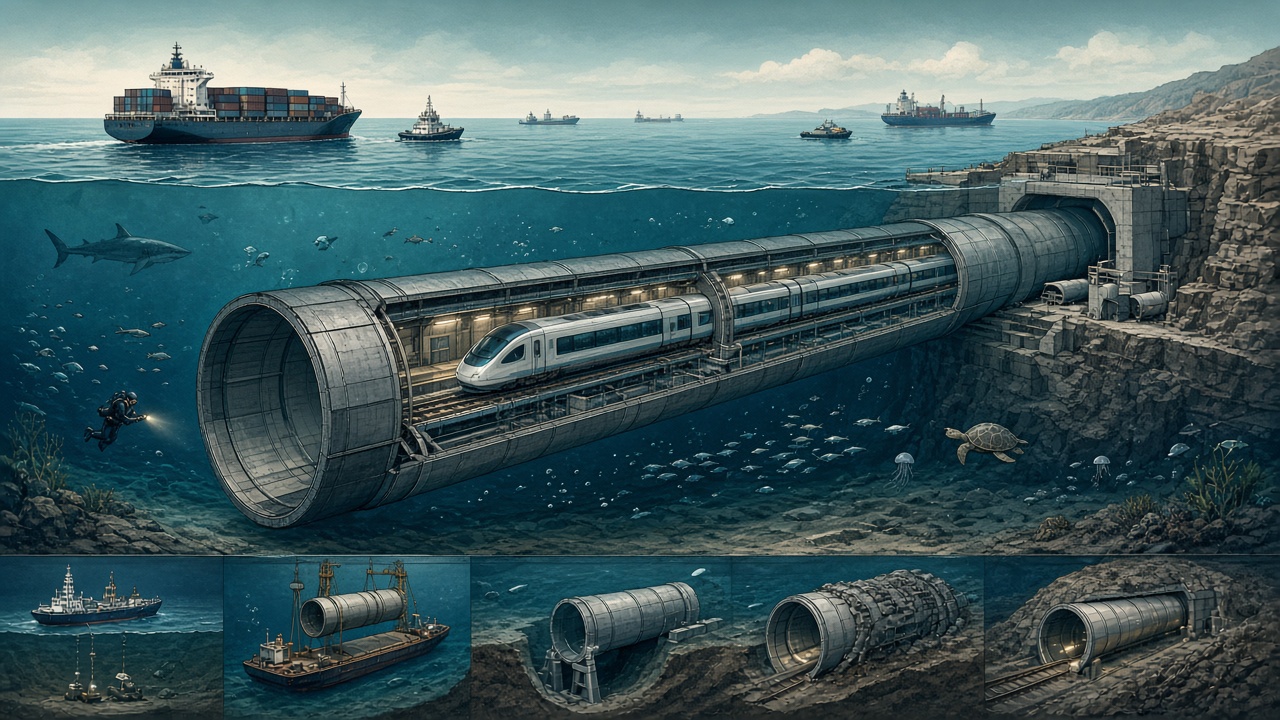
From aqueduct arches and iron girders to cable-hung spans, India’s Chenab Bridge in the Himalayas, and undersea tunnels that cross where decks cannot.
Stone -> SteelSuspension & ChenabUndersea crossings
Why Bridges Matter
Crossings turn rivers, gorges, and seas from barriers into routes. Bridge and tunnel engineering shaped empires, railways, cities—and today’s Himalayan rail links.
This timeline follows ancient aqueducts, iron bridges, suspension bridges, India’s Chenab Bridge, and undersea tunnels as linked turning points.
Big picture
Crossings in one view
Gravity water arches, industrial iron rails, cable-hung decks, a steel arch over the Chenab, and tubes beneath the waves.
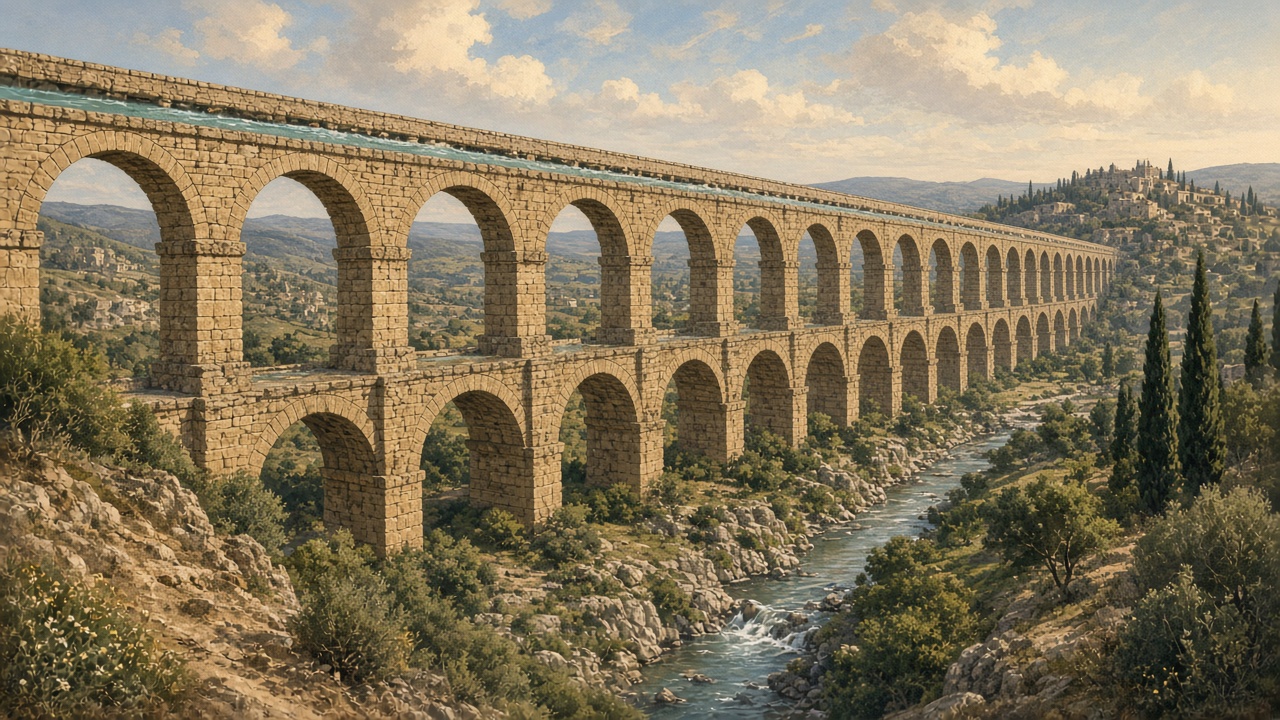
Long before modern road bridges, aqueducts taught builders how to span valleys with stacked arches. Roman systems carried water for cities using precise gradients; similar arch logic later informed stone bridges from Europe to India.
Aqueduct era: arches that carried water—and know-how.
Gravity flow demands accurate surveying and levels.
Multi-tier arches distribute loads over long valleys.
Stone craft sets a template for later bridge builders.
Industrial Spans1700s–
Iron Bridges
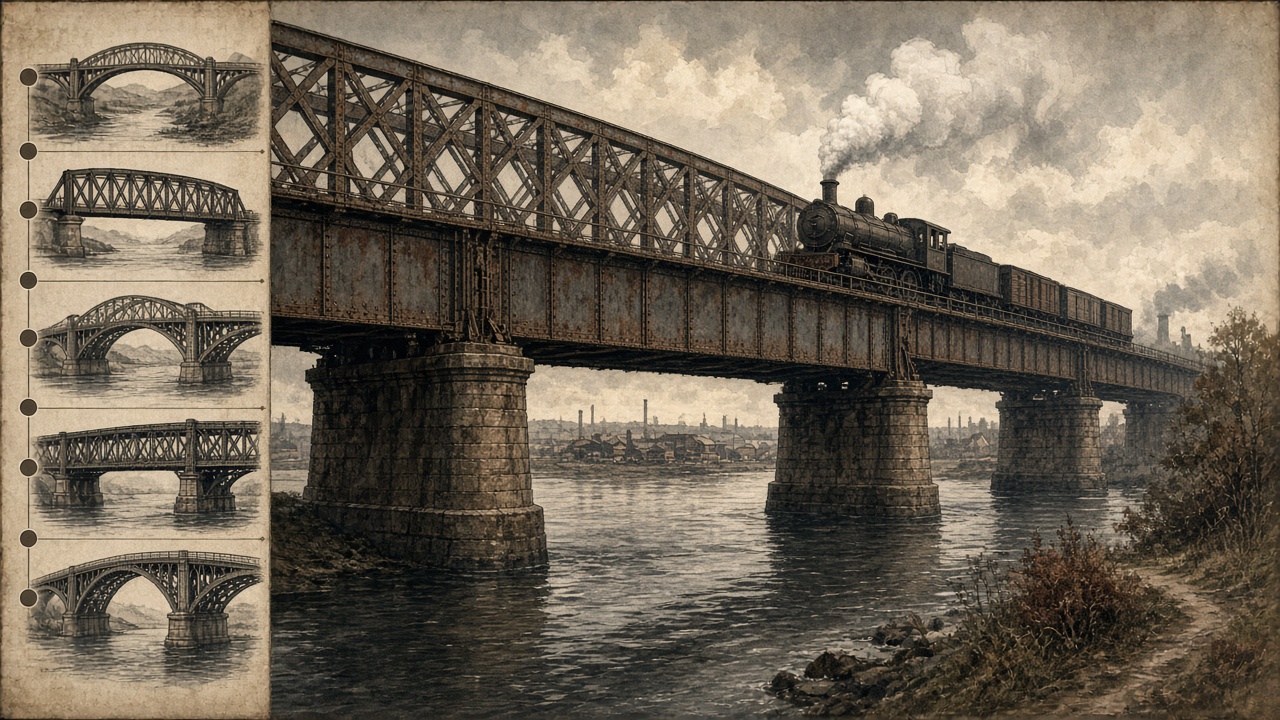
Cast iron, wrought iron, and then steel opened the railway age of bridges. Lattice girders and trusses carried trains across rivers faster and farther than masonry alone. India’s rail network still rests on generations of iron and steel spans.
Iron era: rails on rivets and girders.
Iron Bridge (Coalbrookdale, 1779) symbolises the material shift.
Trusses and girders suit heavy, moving railway loads.
Steel later extends spans and strength further.
Cable Giants1800s–
Suspension Bridges
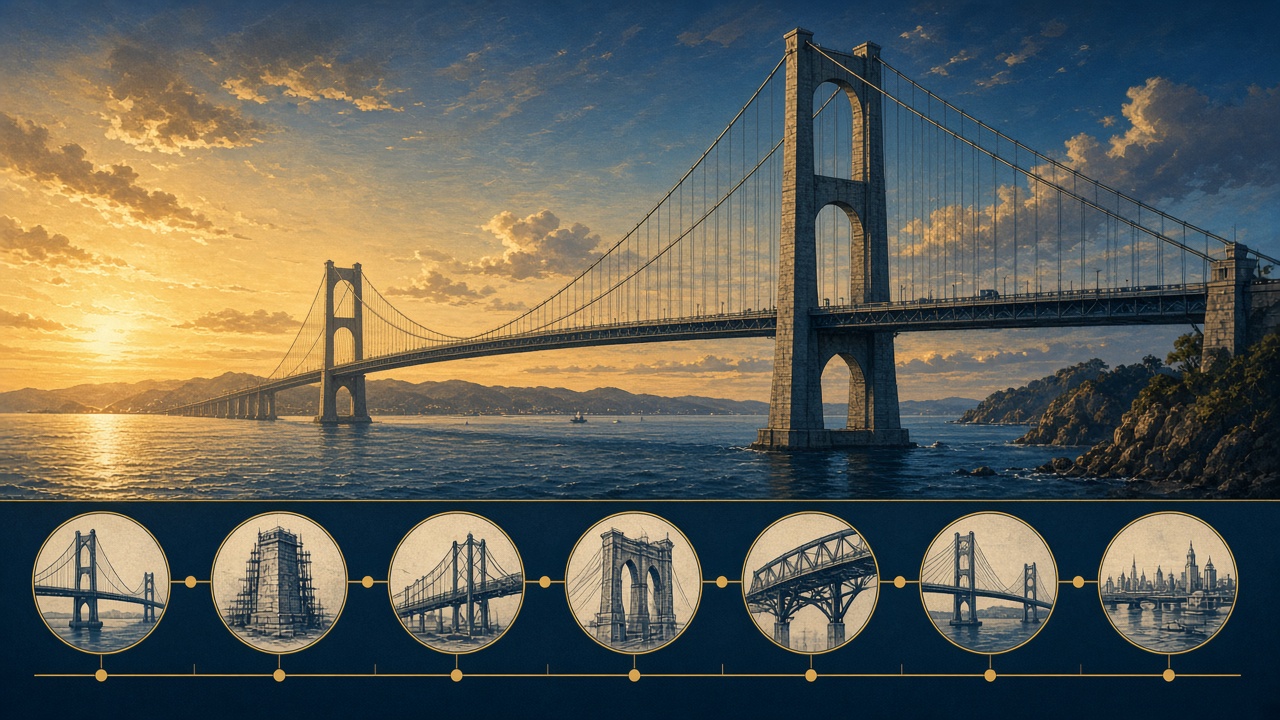
Towers and main cables let decks hang across harbours and wide rivers. From early chain bridges to modern wire-cable icons, suspension designs set world span records and became city landmarks—while wind and aerodynamics became as important as strength.
Suspension era: span length as civic spectacle.
Cables carry deck weight to towers and anchors.
Long spans keep shipping channels clear.
Design must control wind-induced oscillation.
Himalayan RecordIndia
India’s Chenab Bridge
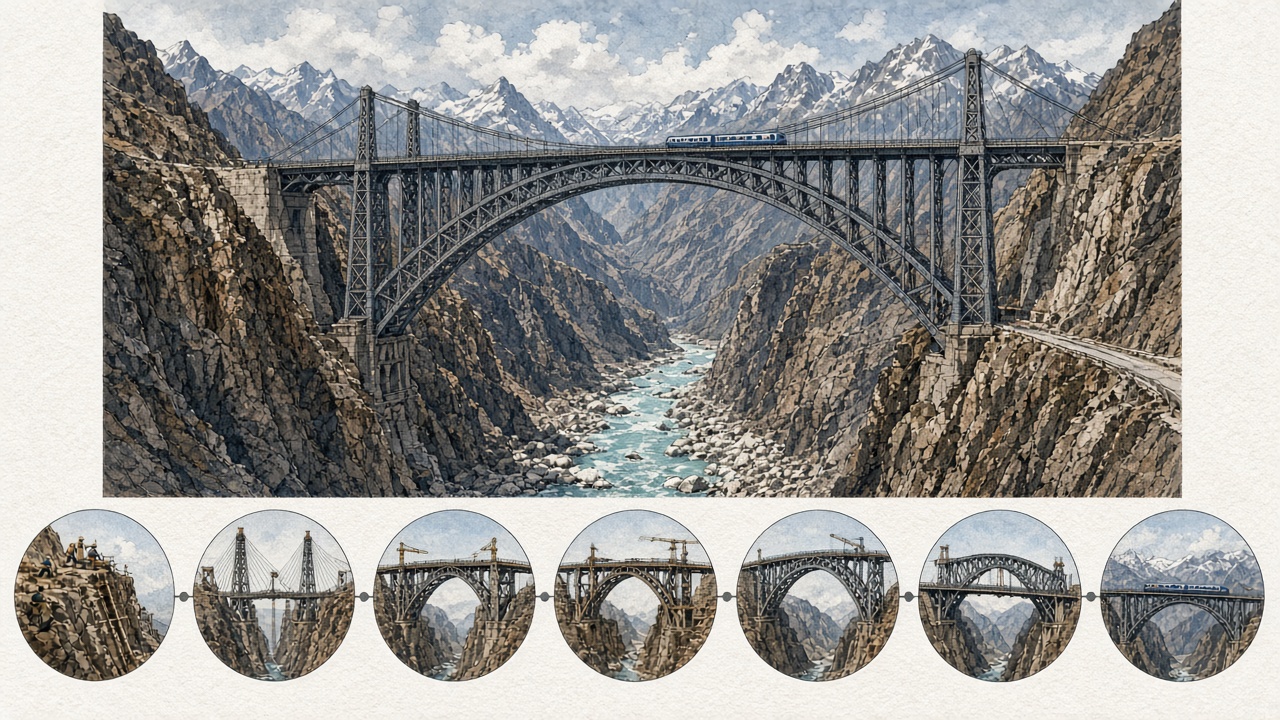
Over the Chenab gorge in Jammu & Kashmir, Indian Railways raised a towering steel arch for the USBRL corridor. Designed for height, wind, and seismic loads, Chenab Bridge stands among the world’s tallest railway bridges—a flagship of modern Indian civil engineering.
Chenab era: rail through the high Himalayas.
Part of Udhampur–Srinagar–Baramulla Rail Link (USBRL).
Arch form suits deep gorge and extreme weather.
Symbol of Make-in-India mega infrastructure capability.
Beneath the WavesModern
Undersea Tunnels
When bridges would block shipping, fight storms, or prove impractical, engineers go under the water. Bored rock tunnels and immersed-tube sections link islands and continents for rail and road—from the Channel Tunnel to Japan’s Seikan—showing another path across the same barrier.
Undersea era: crossing without a surface deck.
TBMs and immersed tubes enable different seabed conditions.
Safety systems (ventilation, evacuation) are mission-critical.
Complements bridges in a full crossings toolkit.
Key Milestones
Milestone
When
Why it matters
Roman aqueduct arches
Ancient
Long stone spans for water—and engineering method.
Iron Bridge / rail iron spans
1779+
Metal opens industrial bridgebuilding.
Modern suspension icons
1800s–1900s
Record spans over harbours and rivers.
Chenab Bridge (USBRL)
2010s–2020s
World-class Himalayan railway arch for India.
Major undersea rail tunnels
20th–21st c.
Fixed links where bridges are impractical.
Crossing Types at a Glance
Type
Core idea
Best for
Aqueduct / arch
Compression in stone/concrete
Valleys, moderate spans
Iron / steel girder
Beams & trusses
Rail & road over rivers
Suspension
Cables + towers
Very long open-water spans
Steel arch (Chenab)
Arch over deep gorge
High, seismic mountain valleys
Undersea tunnel
Passage beneath water
Shipping lanes / harsh seas
Then vs Now
From stone water channels to seismically designed mega spans.
Metric
Then
Now
Materials
Stone, timber
Steel, concrete, high-strength cable
Loads
People, carts, water
Heavy rail, trucks, wind, quakes
Design
Experience & rules of thumb
Sensors, models, codes
Options
Surface spans mainly
Bridges + tunnels toolkit
India focus
River rail bridges
Himalayan mega projects
Future Predictions
Monitoring: Smart sensors watch stress, wind, and corrosion in real time.
Materials: Higher-performance steel and composites extend life and span.
India: More Himalayan and coastal mega links as networks densify.
Climate: Flood and scour resilience become central design drivers.
India spotlight
Bridges & India
From colonial-era rail bridges across the Ganga and Brahmaputra to Howrah’s iconic span and today’s Chenab arch, India’s crossings are national infrastructure—and engineering classrooms.
India spotlight: rivers, rails, and Himalayan ambition.
Rail age
River bridges
Iron and steel spans stitch the subcontinent’s railway map.
Icons
City landmarks
Howrah and others become everyday and symbolic crossings.
Highways
Road mega spans
NHAI projects add long road bridges and elevated corridors.
USBRL
Chenab & tunnels
Arch bridge plus tunnel chain open Kashmir rail connectivity.
Next
Coast & mountains
More complex geology and climate-resilient designs ahead.
Strength: Scale of rail/road networks and mega-project delivery.
Need: Maintenance, seismic upgrades, and skilled workforce.
Debate: Bridge vs tunnel choices for ports and hills.
Test Your Knowledge
20 questions on aqueducts through undersea tunnels. Click to reveal answers.
Answer: Water (by gravity).
Answer: They carry loads in compression efficiently.
Answer: Coalbrookdale / Iron Bridge (1779).
Answer: Stronger, longer spans for heavy trains than stone alone.
Answer: Main cables between towers (via hangers).
Answer: Wind / aerodynamic oscillation.
Answer: Jammu & Kashmir (Chenab gorge), India.
Answer: Udhampur–Srinagar–Baramulla Rail Link.
Answer: Steel arch (railway).
Answer: No—they are tunnels that also cross water barriers.
Answer: Channel Tunnel, Seikan Tunnel, etc.
Answer: Prefabricated tunnel sections sunk into a seabed trench.
Answer: Shipping lanes, storms, or impractical surface spans.
Answer: Steel (and reinforced concrete).
Answer: Deep gorges, seismic activity, weather, access.
Answer: Gradient / surveying for gravity flow.
Answer: Triangulated frameworks of beams.
Answer: Howrah Bridge (among others).
Answer: Stress, vibration, wind, corrosion, etc.
Answer: From stone water spans to mega bridges and undersea links.
Classroom activity
Students Tasks
Ten prompts from aqueducts to undersea tunnels for projects and debate.
Jump to any other transport timeline on WorldTimelineHub.
Disclaimer: This content is AI-generated for educational purposes and may contain errors or outdated details. For correct and authoritative information, please refer to official and reliable sources such as government publications, manufacturers, museums, and academic references.