Ports are where ships meet railways, trucks, and warehouses. India’s seaborne trade—oil, containers, coal, grain, and manufactures—depends on harbours that can berth large vessels, clear cargo fast, and reach the hinterland. From Harappan dockyards to Sagarmala projects, ports have shaped cities, empires, and modern logistics.
This timeline follows ancient ports (Lothal), colonial ports, containerization, Mundra, and Sagarmala as linked turning points.
Big picture
Ports in one view
Lothal shows early organised maritime trade; colonial steam ports become imperial gateways; containers remake terminals worldwide; Mundra proves private mega-port scale; Sagarmala ties ports to roads, rail, and coastal shipping as national policy.
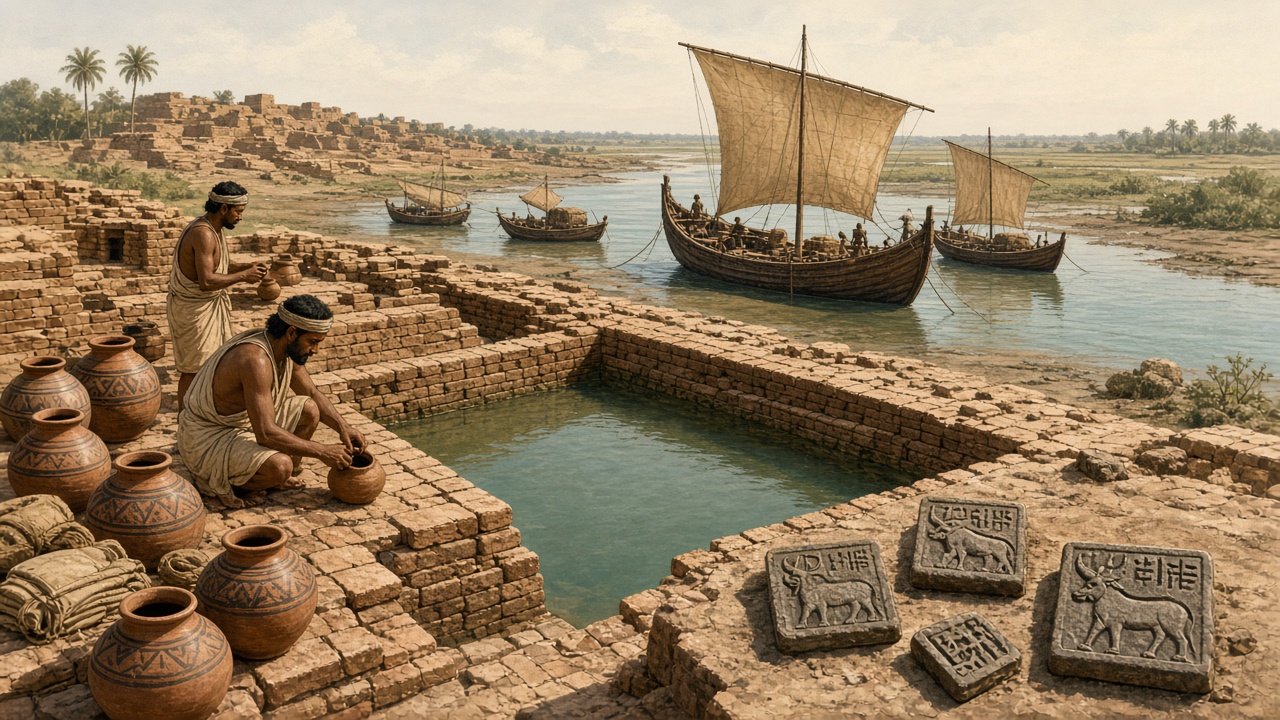
Lothal in Gujarat is famous for a brick-lined basin interpreted as a dockyard—part of the Indus Valley (Harappan) world that traded beads, metals, and crafts along coasts and rivers. Ancient India also knew later ports such as Bharuch, Muziris, and others on monsoon routes, but Lothal stands as the iconic early organised harbour site.
Lothal era: dock, craft, and coastal trade.
Brick dockyard and craft workshops.
Evidence of planned maritime exchange.
Symbol of India’s deep maritime past.
Steam & Empire GatewaysColonial
Colonial Ports
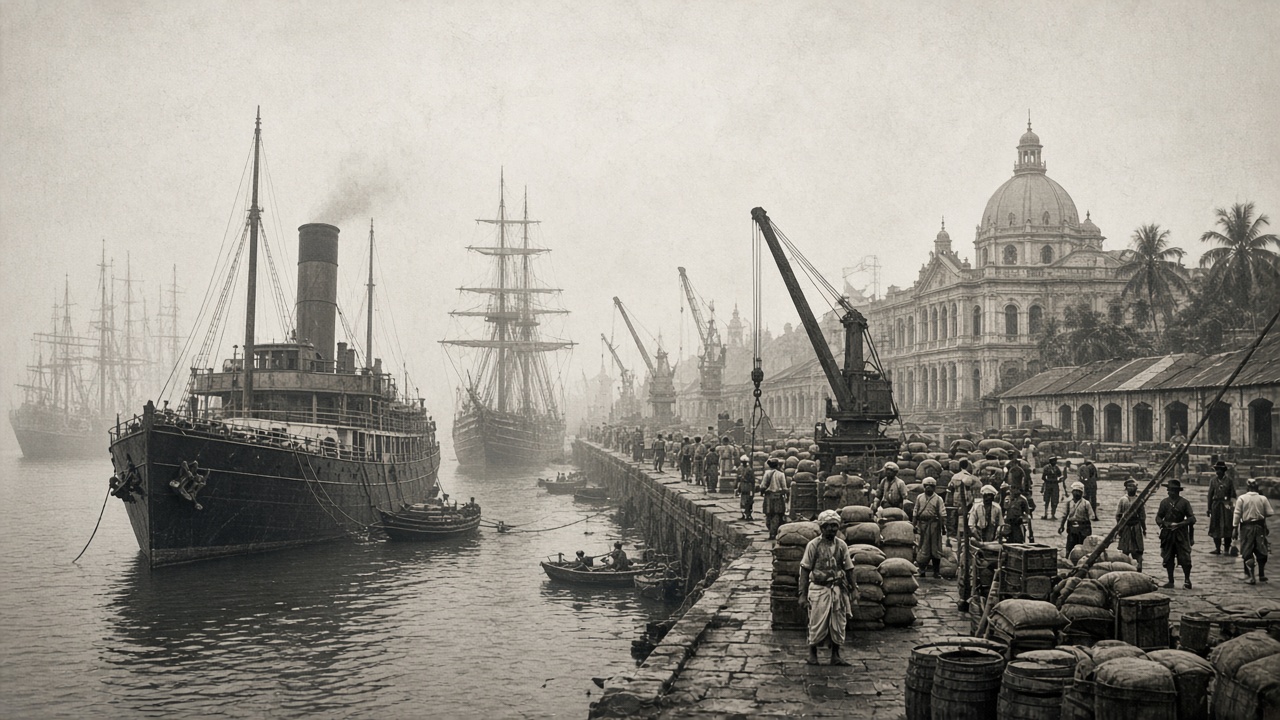
European colonial power expanded Bombay (Mumbai), Calcutta (Kolkata), Madras (Chennai), and other harbours with docks, warehouses, customs, and rail links. Steamships and opium, cotton, tea, and jute trades made these cities imperial nodes—and left India with the urban port spine that still dominates major trade lanes.
Colonial era: steam docks and warehouse cities.
Bombay, Calcutta, Madras as mega-gateways.
Docks, customs, and rail to the hinterland.
Urban growth tied to maritime commerce.
Box RevolutionMid–late 1900s
Containerization
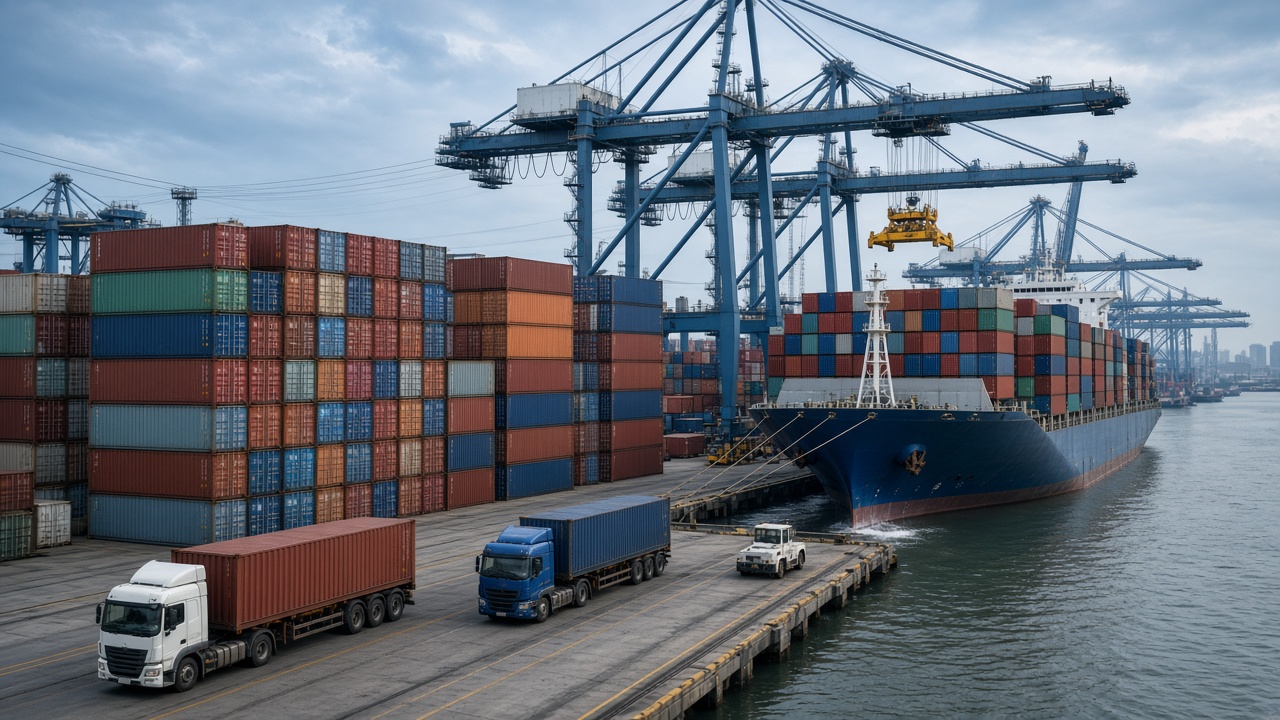
Standard steel containers and gantry cranes turned break-bulk loading into rapid unitised moves. Ports worldwide rebuilt for stacks, trucks, and rail spurs; Indian harbours followed with container terminals that cut handling time, theft, and damage—and locked trade into global liner schedules measured in TEUs.
Container era: boxes, cranes, and TEUs.
Standard boxes replace much break-bulk cargo.
Gantry cranes and dedicated terminals.
Faster turnaround and global liner networks.
Private Mega-Port2000s+
Mundra
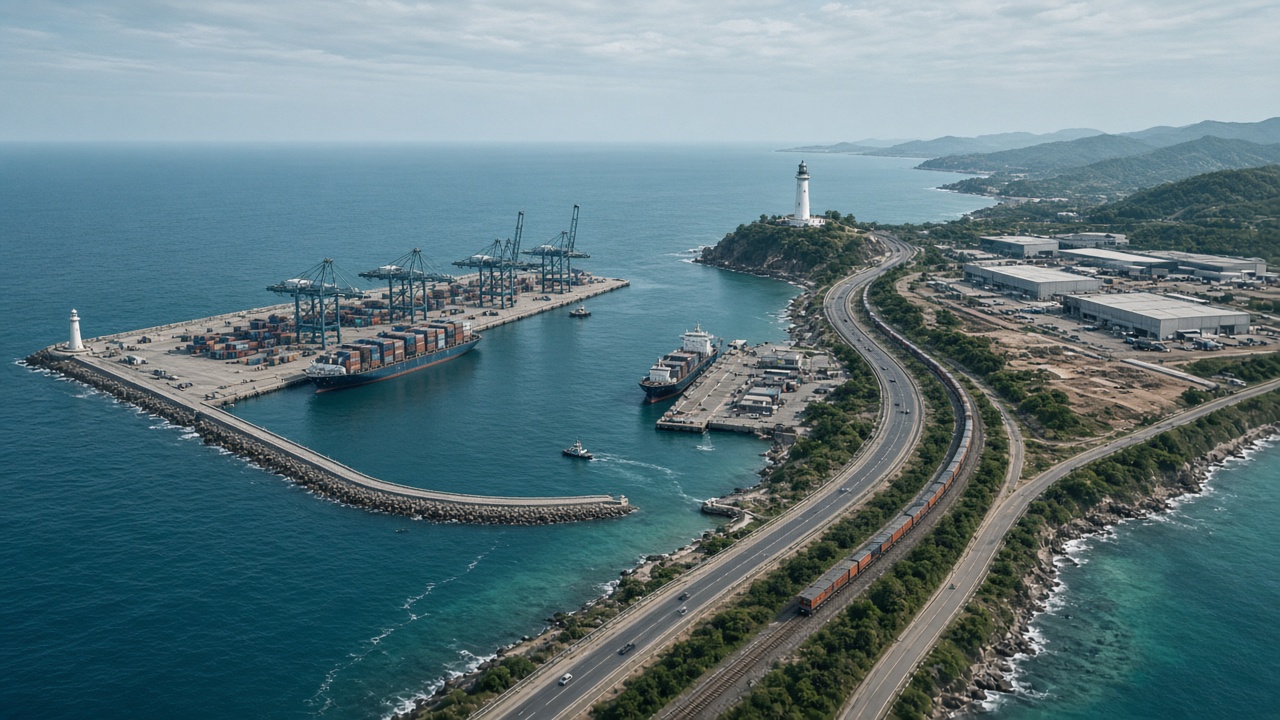
Mundra on Gujarat’s Gulf of Kutch rose as a large multi-cargo commercial port—containers, bulk, and liquid—with strong hinterland rail and road links. It showed that new private terminals could compete with older colonial harbours on scale, efficiency, and location near industrial corridors.
Mundra era: private scale on the west coast.
Multi-cargo mega-terminal growth.
Hinterland connectivity as a competitive edge.
Model for non-metro commercial port power.
Port-Led Development2015+
Sagarmala
Sagarmala is India’s national programme for port-led development: modernise ports, boost coastal shipping and inland waterways, and connect harbours to industrial clusters with roads and rail. The idea is that cheaper, faster maritime logistics can cut logistics costs and spread coastal industrial growth beyond a few historic cities.
Sagarmala era: ports plus connectivity policy.
Port modernisation and new capacity.
Coastal shipping & inland waterways push.
Road–rail–port corridors to factories.
Key Milestones
Milestone
When
Why it matters
Lothal dockyard
Harappan period
Early organised port evidence in India.
Colonial major ports
1700s–1900s
Steam-age gateways and port cities.
Container revolution
Mid–late 20th c.
TEU terminals remake cargo handling.
Mundra expansion
2000s+
Private mega-port on west coast.
Sagarmala launched
~2015
National port-led development agenda.
Port Eras at a Glance
Era
Typical cargo style
Key feature
Ancient (Lothal)
Crafts, metals, coastal goods
Brick dock / tidal basin
Colonial
Bulk commodities, break-bulk
Steam docks & rail
Containerization
TEU containers
Gantry terminals
Mundra
Containers + bulk + liquid
Private mega-scale
Sagarmala
Multi-modal logistics
Port + hinterland policy
Then vs Now
From sack-by-sack loading to crane-lifted boxes.
Metric
Then
Now
Loading
Break-bulk by hand / sling
Container gantries & bulk unloaders
Ship size
Smaller steam / sail
Large container & bulk carriers
Gateways
Few colonial cities
Many major & private ports
Policy lens
Empire / city commerce
Sagarmala logistics corridors
Measure of scale
Tons & berths
TEUs, dwell time, connectivity
Future Predictions
Greener shipping: Cleaner fuels and shore power pressure ports to cut emissions.
Coastal shipping: More cargo shifts from congested roads to sea and inland waterways.
Smart terminals: Automation, tracking, and faster customs reduce dwell times.
Corridor race: Ports win or lose on rail–road hinterland links, not only berth depth.
India spotlight
Shipping, Ports & India
India’s long coastline hosted Harappan docks, later monsoon trade, and colonial steam harbours that built Mumbai, Kolkata, and Chennai. After Independence, major ports and then private terminals like Mundra expanded capacity; Sagarmala tries to treat ports as engines of national logistics—not only city waterfronts.
India spotlight: coastline as a logistics spine.
Harappan
Lothal & ancient trade
Organised dockyard evidence on the western coast.
Colonial
Steam port cities
Bombay, Calcutta, Madras dominate gateways.
Late 1900s
Containers arrive
TEU terminals remake cargo handling.
2000s+
Mundra scale
Private mega-port challenges older hubs.
2015+
Sagarmala
National port-led development programme.
Strength: Long coastline and growing private capacity.
Need: Faster hinterland links and lower logistics costs.
Debate: Ecology, fishing communities, and coastal industrialisation.
Test Your Knowledge
20 questions from Lothal to Sagarmala. Click to reveal answers.
Answer: Indus Valley / Harappan.
Answer: Gujarat.
Answer: Brick dockyard / basin.
Answer: Bombay/Mumbai, Calcutta/Kolkata, or Madras/Chennai (any).
Answer: Steamships (among other factors).
Answer: Goods loaded piece by piece (bags, crates, etc.).
Jump to any other transport timeline on WorldTimelineHub.
Disclaimer: This content is AI-generated for educational purposes and may contain errors or outdated details. For correct and authoritative information, please refer to official and reliable sources such as government publications, manufacturers, museums, and academic references.