From travel agents and endless railway queues to IRCTC e-tickets, pocket apps, and fares that move with demand—how India learned to book a journey.
Agents -> AppsIRCTCDynamic Fares
Why Travel Booking Matters
Getting a confirmed seat once meant queues, agents, and luck. Digitisation moved reservation into homes and phones—then algorithms began reshaping what you pay. Booking systems are now as important as the trains and planes themselves.
This timeline follows travel agents, railway counters, IRCTC online, smartphone apps, and dynamic pricing across Indian travel.
Big picture
Booking evolution in one view
Paper and people gave way to terminals, then websites, then apps. Speed rose; so did choice—and price volatility.
From stamped paper to pocket confirmation—booking as infrastructure.
Human Network1950s - 1990s
Travel Agents
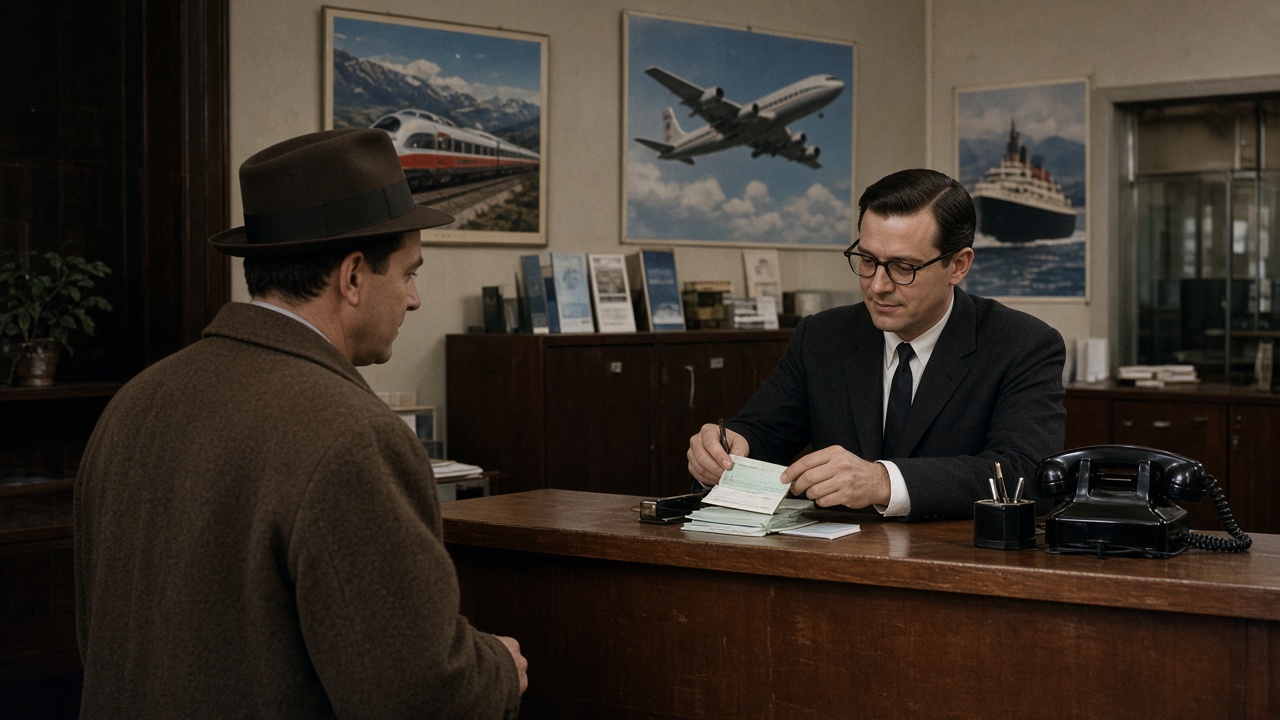
Local agencies booked trains, buses, flights, and package tours. Posters, telephones, and paper vouchers ruled the office. For many families, the agent was the trusted interface to a complex reservation system.
Agent era: expertise, commissions, and face-to-face itineraries.
Neighbourhood and city agencies handle most leisure bookings.
Flights and tours especially depend on agent relationships.
Paper tickets and typed itineraries define the experience.
Technology Used
Phone & telex / fax: Confirm seats with carriers.
Manual ledgers: Track passenger details and payments.
Airline CRS (later): Computer reservation systems enter agencies.
Features
Advice included: Routes, seasons, and connections explained.
Access barrier: You needed an office visit or phone call.
Still relevant: Groups, visas, and complex trips.
Queue Culture1950s - 2000s
Railway Counters
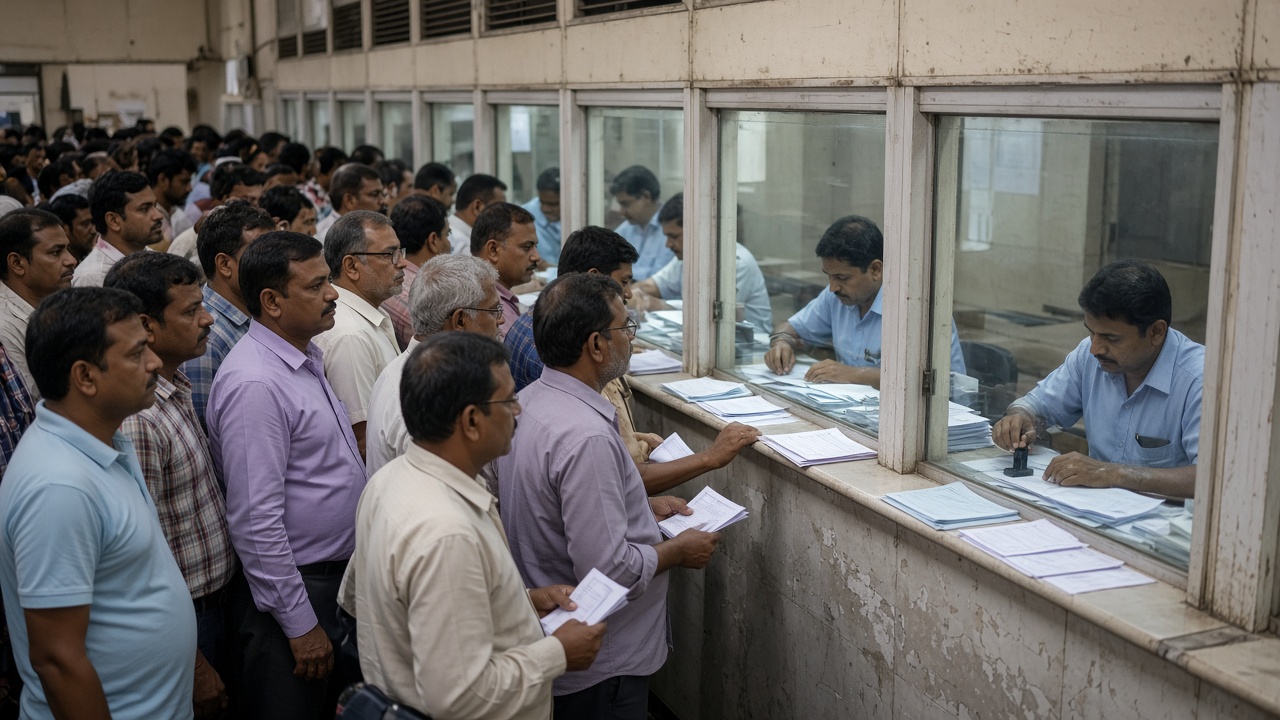
Indian Railways reservation meant early mornings, forms, and glass windows. Computerised Passenger Reservation System (PRS) terminals sped clerks—but passengers still queued. Tatkal rushes and waitlists became national folklore.
Counter era: PRS screens behind glass, hope in the queue.
PRS computerisation modernises counters from the 1980s onward.
Advance reservation periods and charts shape travel planning.
Authorised agents bridge busy counters and customers.
Technology Used
PRS network: Centralised seat inventory for trains.
Paper tickets / charts: Physical proof of booking.
Forms & ID rules: Manual data entry at the window.
Features
Official channel: Direct railway booking.
Time cost: Hours for a few minutes at the window.
Social memory: Queues define pre-internet rail travel.
E-Ticket Revolution2002 - 2010s
IRCTC Online
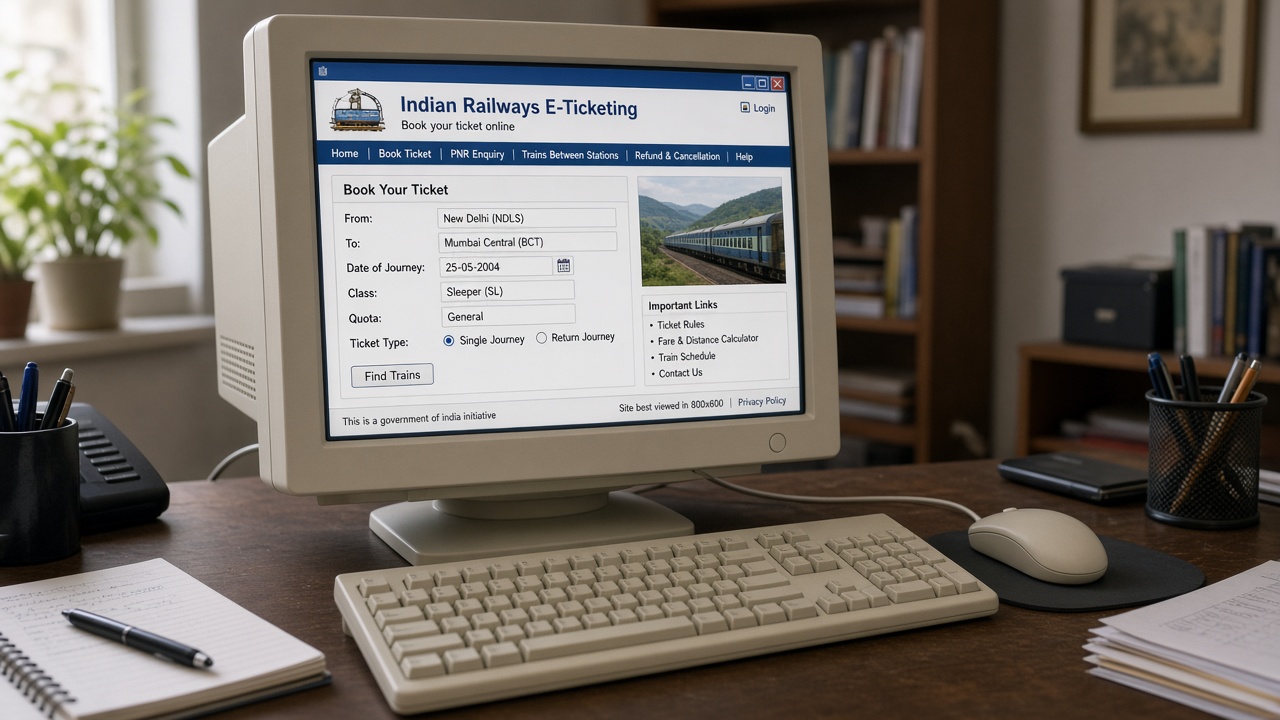
IRCTC’s internet booking (from 2002) let Indians reserve trains from home. Captchas, payment gateways, waitlist anxiety, and e-tickets replaced many counter visits—one of India’s largest citizen-facing digital services.
IRCTC era: booking moves from the station to the screen.
~2002: Public online train reservation expands nationwide.
E-tickets and ID-based travel reduce paper dependency.
Peak-hour crashes and login races become new rituals.
Technology Used
Web booking portal: Search trains, berths, quotas.
Payment gateways: Cards, net banking, later wallets/UPI.
E-ticket / SMS: Digital proof for boarding.
Features
24×7 access: No need to reach a counter first.
Scale: Millions of tickets in peak seasons.
Learning curve: Passwords, captchas, and quotas.
Pocket Booking2010s - Present
Travel Apps
Smartphones and OTAs put trains, flights, buses, and hotels in one tap. Push notifications, UPI, cancellations, and live PNR status made booking continuous—not a once-a-journey errand.
App era: compare, pay, and board with a phone.
IRCTC and private OTAs race for mobile users.
Flight + hotel bundles popularise leisure planning.
UPI and wallets make checkout nearly instant.
Technology Used
Native / web apps: Search, filter, and book on the go.
APIs & aggregators: Inventory from many suppliers.
Push & UPI: Status updates and one-tap payments.
Features
Comparison shopping: Prices and timings side by side.
Self-service: Cancel, modify, download invoices.
Attention economy: Alerts, deals, and rush-hour taps.
Living Fares2010s - Present
Dynamic Pricing
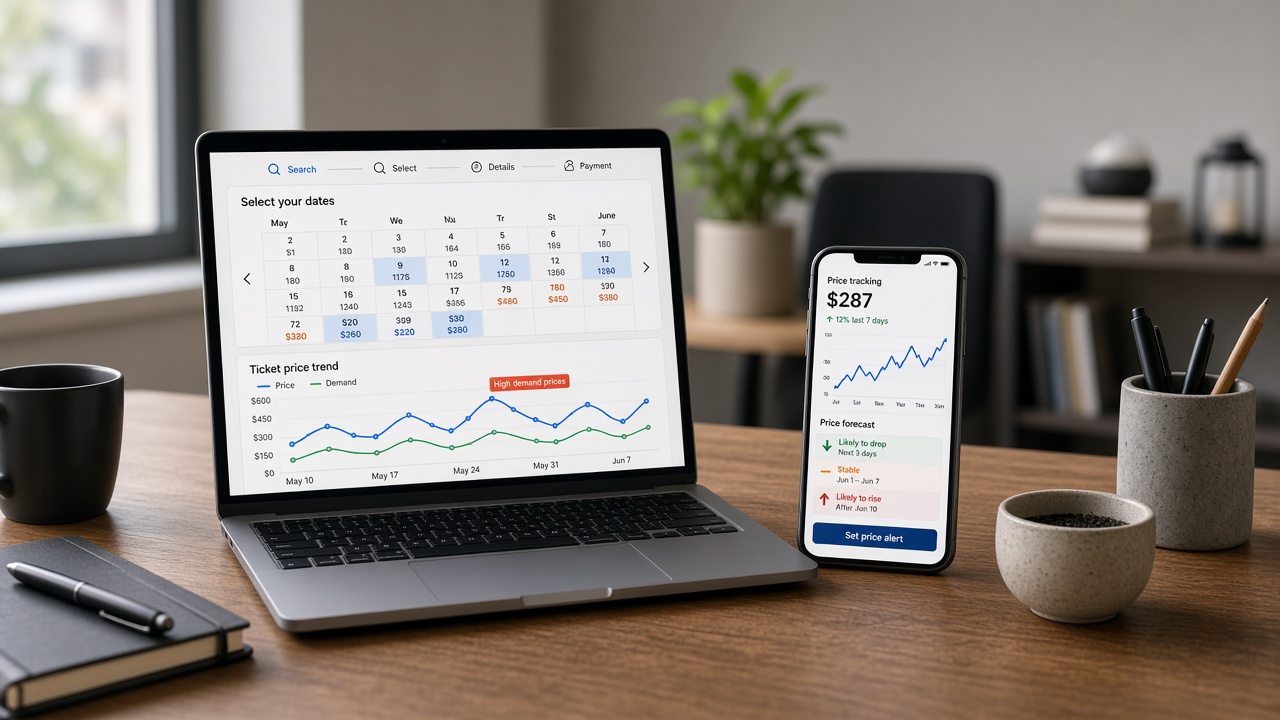
Airlines long varied fares by demand; railways tested flexi-fare and related schemes; OTAs surface surge and sale prices in real time. Booking became a race against the clock—and against the algorithm.
Pricing era: the same seat can cost different amounts by the hour.
Airline yield management sets the global template.
Apps show countdowns, fare alerts, and “price dropped” nudges.
Technology Used
Yield / revenue management: Optimise load and revenue.
Real-time fare engines: Update displayed prices continuously.
Alerts & analytics: Track routes for cheaper windows.
Features
Demand-sensitive: Festivals and last seats cost more.
Consumer strategy: Book early, set alerts, stay flexible.
Debate: Fairness vs filling empty seats efficiently.
Travel Booking Timeline Summary
Year / Era
Milestone
Why it matters
1950s–90s
Travel agents
Human gatekeepers to tickets and tours.
1950s–2000s
Railway counters / PRS
Official queues define rail booking.
~2002
IRCTC online
Home e-tickets transform rail travel.
2010s–
Travel apps / OTAs
Mobile booking for trains, flights, hotels.
2010s–
Dynamic pricing
Fares move with demand and algorithms.
Key Historical Events
Event
Year
Significance
Agency-led travel culture
mid–late 20th c.
Agents dominate complex bookings.
PRS computerisation
1980s onward
Counters get networked inventory.
IRCTC online booking
~2002
Internet rail reservation for the public.
E-ticket normalisation
2000s–
Paper pickup becomes optional.
Smartphone OTA boom
2010s
Apps aggregate travel products.
UPI checkout
late 2010s
Faster, simpler payments on phones.
Flexi-fare / dynamic rail experiments
2010s
Some train fares track demand.
Airline yield management mainstream
ongoing
Prices change by seat and day.
Booking Channels at a Glance
Channel
Best for
Strength
Travel agent
Packages, groups, advice
Human help
Railway counter
Official PRS booking
Direct, no home internet needed
IRCTC web / app
Train tickets
Official e-tickets at scale
OTA apps
Flights, hotels, buses
Comparison and deals
Dynamic pricing
Airlines / select trains
Matches demand (variable cost)
Then vs Now
Queues and agents to apps and living fares.
Metric
Then (agents / counters)
Now (IRCTC / apps)
Where
Office or station queue
Home, phone, anywhere
Proof
Paper ticket
E-ticket / app / SMS
Speed
Hours possible
Minutes (if inventory exists)
Price
Mostly fixed published fares
Often dynamic / deal-driven
Help
Agent or clerk
Chatbots, FAQs, still some agents
Future Predictions
2025–2030: More multimodal apps (train + cab + hotel) in one checkout.
Late 2020s: Clearer fare transparency rules as dynamic pricing spreads.
2030s: Biometric / digital ID boarding linked to bookings becomes common.
Ongoing: Agents survive for complexity; simple trips stay self-serve.
India spotlight
Travel Booking in India
India’s story is unique in scale: PRS counters, then IRCTC as a national e-governance success, then a smartphone OTA boom. UPI unlocked payments; dynamic fares brought airline-style pricing into everyday planning debates.
India spotlight: from PRS queues to IRCTC and OTAs.
Agents
Neighbourhood booking
Travel shops and authorised agents handle tickets and tours.
PRS
Computerised counters
Networked reservation terminals reshape station halls.
2002
IRCTC online
Internet booking and e-tickets go mainstream.
2010s
App + UPI era
OTAs and rail apps put booking in every pocket.
Pricing
Dynamic fares
Airlines lead; railways experiment; travellers learn to watch prices.
Inclusion: Counters still matter where data or literacy is limited.
Trust: Official IRCTC vs third-party apps remains a consumer choice.
Festivals: Booking wars define Diwali and summer rush culture.
Test Your Knowledge
20 questions on agents, counters, IRCTC, apps, and pricing. Click to reveal answers.
Answer: Ticket reservation, tours, hotels, and itinerary help.
Jump to any other transport timeline on WorldTimelineHub.
Disclaimer: This content is AI-generated for educational purposes and may contain errors or outdated details. For correct and authoritative information, please refer to official and reliable sources such as government publications, manufacturers, museums, and academic references.