Bridal Wear Timeline of India: Traditional Silk → Zari → Designer Wear → Rental Bridal → Sustainable Bridal
In the 1950s a South Indian bride’s pride was her heavy Kanjivaram silk sari with a broad gold border. Glittering zari and zardozi followed, designer lehengas became the dream in the
1980s and 1990s, renting a designer outfit became normal in the 2000s, and in the 2020s many brides choose handloom, heirloom, and re-wearable outfits to cut waste.
This timeline covers handwoven wedding silks, Kanjivaram and Banarasi saris, real and imitation zari, zardozi embroidery, film-inspired red lehengas, 1980s designer couture,
fashion weeks, bridal rentals, pastel Instagram brides, pandemic weddings, heirloom saris, upcycling, Silk Mark and GI tags, and regional bridal traditions across India.
A wedding outfit is often the most precious garment an Indian woman owns. It carries family memories, regional identity, and the skill of weavers and embroiderers whose crafts
go back centuries. How brides dress also reflects wider changes — rising incomes, films and television, fashion design, the internet, and today’s concern for artisans and the
environment.
Big picture
India’s bridal wear journey in one view
For centuries brides wore handwoven silks made by local weavers and passed them down. After Independence, Kanjivaram and Banarasi silks ruled weddings, and gold zari and
zardozi added sparkle. Designers turned bridal wear into couture from the 1980s, rentals made designer looks affordable in the 2000s, and in the 2020s sustainable choices —
handloom, heirloom, and re-wear — are growing. Related timelines:
Bt cotton,
television,
mobile phones.
2nd
India’s rank among world silk producers
35 lakh+
Handloom workers (2019–20 census)
2005
GI tag for Kanchipuram silk
~1 crore
Weddings a year (estimate)
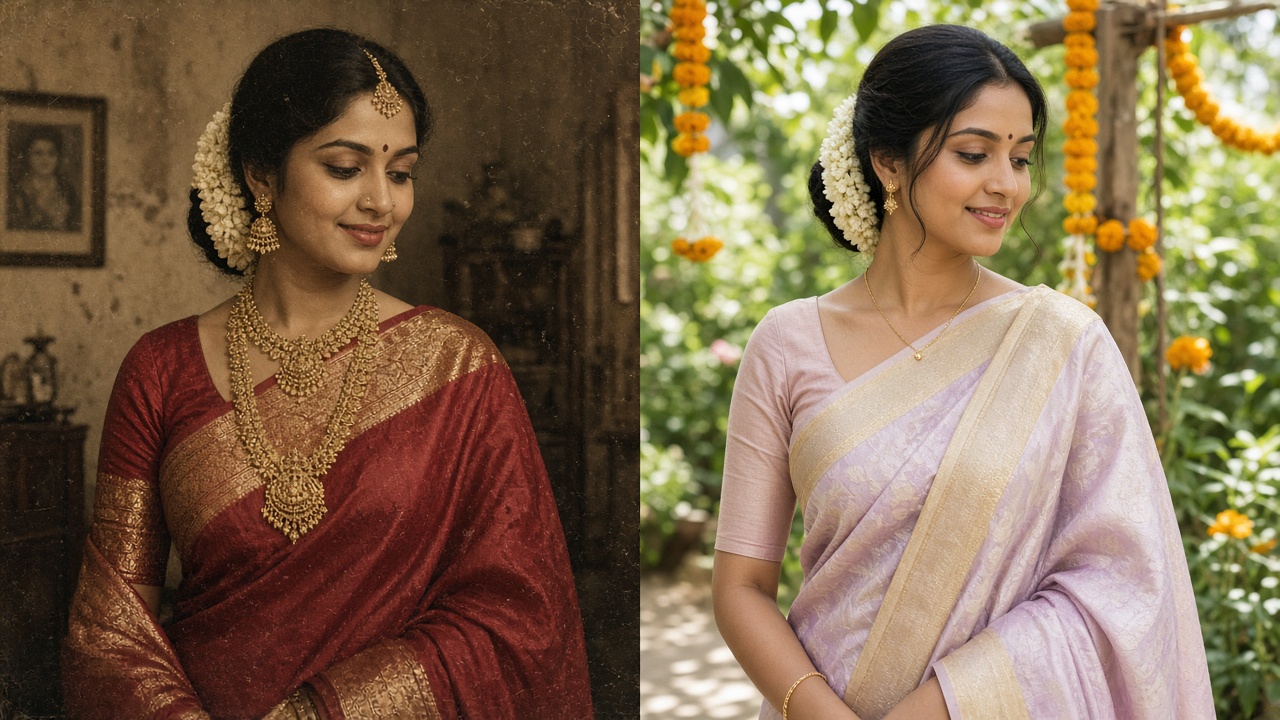
From a heavy 1950s Kanjivaram to a light, pastel handloom silk (artistic illustration).
Bridal Wear Then vs Now at a Glance
Feature
Then
Now
Main outfit
Handwoven silk sari or ghagra
Sari, designer lehenga, gown, or fusion outfit
Fabric
Pure silk and cotton
Silk, georgette, net, velvet, organza, handloom
Decoration
Pure gold and silver zari
Real, tested, or imitation zari; sequins, crystals, thread work
Colours
Red, maroon, gold, and regional colours
Red plus pastels, ivory, and bold modern shades
Who made it
Local weavers and family tailors
Designers, brands, boutiques, and weaver cooperatives
Number of outfits
One for the main ceremony
Several — mehendi, haldi, sangeet, wedding, reception
How it is bought
From weavers or local shops
Boutiques, online stores, rentals, and resale
After the wedding
Worn again and passed to daughters
Often stored, rented out, resold, or upcycled
Influences
Family and community customs
Films, celebrities, Instagram, and designers
Sustainability
Hand-made and handed down
Growing interest in handloom, re-wear, and renting
🧵 SilkAncient – 1946
Traditional Silks & Handloom
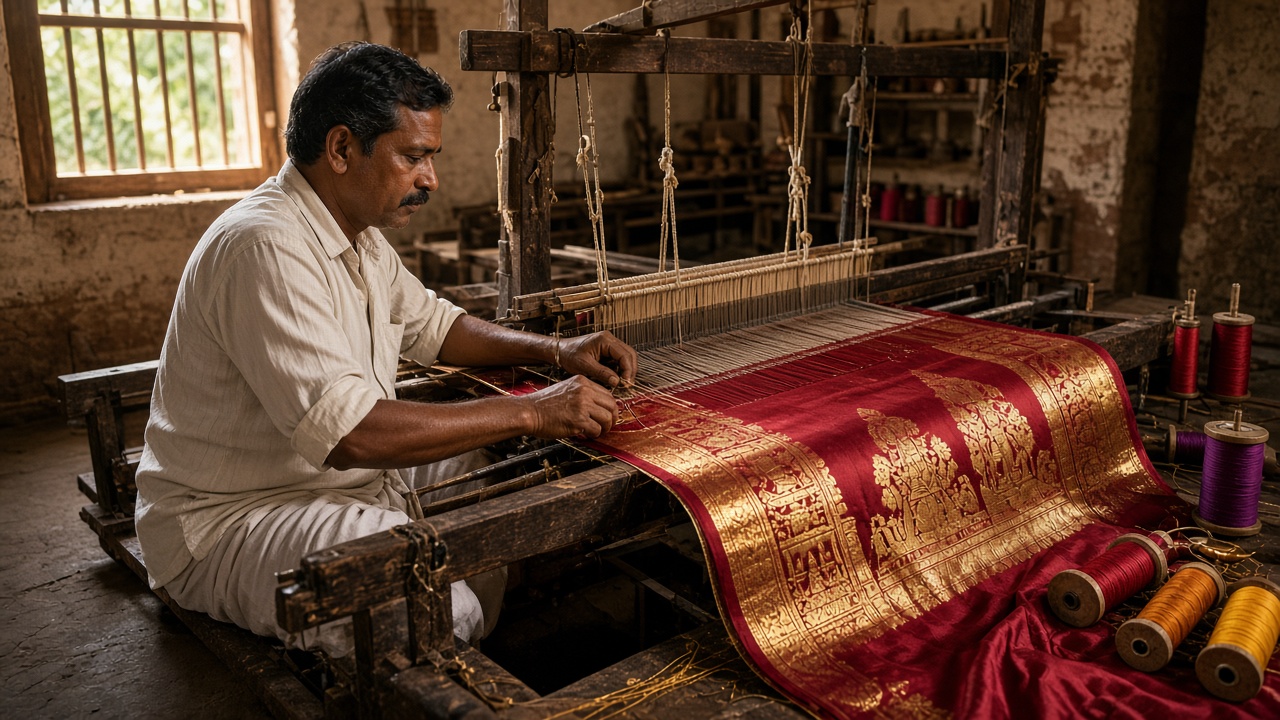
For centuries Indian brides wore handwoven silk and cotton in colours their community considered lucky. Weaving towns such as Kanchipuram, Varanasi, and Paithan became famous for wedding silks with gold borders, and a bride’s sari was treasured and passed down.
A weaver works gold zari into a red silk bridal sari on a pit loom (artistic illustration).
Ancient times: Brides wear handwoven cotton and silk; red, yellow, and white-and-gold are seen as auspicious in different regions, and ancient texts mention cloth woven with gold thread.
Medieval period: Temple towns such as Kanchipuram and trade centres such as Paithan grow into famous silk-weaving hubs, making saris with zari borders for weddings and festivals.
Mughal era: Banarasi brocades with Persian-style floral motifs, zardozi metal-thread embroidery, and fine muslins flourish under royal patronage.
1800s–1940s: Cheap machine-made imported cloth hurts weavers; the Swadeshi movement (1905) and khadi encourage Indian cloth, while families keep wedding silks as heirlooms.
Technology
Pit loom: Hand-operated weaving.
Pure zari: Gold-coated silver thread.
Natural dyes: Madder, indigo, turmeric.
Features
Regional colours: Local customs.
Heirlooms: Passed to daughters.
Hand-made: Weeks of weaving.
🥻 Kanjivaram1947 – 1969
Kanjivaram & Banarasi Silk Brides
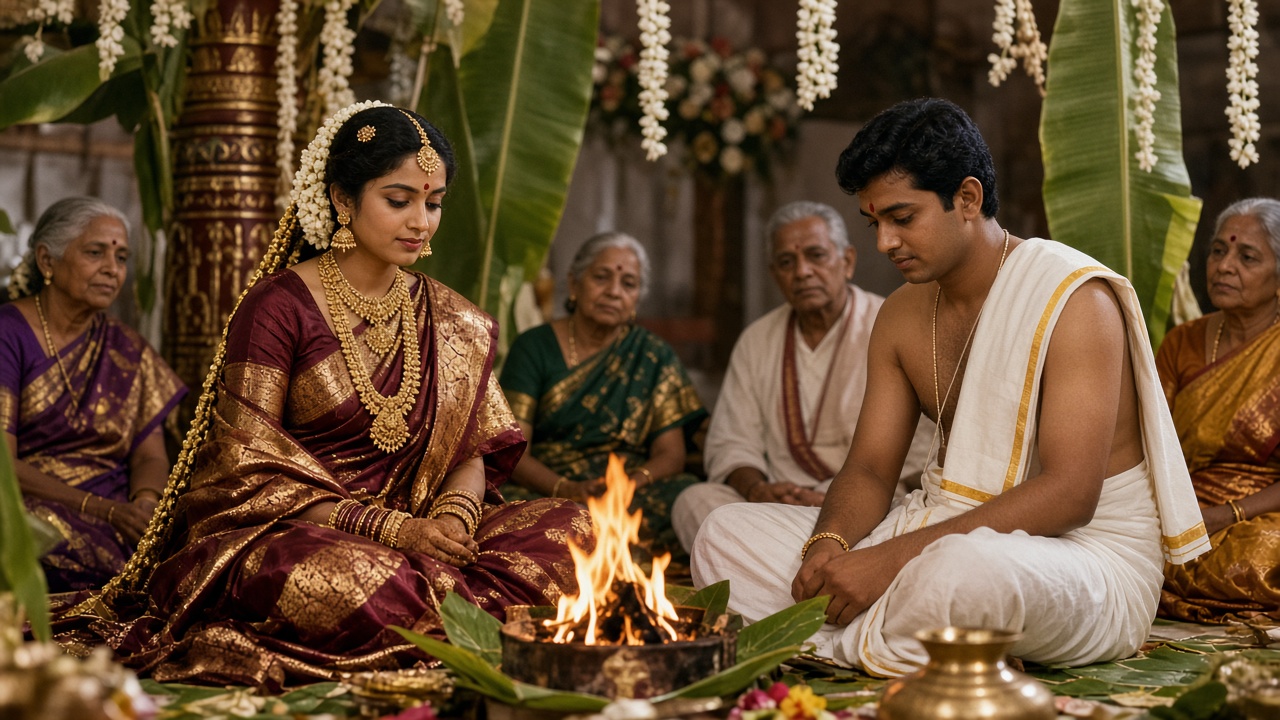
In the 1950s the heavy Kanjivaram silk sari, in deep red, maroon, or mustard with a wide gold border, was the dream of South Indian brides, while the Banarasi sari ruled weddings in the north and east. New handloom boards and cooperatives helped weavers after Independence.
A bride in a maroon Kanjivaram silk sari beside the sacred fire (artistic illustration).
1950s: South Indian brides favour heavy Kanjivaram saris with temple, peacock, and checked motifs; Banarasi brocade saris are the bridal choice in Uttar Pradesh, Bihar, and Bengal.
Korvai technique: Kanjivaram weavers interlock a contrasting border and body by hand so firmly that the sari lasts for generations.
1952–1956: The All India Handloom Board (1952) and Weavers’ Service Centres (1956) support weavers; cooperatives such as Tamil Nadu’s Co-optex (1935) sell silk saris widely.
1960s: Heavy gold jewellery and gold-rich saris show family status, and film heroines’ wedding looks start to influence brides.
Technology
Korvai: Interlocked border.
Mulberry silk: Thick, lustrous yarn.
Brocade weaving: Raised zari motifs.
Features
Heavy silk: Rich drape.
Deep colours: Red, maroon, gold.
Family investment: Worn for life.
✨ Zari1970 – 1985
Zari, Zardozi & Film Glamour
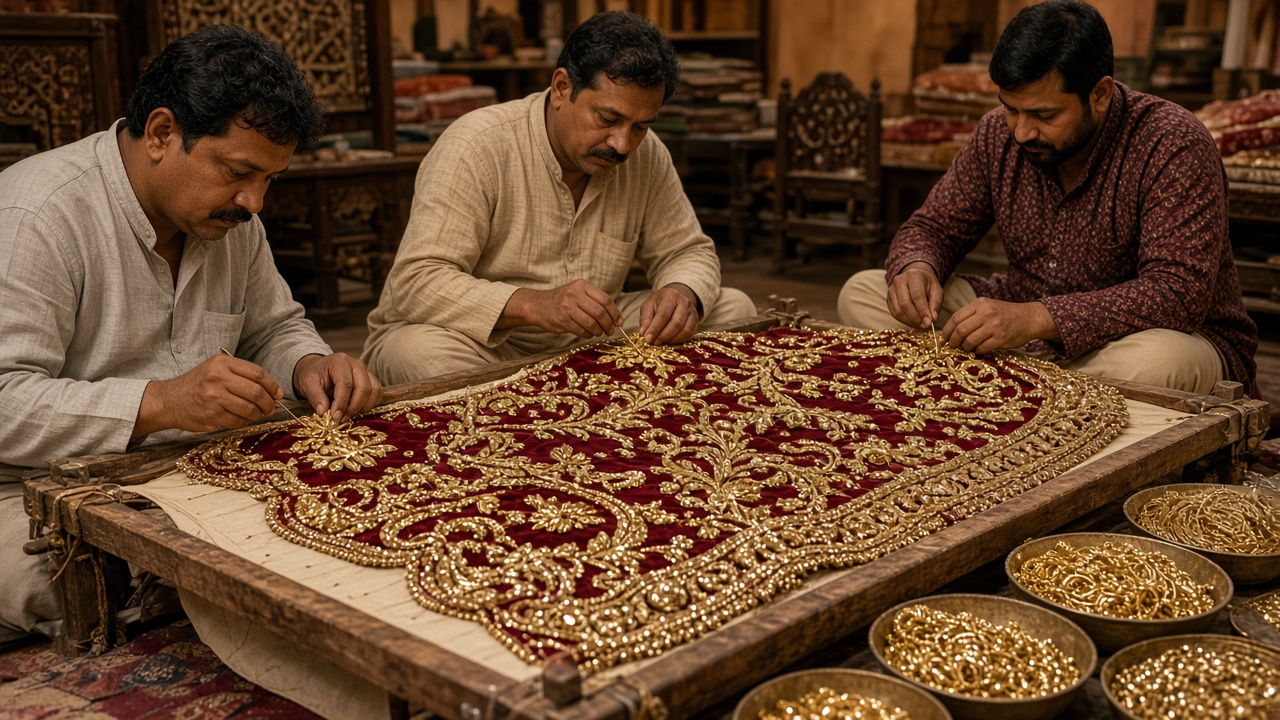
Glittering gold thread became the heart of bridal style. As precious metals grew costly, cheaper tested and imitation zari let more families afford shiny saris, while zardozi workshops covered lehengas and shararas in gold embroidery and films made the red bridal lehenga popular.
Zardozi artisans stitch gold metal thread onto a bridal lehenga (artistic illustration).
Real zari: Fine silver thread coated with gold and wound around silk is woven into bridal saris; Surat in Gujarat is India’s main zari-making centre.
1970s: With gold and silver prices rising, “tested” zari (silver-coated copper) and imitation metallic zari make glittering saris affordable for more families.
1970s–1980s: Zardozi from Lucknow, Agra, Bareilly, and Hyderabad decorates bridal lehengas, ghagras, and shararas; synthetic georgettes and chiffons join silk.
Early 1980s: Film weddings popularise the red lehenga-choli for many North Indian brides, and wedding videos make brides dress for the camera.
Technology
Real zari: Gold on silver.
Tested zari: Silver on copper.
Imitation zari: Metallic polyester.
Features
Sparkle: Gold everywhere.
Affordable glitter: Cheaper zari.
Lehenga rise: Film influence.
👗 Designer1986 – 1999
Designer Bridal Wear
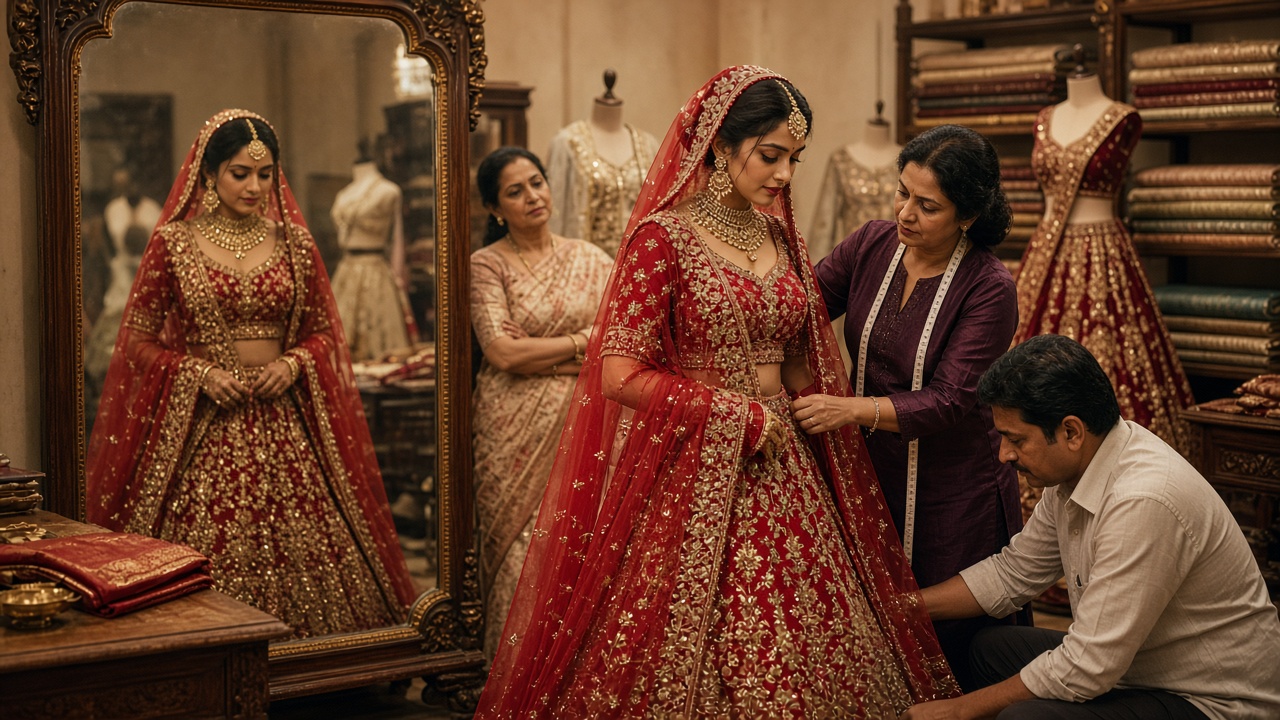
From the 1980s Indian fashion designers turned bridal wear into couture, reviving old crafts in new cuts. After 1991 rising incomes, satellite TV, and blockbuster wedding films made the heavily embroidered designer lehenga a dream outfit, and weddings grew to include several ceremonies and outfits.
A designer and tailor fit a bride’s embroidered lehenga (artistic illustration).
1980s: Designers such as Ritu Kumar (working since the late 1960s), Abu Jani–Sandeep Khosla (1986), and Tarun Tahiliani (whose Ensemble boutique opened in 1987) bring craft-rich couture to brides.
1986: The National Institute of Fashion Technology (NIFT) is founded in New Delhi, training a new generation of designers.
1990s: Wedding films such as Hum Aapke Hain Koun (1994) and Dilwale Dulhania Le Jayenge (1995) set bridal trends, and designer lehengas become the dream outfit.
1998: The Fashion Design Council of India (FDCI) is founded; “big fat weddings” add mehendi, sangeet, and reception outfits.
Technology
Couture tailoring: Made to measure.
Craft revival: Chikankari, gota, zardozi.
New fabrics: Net, crepe, velvet.
Features
Many outfits: One per ceremony.
Brand names: Designer labels.
Film influence: Screen to wedding.
🔁 Rental2000 – 2019
Fashion Weeks & Rental Bridal
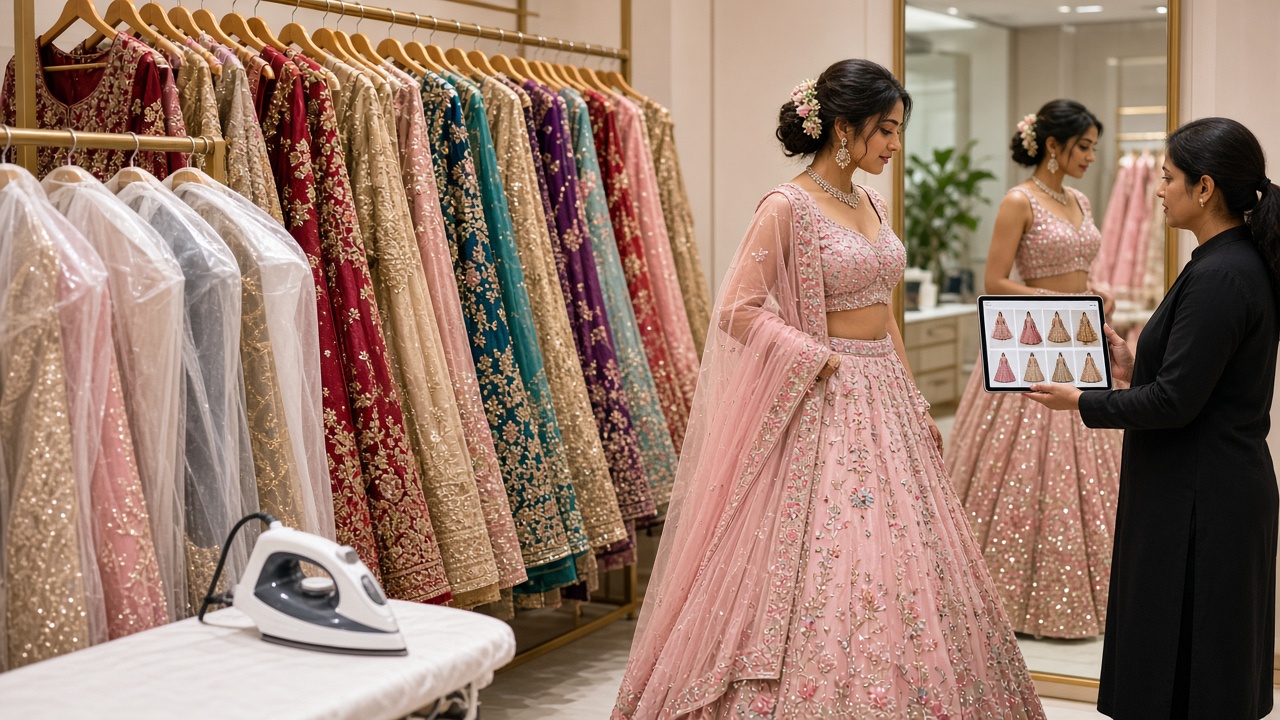
Fashion weeks and celebrity designers made bridal couture glamorous in the 2000s, but a lehenga costing lakhs was usually worn only once. Renting became the smart answer — first from local shops, then from online platforms — and Instagram brought pastel colours and destination weddings.
Renting lets brides wear designer lehengas for a fraction of the price (artistic illustration).
2000s: India’s fashion weeks begin (2000), and labels such as Sabyasachi (founded 1999) make handcrafted bridal couture aspirational; bridal fashion weeks follow later in the decade.
2000s: Rental shops in city markets offer bridal lehengas and sherwanis for a few days, saving families money on outfits worn once.
Around 2015: Online rental platforms let brides book designer lehengas with fitting, dry-cleaning, and delivery; renting often costs roughly 10–30% of the retail price.
2010s: Instagram, celebrity weddings, destination weddings, and pastel shades such as blush pink, peach, and mint change bridal style; lehengas are sold online.
Technology
Online booking: Browse and reserve.
Alterations: Adjustable fits.
Dry-cleaning: Ready for the next bride.
Features
Save money: Rent, don’t buy.
Designer looks: For more brides.
Pastel trend: Beyond red.
🌿 Sustainable2020s – Future
Sustainable Bridal Wear
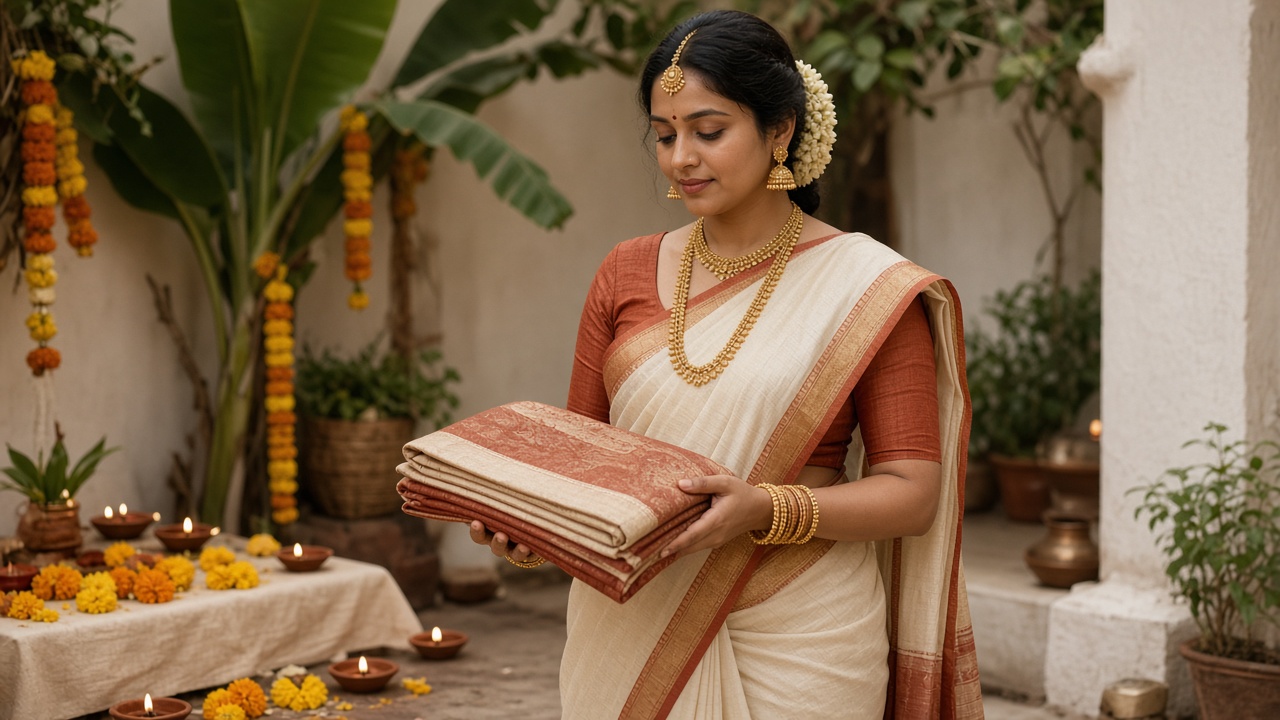
Small pandemic weddings and growing concern for artisans and the planet changed bridal choices in the 2020s. Many brides now wear their mother’s sari, upcycle old silks, choose handloom and natural dyes, rent or buy pre-loved outfits, and pick pieces they can wear again.
A bride in handloom and heirloom jewellery holds her mother’s wedding sari (artistic illustration).
2020–2021: COVID-19 limits on wedding guests lead to small, intimate weddings; many brides choose simpler handloom saris or family pieces.
2020s: Brides re-wear heirloom saris, upcycle old saris into lehengas, and buy pre-loved bridal wear; designers promote handloom, natural dyes, and slow fashion.
Trust labels: National Handloom Day (7 August, since 2015), GI tags such as Kanchipuram silk (2005), and the Silk Mark (2004) help buyers find genuine handwoven silk.
Future: Peace (ahimsa) silk, recycled zari, digital try-ons, and resale platforms aim to cut waste while keeping weavers in work.
Technology
Natural dyes: Plant-based colours.
Upcycling: Old saris, new outfits.
Silk Mark and GI tags: Proof of origin.
Features
Re-wear: Heirlooms return.
Support weavers: Buy handloom.
Less waste: Rent, resell, reuse.
Famous Bridal Silks & Crafts of India
Weave or craft
State
Known for
Kanjivaram (Kanchipuram) silk
Tamil Nadu
Heavy silk, korvai borders, temple motifs
Banarasi silk
Uttar Pradesh
Brocade with Mughal-style floral zari motifs
Paithani
Maharashtra
Peacock pallus and tapestry-like zari borders
Patan Patola
Gujarat
Double ikat, where both warp and weft are tie-dyed
Mysore silk
Karnataka
Light, smooth silk with pure zari
Muga silk
Assam
Natural golden silk for mekhela chadors
Baluchari
West Bengal
Pallus woven with scenes from epics
Pochampally ikat
Telangana
Bold geometric ikat patterns
Zardozi
Uttar Pradesh, Telangana
Metal-thread embroidery on lehengas
Gota patti
Rajasthan
Gold and silver ribbon appliqué
Chikankari
Uttar Pradesh
Delicate white-thread embroidery from Lucknow
Regional Brides of India
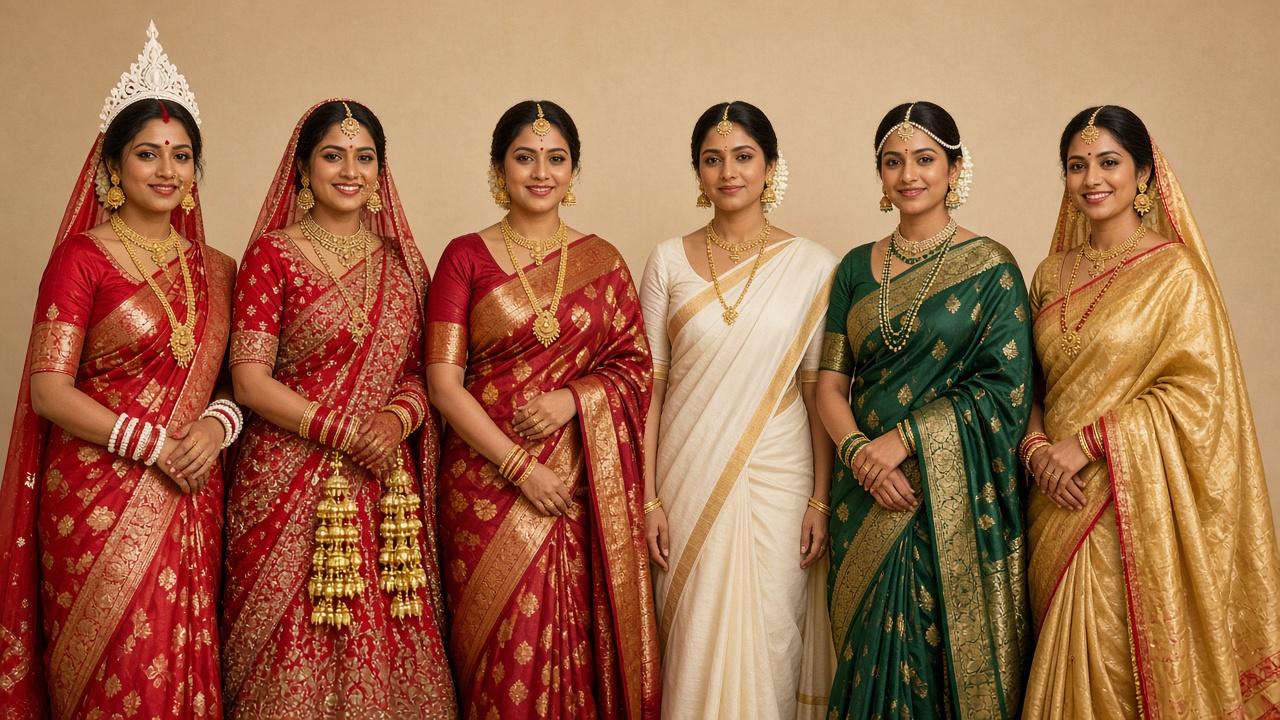
Bengali, Punjabi, Tamil, Kerala, Maharashtrian, and Assamese brides (artistic illustration).
Region
Traditional bridal outfit
Signature details
Punjab
Red lehenga or salwar suit
Red-and-white chooda bangles, kalire
Bengal
Red Banarasi sari
Shakha-pola bangles, shola-pith mukut
Tamil Nadu
Kanjivaram silk sari (nine-yard in some communities)
Temple jewellery, jasmine
Kerala
Kasavu sari or Kanjivaram
Off-white and gold, gold jewellery
Maharashtra
Paithani or nauvari sari
Mundavalya forehead string, green bangles
Gujarat
Panetar and gharchola saris
White-and-red panetar, bandhani
Rajasthan
Lehenga or poshak with odhni
Gota patti, leheriya, borla
Assam
Muga silk mekhela chador
Golden silk, traditional gold jewellery
Andhra Pradesh and Telangana
Pelli cheera (white sari with red border) and silk saris
Basikam forehead ornament
Hyderabad and Lucknow
Gharara, sharara, or khada dupatta
Zardozi, chikankari, gota
Customs vary widely between communities, religions, and families within each region.
Buy, Rent, or Re-wear? Bridal Choices Compared
Choice
Cost
Times worn
Impact
New designer lehenga
High — often lakhs of rupees
Often once
New materials; may be stored unused
New handloom silk sari
Medium to high
Many times; can be handed down
Supports weavers; long-lasting
Rented outfit
Low — a fraction of retail
Once per bride, many brides
One outfit serves many weddings
Heirloom sari
Free or small restoration cost
Across generations
No new production; family memories
Upcycled outfit
Low to medium (tailoring)
New life for old fabric
Reuses precious silk and zari
Pre-loved (resale)
Low to medium
Second or third wear
Keeps outfits in use longer
Costs vary hugely by city, designer, fabric, and the amount of real zari or embroidery.
Bridal Wear Timeline Summary
Year / Era
Milestone
Ancient times
Handwoven silk and cotton; gold-thread cloth
Medieval period
Kanchipuram and Paithan grow as silk centres
Mughal era
Banarasi brocades and zardozi flourish
1905
Swadeshi movement promotes Indian cloth
1935
Co-optex weavers’ cooperative, Tamil Nadu
1950s
Kanjivaram and Banarasi silk brides
1952
All India Handloom Board
1970s
Tested and imitation zari spread
Early 1980s
Red lehenga-choli popularised by films
1986
NIFT founded; designer bridal couture grows
1994–1995
Wedding films set bridal trends
1998
Fashion Design Council of India
2000
Indian fashion weeks begin
2004
Silk Mark launched
2005
GI tag for Kanchipuram silk
Around 2015
Online bridal rental platforms
2015
First National Handloom Day (7 August)
2010s
Pastel and destination-wedding brides
2020–2021
Small pandemic weddings
2020s
Heirloom, upcycled, and handloom bridal wear
Test Your Knowledge
20 quick questions from the bridal wear timeline. Click each question to reveal the answer.
Answer: Tamil Nadu.
Answer: Interlocking a contrasting border and body of a Kanjivaram sari by hand.
Answer: Varanasi (Banaras).
Answer: Fine silver thread coated with gold.
Answer: Surat.
Answer: Rich metal-thread embroidery that flourished under the Mughals.
Click any panel to expand and explore the visual mood.
India’s bridal wear journey in pictures — handloom weaving, 1950s Kanjivaram brides, zardozi workshops, 1990s designer lehengas, bridal rentals, sustainable brides, regional brides, and then versus now.
Handloom Silk
Woven by hand
1950s Kanjivaram
Silk and gold
Zari & Zardozi
Threads of gold
Designer Lehenga
Couture brides
Rental Bridal
Wear, return, repeat
Sustainable Bride
Handloom and heirloom
Regional Brides
Many traditions
Then vs Now
Kanjivaram to handloom
Explore all daily life timelines
Jump to any other daily life timeline on WorldTimelineHub.
Disclaimer: This content is AI-generated for educational purposes and may contain errors or outdated details. For correct and authoritative information, please refer to official and reliable sources such as government publications, manufacturers, museums, and academic references.