Festivals Timeline of India: Community → Family → Cards → SMS → Social Media → Virtual
In the 1950s festivals belonged to the whole mohalla — Ramlilas, pandals, and melas funded by neighbours, with sweets carried from door to door. By the 1980s families celebrated more at home and posted
colourful greeting cards, the 2000s brought floods of festival SMS, the 2010s moved wishes to WhatsApp and selfies, and in the 2020s aartis, pandal tours, and family pujas went live on screens.
This timeline covers harvest festivals and temple utsavs, the Kumbh Mela, public Ganeshotsav and barowari Durga Puja, national festivals, mohalla Ramlilas, postcards and greetings telegrams, greeting
cards, Doordarshan specials, festival SMS and e-cards, WhatsApp forwards, online festive sales, green crackers, UNESCO heritage festivals, and virtual pujas.
1950s Community → 1980s Cards2000s SMS → 2010s Social Media2020s Virtual Pujas
Why the Festivals Story Matters
Festivals are when Indian families, neighbours, and whole towns come together. How we celebrate them — in a village mela, a mohalla pandal, a living room with greeting cards, or on a video call —
shows how our homes, cities, technology, and relationships have changed. The journey from walking to a neighbour’s house with sweets to sending a WhatsApp greeting in seconds is also the story of India’s communication revolution.
Big picture
India’s festival journey in one view
Ancient festivals followed the harvest and the temple calendar, and in colonial times public Durga Pujas and Ganeshotsavs brought communities together. After independence festivals were shared by
whole neighbourhoods, city families celebrated more at home with greeting cards and television from the 1970s, SMS and e-cards spread wishes in the 2000s, social media took over in the 2010s, and the pandemic made virtual pujas common. Related timelines:
postal service,
telecom,
television.
1893
Public Ganeshotsav begins
1979
Archies greeting cards start
1995
First mobile call opens the SMS era
2020
Aartis and pujas go live online
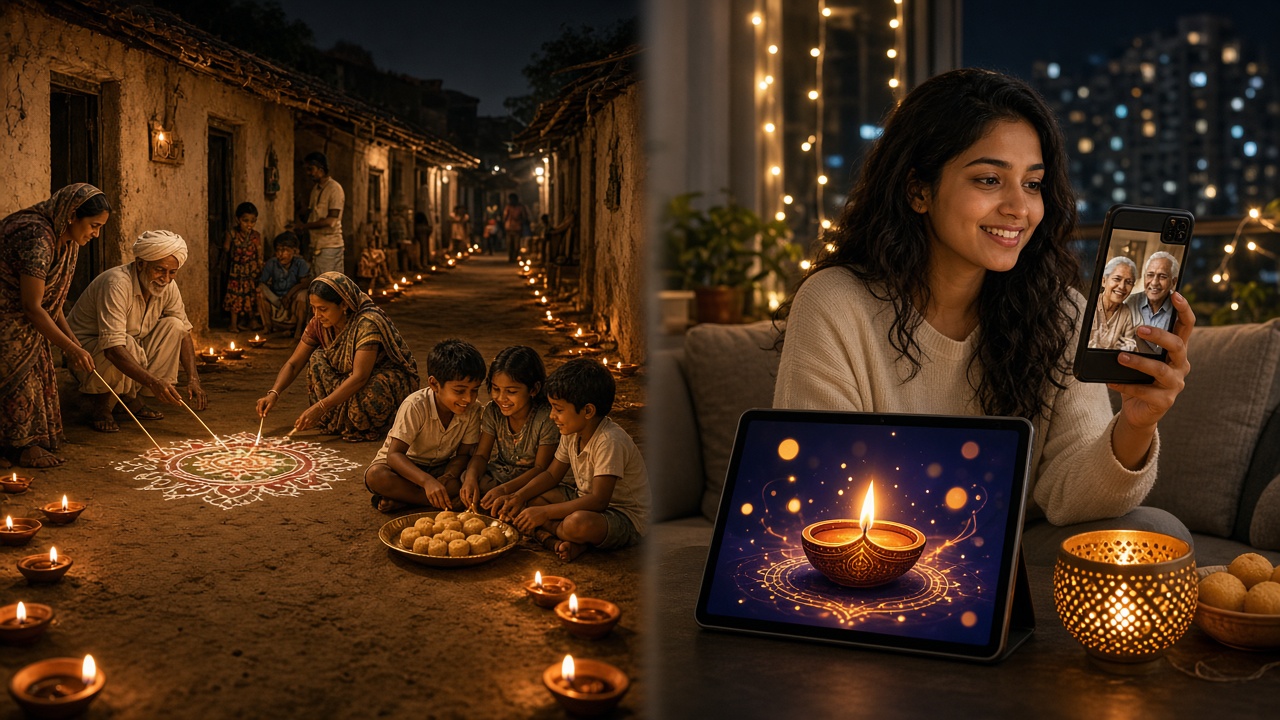
From lighting diyas together in the lane to wishing grandparents on a video call (artistic illustration).
Indian Festivals Then vs Now at a Glance
Feature
Then
Now
Who celebrated
The whole village or mohalla
Family, friends, and online groups
Greetings
Visits, postcards, and cards
WhatsApp, reels, and video calls
Gifts
Home-made sweets
Mithai boxes, hampers, and online orders
Lights
Clay diyas and oil lamps
LED strings and electric diyas
Decorations
Rangoli, mango leaves, and flowers
Ready-made décor and stickers
Shopping
Local fairs and bazaars
Online festive sales
Entertainment
Ramlila, melas, and folk dances
TV specials, concerts, and streaming
Worship
At home, temple, or pandal
Also live-streamed and online darshan
Photos
A rare studio photo
Hundreds of selfies
Environment
Natural colours and clay idols
A return to green crackers and eco-friendly idols
🪔 MelasAncient – 1946
Harvest Festivals, Melas & Public Utsavs
For thousands of years festivals followed the farming year and the temple calendar. Villages celebrated the harvest, pilgrims gathered in their lakhs at river melas, and royal courts held grand celebrations. In colonial times community-funded pujas and public Ganeshotsav turned private festivals into public events that also carried nationalist ideas.
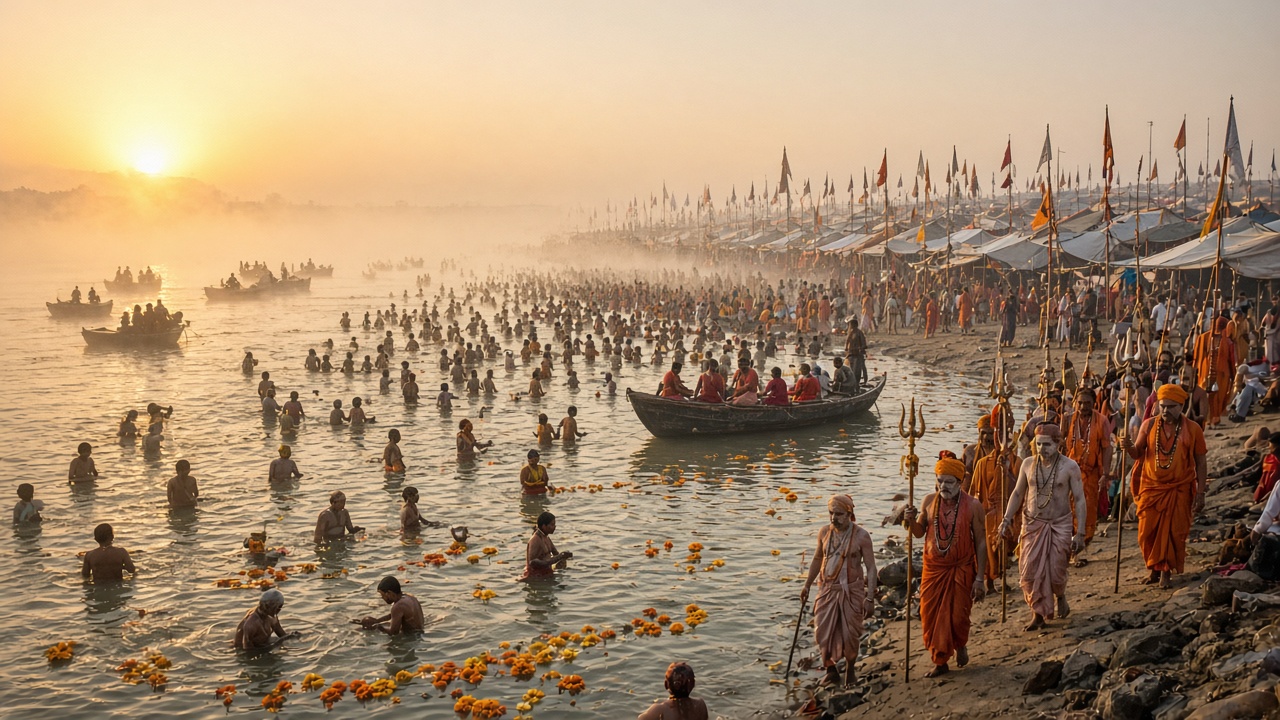
Pilgrims and sadhus at the Kumbh Mela at sunrise (artistic illustration).
Ancient times: Harvest festivals such as Pongal, Makar Sankranti, Onam, Bihu, and Baisakhi mark the farming year, and temples hold chariot festivals.
7th century: Xuanzang describes a great assembly of pilgrims at Prayag in 644 CE, often linked with the Kumbh Mela, and King Harsha’s play Ratnavali describes spring colour celebrations like Holi.
1500s–1700s: Mughal courts celebrate Diwali and Holi, which they call Eid-e-Gulabi, and Christmas is celebrated in Portuguese Goa.
1790–1893: Twelve friends at Guptipara start the first barowari (community-funded) Durga Puja (1790), the postcard arrives in India (1879), and Bal Gangadhar Tilak makes Ganeshotsav a public festival (1893).
Technology
Clay diyas: Oil-lamp lighting.
Temple chariots: Rath processions.
Postcards: Written wishes from 1879.
Features
Harvest calendar: Seasons set the dates.
River melas: Pilgrims in lakhs.
Public utsavs: Open to all.
🏘️ Community1947 – 1969
Community Celebrations & Mohalla Pandals
After independence festivals were shared by the whole neighbourhood. Mohalla committees collected chanda to stage Ramlilas and build pandals, families carried sweets to neighbours of every faith, villages held melas with giant wheels and folk dances, and the new nation added Republic Day and Independence Day to its festival calendar.
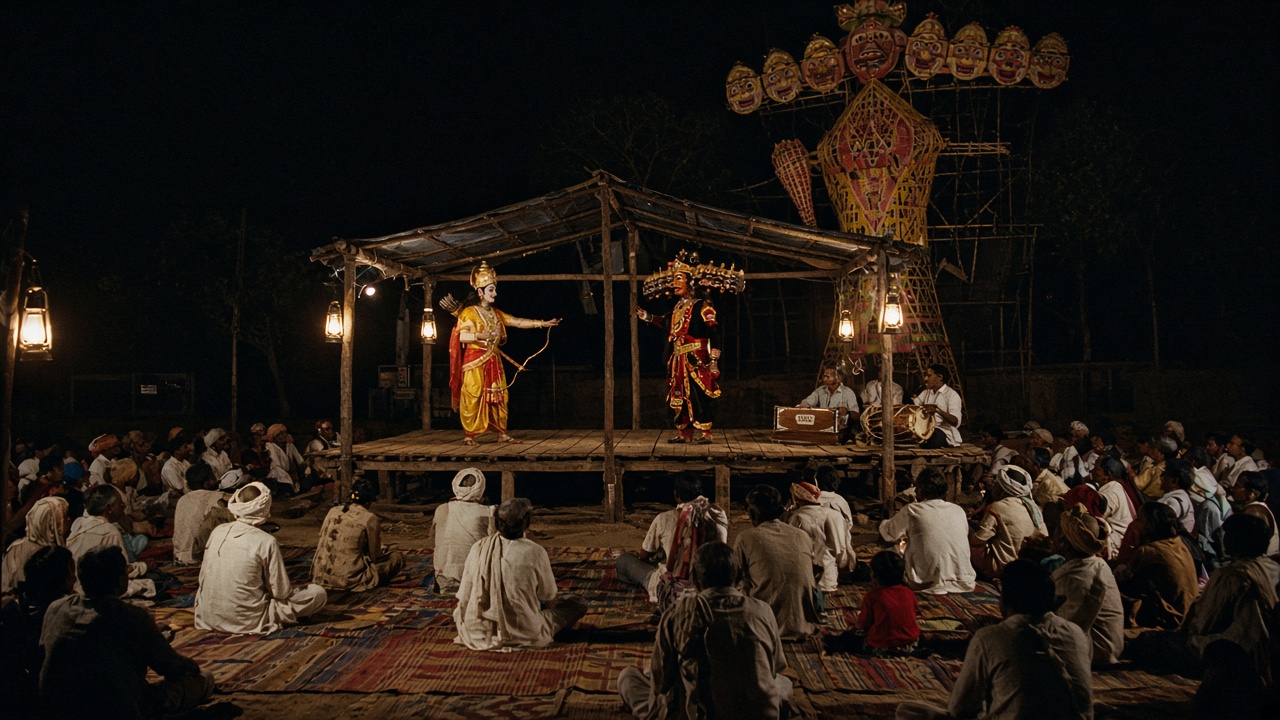
The whole mohalla watches the Ramlila before Dussehra (artistic illustration).
1950: The first Republic Day parade is held on 26 January; Republic Day, Independence Day, and Gandhi Jayanti become national festivals in every school and village.
1950s: Mohalla committees stage Ramlilas and build Durga Puja pandals and Ganesh mandals with public donations, and village melas mark harvest festivals.
1957: All India Radio’s Vividh Bharati broadcasts festival songs and special programmes, and Hindi films add famous Holi and Diwali songs.
1950s–1960s: Wishes travel by postcards, inland letters, and greetings telegrams, and neighbours share sweets at Diwali, Eid, Christmas, and Gurpurab.
Technology
Petromax lanterns: Lighting stages.
Loudspeakers: Pandal announcements.
Radio: Festival programmes.
Features
Chanda: Neighbours fund pandals.
Sweets exchange: Door to door.
Village melas: Fairs and folk dance.
💌 Cards1970 – 1994
Family Celebrations & Greeting Cards
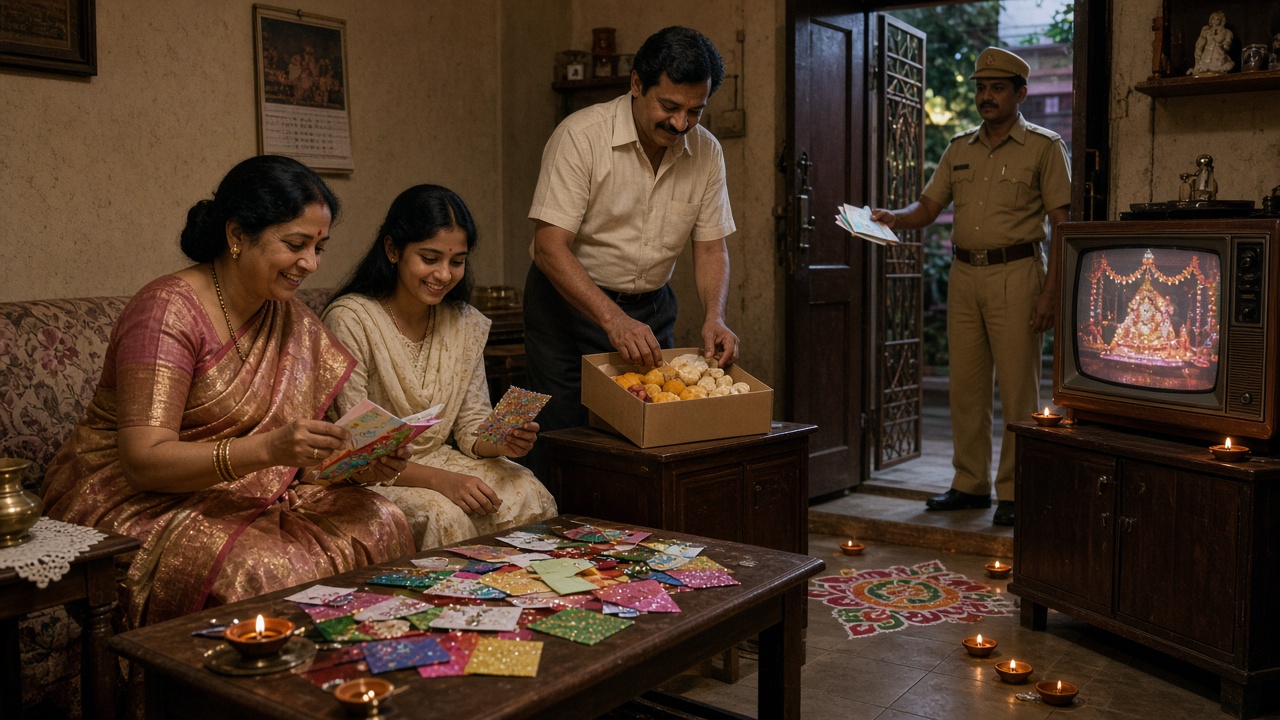
As more families moved to cities and flats, festivals became more family-centred. Printed greeting cards with glitter and verses arrived by post, mithai and dry-fruit boxes became the standard gift, colour television brought festival specials into living rooms, and relatives phoned from STD booths.
Greeting cards, a mithai box, and a festival special on colour TV (artistic illustration).
1970s: City families celebrate more at home in smaller groups; mithai and dry-fruit boxes become the usual festival gift, and Sivakasi supplies most firecrackers.
1979: Archies starts in Delhi, and printed cards for Diwali, Eid, Christmas, New Year, and Raksha Bandhan become a craze alongside UNICEF and handmade cards.
1982–1987: Colour television arrives (1982), Doordarshan shows festival specials and the Republic Day parade live, and families call relatives from STD booths.
Late 1980s–1994: Cassettes of bhajans and festival songs spread, electric serial lights join clay diyas, and rakhis travel to brothers by post.
Technology
Printed cards: Glitter and verses.
Colour TV: Festival specials.
STD booths: Long-distance wishes.
Features
Family at home: Smaller gatherings.
Card displays: On the mantelpiece.
Mithai boxes: Standard gifts.
📱 SMS1995 – 2009
Festival SMS, E-Cards & Live TV
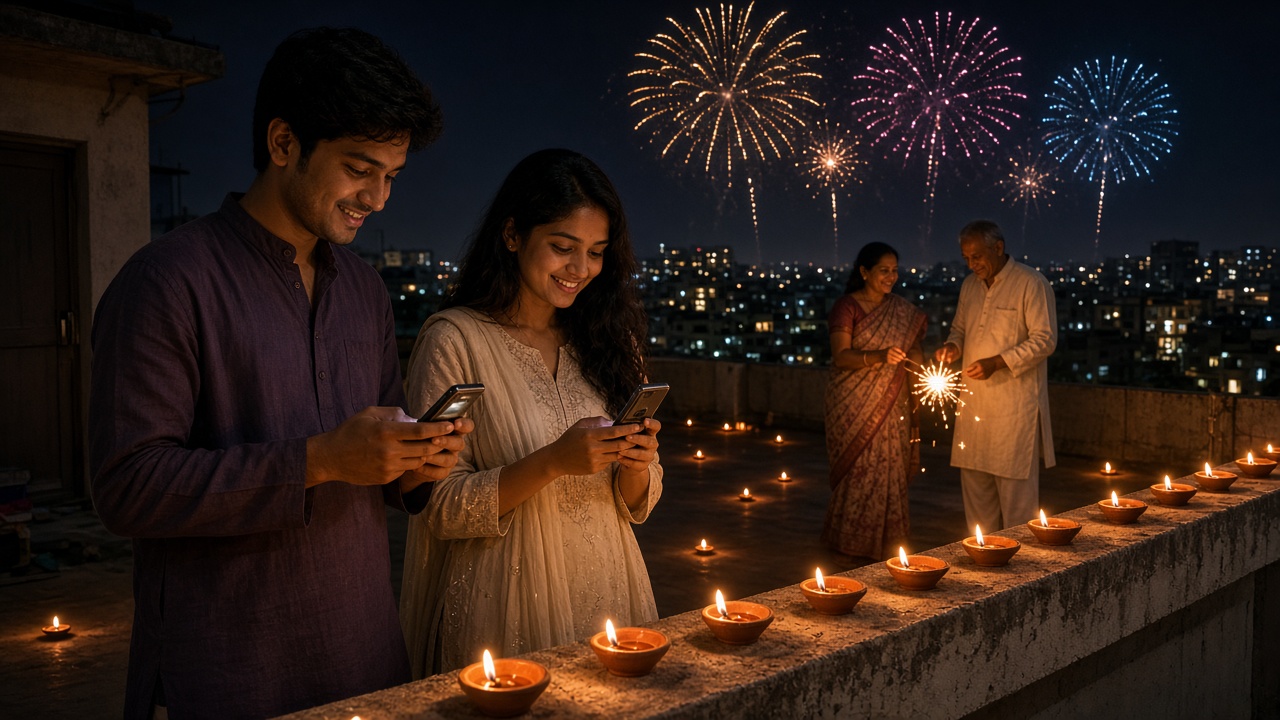
Mobile phones turned greetings into instant messages. At midnight on New Year’s Eve and on Diwali and Eid, millions of rhyming SMS wishes jammed networks, families abroad sent animated e-cards, and TV channels telecast aartis, Ganesh visarjan, and fireworks live.
Typing Diwali SMS wishes on the terrace as fireworks light the sky (artistic illustration).
1995: India’s first mobile phone call is made on 31 July, and within a few years festival greetings begin to travel by SMS.
Late 1990s–2000s: E-card websites and e-mail greetings let families in India and abroad exchange animated cards instantly.
2000s: SMS floods on Diwali, Eid, and New Year’s Eve jam networks, operators declare “blackout days” when free SMS packs do not apply, and bhajan caller tunes become popular.
2004–2008: Orkut scraps carry festival wishes, TV channels telecast aartis and Ganesh visarjan live, and UNESCO lists the Ramlila as world heritage (2008).
Technology
SMS: 160-character wishes.
E-cards: Animated greetings.
Caller tunes: Festive ringback songs.
Features
Forwards: Rhyming shayari.
Blackout days: Full SMS charges.
Live telecasts: Festivals on TV.
🤳 Social Media2010 – 2019
Social Media, Selfies & Green Festivals
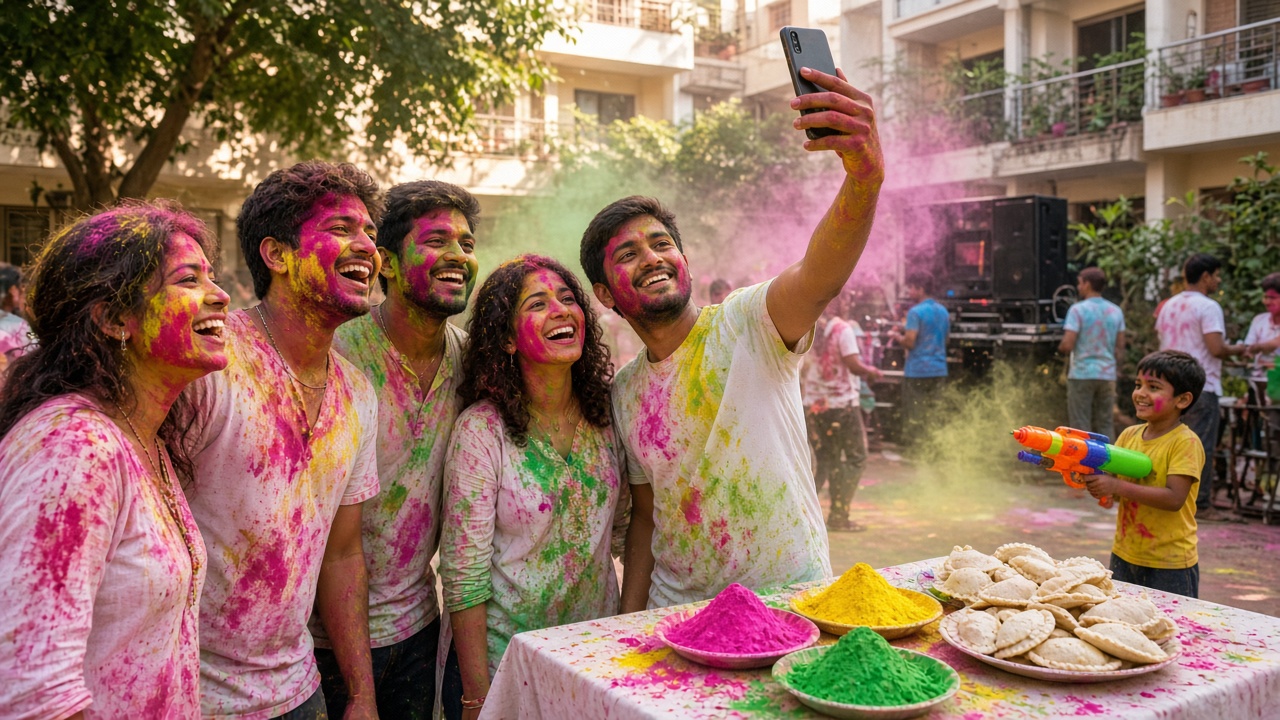
Smartphones and cheap data made every festival a photo and video event. WhatsApp forwards, Facebook posts, and Instagram stories replaced cards, online stores ran huge festive sales, and worries about pollution led to green crackers, clay idols, and natural colours.
The Holi group selfie, ready to share in seconds (artistic illustration).
2010s: WhatsApp forwards, Facebook posts, and Instagram stories replace cards, with festival stickers, GIFs, and group video calls.
2014–2016: Flipkart’s Big Billion Day (2014) launches huge online festive sales, and cheap 4G data after 2016 brings festival selfies and video calls to small towns.
2017–2018: UNESCO lists the Kumbh Mela (2017), Ayodhya’s Deepotsav begins (2017), and the Supreme Court allows only green crackers at fixed times in Delhi-NCR (2018).
2010s: Clay Ganesh idols, green Diwali campaigns, natural Holi colours, online puja bookings, and prasad delivery grow.
Technology
WhatsApp: Group greetings.
Smartphone cameras: Selfies and reels.
E-commerce: Festive sales.
Features
Instant sharing: Photos in seconds.
Green festivals: Less pollution.
Online gifting: Doorstep delivery.
💻 Virtual2020s – Future
Virtual Pujas & Hybrid Celebrations
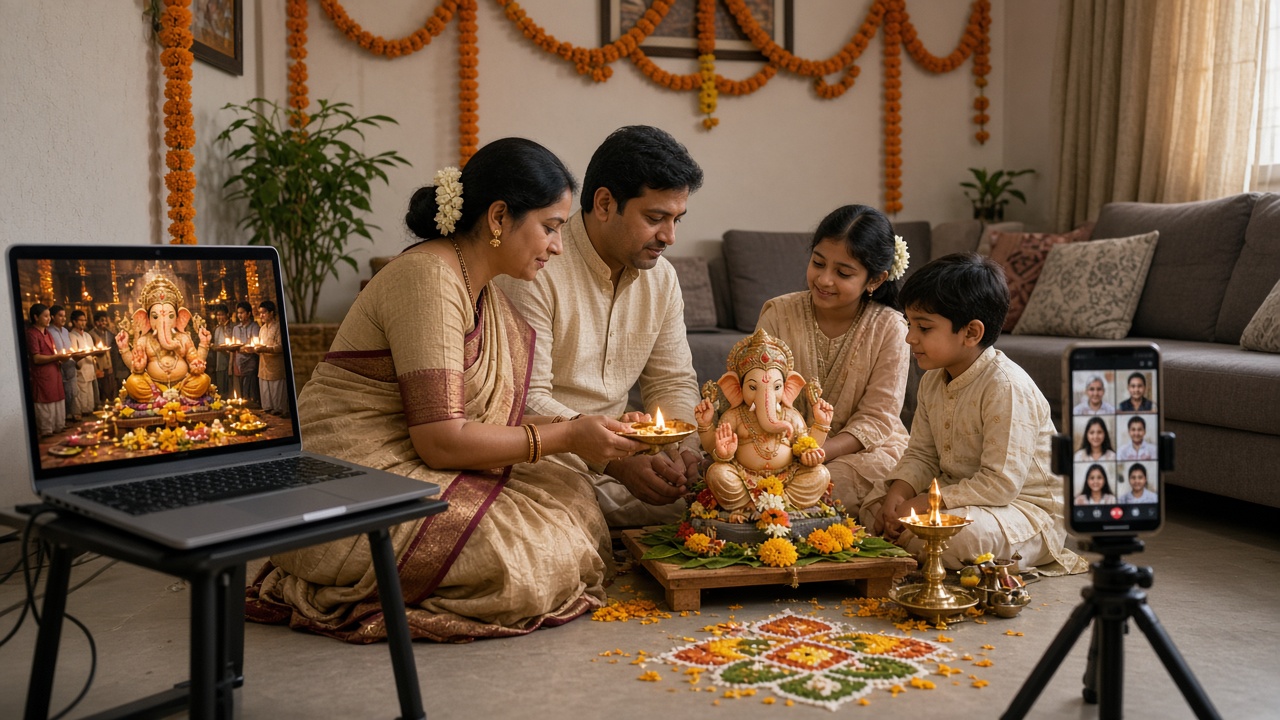
The pandemic moved festivals onto screens. Temples live streamed aartis, pandals offered virtual tours, and families held pujas with relatives joining by video call. Even after crowds returned, online darshan, digital greetings, and live streams stayed — alongside record-breaking mass celebrations managed with apps and drones.
A home Ganesh puja with a live temple aarti and relatives on video call (artistic illustration).
2020–2021: The pandemic moves Ganeshotsav, Durga Puja, Eid, Christmas, and Diwali indoors, with live-streamed aartis, virtual pandal tours, and family pujas on video calls.
2021–2023: UNESCO recognises Durga Puja in Kolkata (2021) and the Garba of Gujarat (2023) as intangible cultural heritage.
2024–2025: Ayodhya’s Deepotsav sets a world record for oil lamps lit (2024), and the Maha Kumbh at Prayagraj (January–February 2025) uses apps, AI cameras, and drones to manage huge crowds.
Future: AR filters, metaverse pandals, drone light shows instead of fireworks, AI-made greetings, and hybrid in-person and online family celebrations.
Technology
Live streaming: Aartis and pandals.
Drones: Light shows and crowd control.
Apps: Online darshan booking.
Features
Hybrid family: In person and online.
Virtual tours: Pandals from home.
Heritage pride: UNESCO festivals.
India’s Festival Calendar
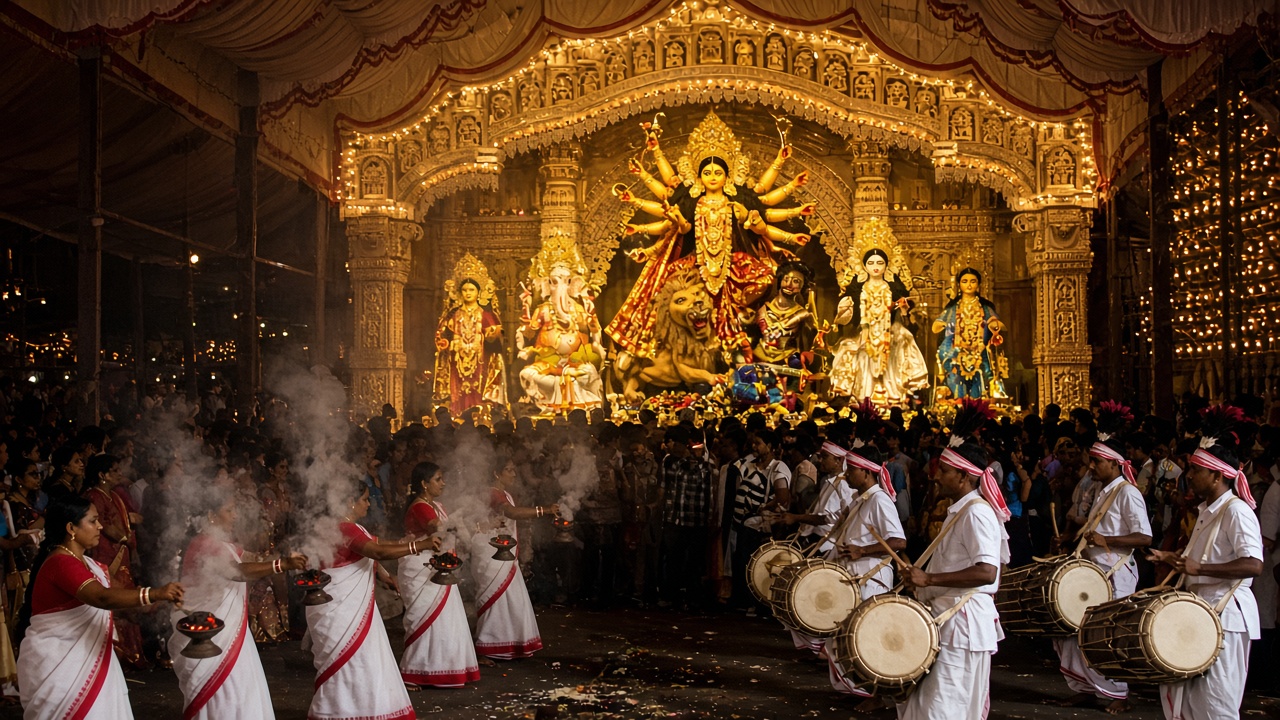
Dhunuchi dance and dhak drums at a Durga Puja pandal (artistic illustration).
Many festival dates follow lunar or solar calendars, so the months below are approximate and change each year.
Festival
Usual month
Where / how celebrated
Makar Sankranti, Pongal, Lohri, Bihu
January
Harvest festivals with kites, bonfires, and new rice
Republic Day
26 January
National parade and flag hoisting
Holi
March
Colours, gujiya, and bonfires across North India
Baisakhi, Vishu, Puthandu, Bohag Bihu
April
New year and harvest in many regions
Eid al-Fitr
Varies (lunar)
Prayers, sheer khurma, and Eidi gifts
Rath Yatra
June–July
Chariot festival in Puri, Odisha
Raksha Bandhan
August
Sisters tie rakhis on brothers
Onam
August–September
Pookalam, sadya feast, and boat races in Kerala
Ganesh Chaturthi
August–September
Public mandals, especially in Maharashtra
Navratri, Durga Puja, Dussehra
September–October
Garba, pandals, and Ravana effigies
Diwali and Chhath
October–November
Diyas and sweets; sun worship in Bihar
Christmas
25 December
Church services, cakes, and stars, especially in Goa, Kerala, and the Northeast
How Festival Greetings Travelled
Medium
Era
How it worked
Personal visits
All eras
Walking to relatives and neighbours with sweets
Postcards and inland letters
1879 onwards
Hand-written wishes by post
Greetings telegrams
20th century–2013
Short standard messages sent by telegraph
Printed greeting cards
1970s–1990s peak
Glitter cards posted in envelopes
STD and landline calls
1980s–1990s
Long-distance calls on festival mornings
E-cards and e-mail
Late 1990s–2000s
Animated cards sent online
SMS
2000s
Rhyming wishes forwarded to everyone
WhatsApp and social media
2010s–now
Images, GIFs, stickers, and reels
Video calls and live streams
2020s
Celebrating together from different places
Indian Festivals on UNESCO’s Heritage List
Festival / tradition
Year listed
Region
Ramlila
2008
North India
Ramman festival
2009
Garhwal, Uttarakhand
Mudiyettu ritual theatre
2010
Kerala temple festivals
Navroz (shared with other countries)
2016
Parsi community
Kumbh Mela
2017
Prayagraj, Haridwar, Ujjain, Nashik
Durga Puja in Kolkata
2021
West Bengal
Garba of Gujarat
2023
Gujarat
Festivals Timeline Summary
Year / Era
Milestone
Ancient times
Harvest and temple festivals
644 CE
Xuanzang describes the assembly at Prayag
1500s–1700s
Mughal Diwali and Holi; Christmas in Goa
1790
First barowari Durga Puja, Guptipara
1879
Postcards arrive in India
1893
Tilak’s public Ganeshotsav
1950
First Republic Day parade
1950s
Mohalla Ramlilas, pandals, and melas
1957
Vividh Bharati festival programmes
1979
Archies greeting cards begin
1982
Colour TV festival specials
1995
First mobile phone call in India
2000s
Festival SMS floods and blackout days
2008
Ramlila on UNESCO list
2010s
WhatsApp greetings and selfies
2014
Big Billion Day online festive sale
2017
Kumbh Mela on UNESCO list; Ayodhya Deepotsav
2018
Green crackers ruling
2020–2021
Live-streamed and virtual pujas
2021
Durga Puja on UNESCO list
2023
Garba on UNESCO list
2024
Deepotsav oil-lamp world record
2025
Maha Kumbh with apps and drones
Future
AR, metaverse pandals, and drone shows
Test Your Knowledge
20 quick questions from the festivals timeline. Click each question to reveal the answer.
Answer: Any two of Pongal, Makar Sankranti, Lohri, Bihu, Onam, and Baisakhi.
Answer: Xuanzang (Hiuen Tsang).
Answer: Eid-e-Gulabi.
Answer: “Of twelve friends” — a community-funded puja.
Answer: Lokmanya Bal Gangadhar Tilak.
Answer: 1879.
Answer: Republic Day, Independence Day, and Gandhi Jayanti.
Answer: Donations collected from neighbours to fund pandals and events.
Answer: Vividh Bharati of All India Radio.
Answer: Archies.
Answer: Sivakasi.
Answer: 1982.
Answer: 31 July 1995.
Answer: Festival days when free SMS packs did not apply and every message was charged.
Answer: 2008.
Answer: Firecrackers that produce less smoke and pollution.
Answer: 2017.
Answer: By live streaming aartis and offering online darshan.
Answer: Durga Puja.
Answer: Garba.
Classroom activity
Students Tasks
Use these prompts for discussion or projects on how Indians have celebrated and shared festivals over time.
Timeline understandingUnity in diversityCommunication historyEnvironment
Interview a grandparent about how they celebrated Diwali, Eid, Christmas, or another festival as children.
Make a timeline poster: community (1950s), family (1970s), cards (1980s), SMS (2000s), social media (2010s), and virtual (2020s).
Make a handmade greeting card and post it to a relative, then compare it with sending a WhatsApp message.
Create a festival calendar for your class listing one festival of every religion and region.
Find out how one festival is celebrated differently in two states of India.
Collect old greeting cards or festival photos at home and arrange them by decade.
Plan a green festival: clay idols, natural colours, no plastic, and less noise.
Watch a live-streamed aarti or pandal tour and write about how it felt compared with being there.
Research one Indian festival on UNESCO’s heritage list and present its history.
Debate: “Festivals were more joyful before social media.”
Continue exploring
Festival greetings travelled by post, telephone, television, and the internet. Explore these connected timelines next.
Click any panel to expand and explore the visual mood.
India’s festival journey in pictures — the Kumbh Mela, the mohalla Ramlila, Durga Puja’s dhunuchi dance, 1980s greeting cards, Diwali SMS, the Holi selfie, a virtual Ganesh puja, and then versus now.
Kumbh Mela
A holy dip at sunrise
Ramlila
The whole mohalla watches
Durga Puja
Dhak and dhunuchi
Greeting Cards
Glitter by post
Festival SMS
Wishes at midnight
Holi Selfie
Colours on social media
Virtual Puja
Aarti on the screen
Then vs Now
Lane diyas to video calls
Explore all daily life timelines
Jump to any other daily life timeline on WorldTimelineHub.
Disclaimer: This content is AI-generated for educational purposes and may contain errors or outdated details. For correct and authoritative information, please refer to official and reliable sources such as government publications, manufacturers, museums, and academic references.