Grocery Shopping Timeline of India: Weekly Mandi → Kirana Store → Supermarket → Online Grocery
In the 1950s families carried cloth bags to the weekly mandi and bargained over vegetables weighed on brass balances. By the 1980s the neighbourhood kirana, with its credit notebook, supplied
almost everything, supermarkets and trolleys arrived in the 2000s, online grocery and UPI grew in the 2010s, and in the 2020s apps such as Blinkit and Zepto deliver milk and bread in about ten minutes.
This timeline covers village haats and city bazaars, bania shops and bahi-khatas, weekly mandis, ration shops and cooperative stores, the switch to kilograms, kirana stores and udhaar, packaged brands
and MRP labels, supermarkets and hypermarkets, online grocery, UPI and QR codes, dark stores, 10-minute delivery, and ONDC.
Buying food is the most regular shopping every family does. How Indians shop — at a weekly market, from a trusted kirana, in a supermarket aisle, or through a phone app — shapes neighbourhoods,
jobs, prices, and even what we eat. The journey from bargaining at the mandi to ten-minute delivery shows how roads, packaging, digital payments, and the internet changed everyday life.
Big picture
India’s grocery shopping journey in one view
For centuries Indians bought food at village haats, city bazaars, and bania shops. After independence weekly mandis, ration shops, and cooperatives fed growing towns, the kirana store became the
heart of every neighbourhood by the 1970s and 1980s, supermarket chains spread from the mid-1990s, online grocery and UPI grew in the 2010s, and quick commerce took off in the 2020s. Related timelines:
agriculture marketing,
Digital India,
banking.
1958
Metric weights replace seers and maunds
1966
Super Bazar cooperative store in Delhi
2001
First Big Bazaar hypermarket
2021
10-minute grocery delivery arrives
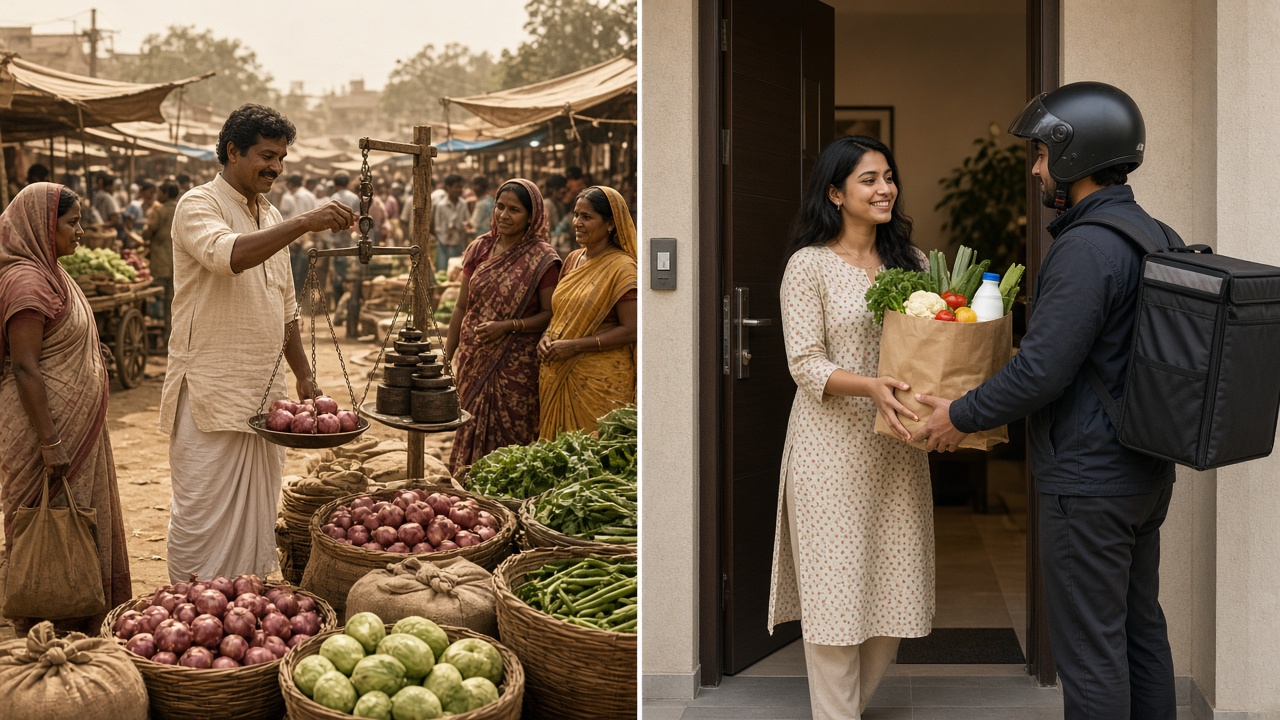
From bargaining at the weekly mandi to groceries delivered at the door (artistic illustration).
Grocery Shopping Then vs Now at a Glance
Feature
Then
Now
Where
Weekly mandi and local kirana
Supermarkets, apps, and kiranas
How often
Grain yearly, vegetables daily or weekly
Anytime, even at midnight
Goods
Loose, weighed on a balance
Packaged with MRP and expiry dates
Units
Tola, seer, and maund
Grams, kilograms, and litres
Price
Bargained face to face
Fixed prices, offers, and coupons
Payment
Cash, barter, or credit notebook
UPI, cards, and wallets
Carrying
Cloth bags and baskets
Home delivery
Choice
Local and seasonal produce
Thousands of brands, all year round
Relationship
Shopkeeper knew every family
Apps remember your past orders
Delivery time
Carry it home yourself
About 10 minutes in big cities
🌳 HaatsAncient – 1946
Haats, Bazaars & Bania Shops
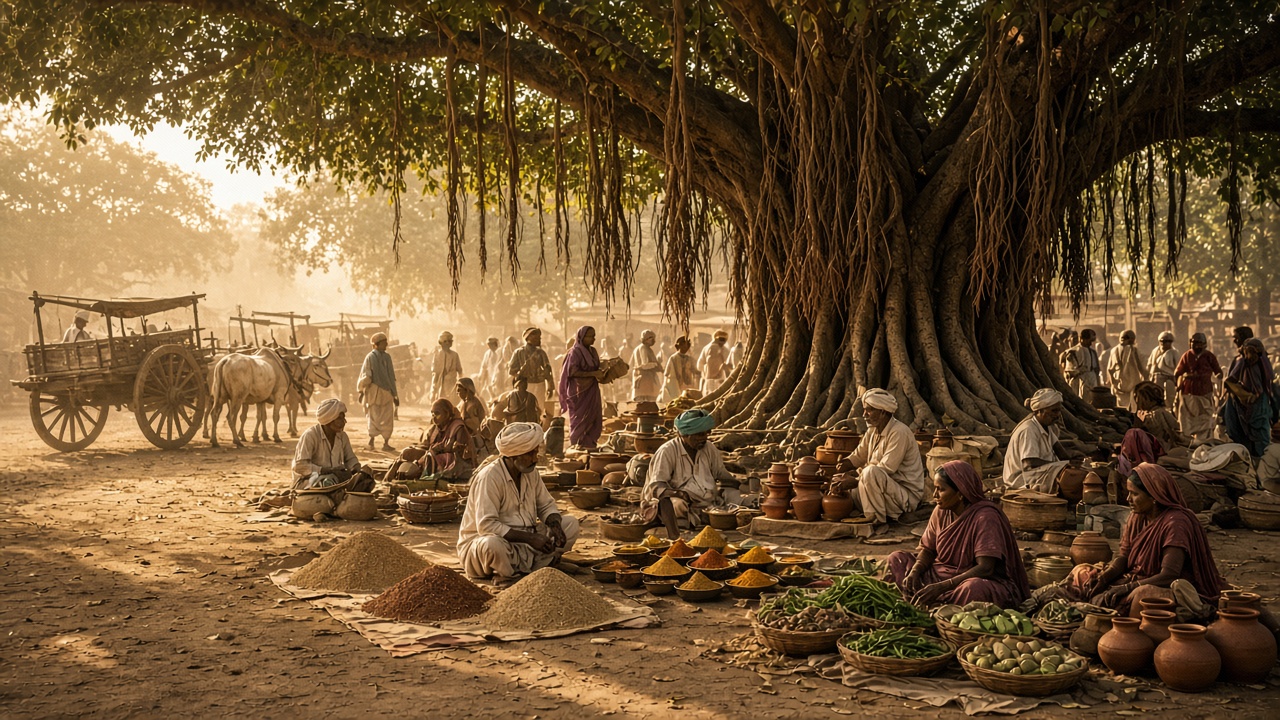
For most of history Indians bought food at periodic village haats, busy city bazaars, and small bania shops. Farmers sold grain and vegetables directly, prices were bargained, goods were measured in tolas, seers, and maunds, and trusted shopkeepers kept credit accounts in red cloth-bound ledgers called bahi-khatas.
Grain, spices, vegetables, and pots at a weekly haat under a banyan tree (artistic illustration).
c. 2600–1900 BCE: Harappan traders use standard stone weights, showing that goods were carefully weighed and traded.
c. 300 BCE onwards: The Arthashastra describes a superintendent of markets who checks weights, measures, and prices.
1650: Chandni Chowk in Delhi, designed by Jahanara, daughter of Shah Jahan, becomes one of India’s great bazaars.
1869–1874: Covered markets such as Crawford Market in Bombay (1869) and New Market in Calcutta (1874) open; rationing begins in cities during the Second World War in the 1940s.
Technology
Pan balances: Weights and scales.
Bahi-khata: Handwritten ledgers.
Bullock carts: Produce to market.
Features
Weekly market day: Shopping and socialising.
Bargaining: Prices by talk.
Direct from farmers: Local produce.
⚖️ Mandi1947 – 1969
Weekly Mandis & Ration Shops
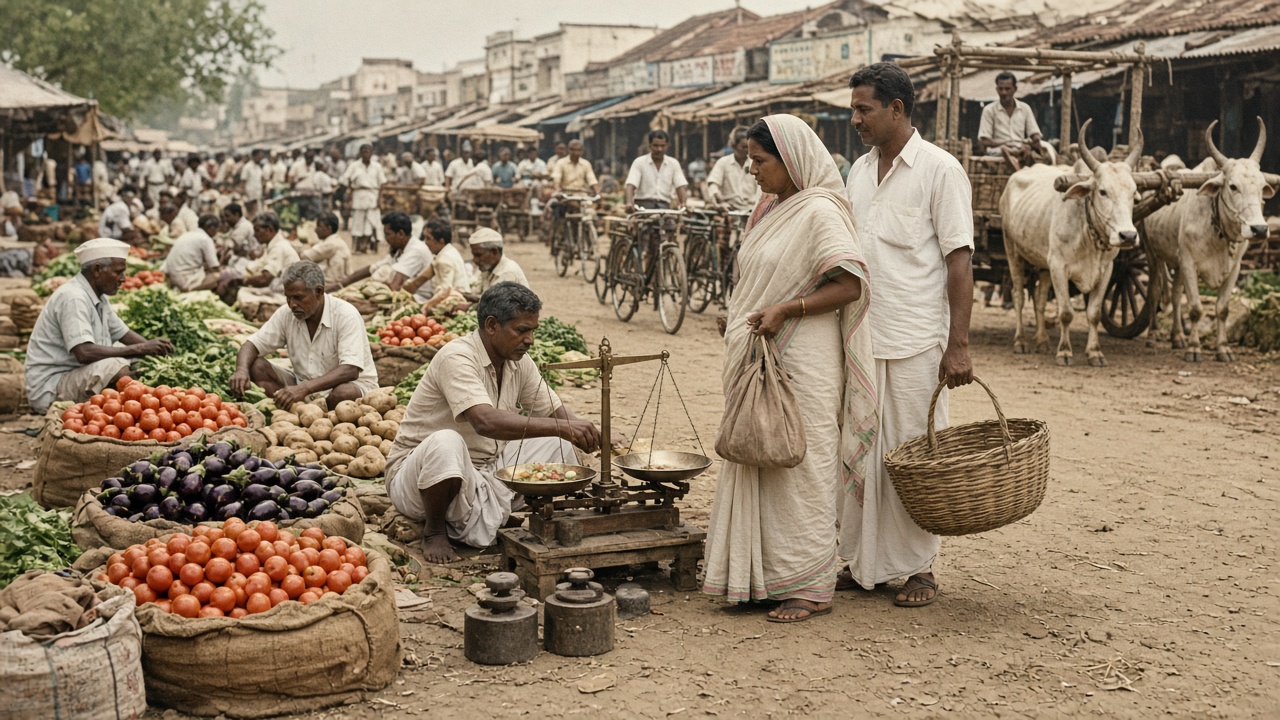
In the 1950s town families shopped at the weekly or daily vegetable mandi with cloth bags and baskets, bought a year’s wheat or rice after harvest to clean and store at home, collected rationed sugar and kerosene from fair-price shops, and bought milk from the doodhwala who came to the door.
Weighing vegetables on a brass balance at the weekly mandi (artistic illustration).
1948: Cooperative stores such as Apna Bazar in Bombay begin selling groceries at fair prices.
1958: India begins switching to the metric system on 1 October; kilograms and litres slowly replace seers and maunds in markets.
1960s: Ration shops of the Public Distribution System sell wheat, rice, sugar, and kerosene at controlled prices; the Food Corporation of India is set up in 1965.
1963–1966: Kendriya Bhandar (1963) and Delhi’s Super Bazar (1966) open cooperative stores, among India’s earliest self-service shops.
Technology
Metric weights: Kilograms from 1958.
Ration cards: Fixed monthly quotas.
Bicycles: Carrying shopping home.
Features
Yearly grain: Bought after harvest.
Doorstep sellers: Doodhwala and sabziwala.
Queues: At ration shops.
🏪 Kirana1970 – 1994
Kirana Stores & Packaged Brands
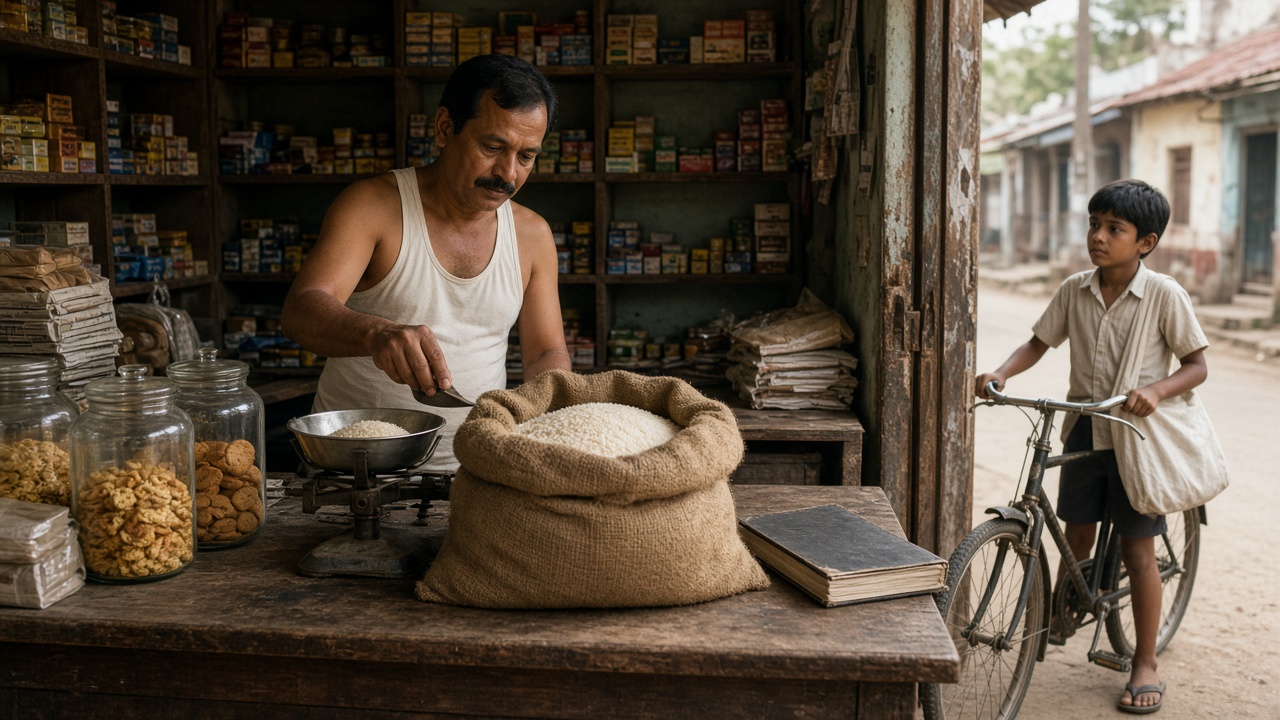
The neighbourhood kirana became every family’s grocery store. The shopkeeper weighed rice and dal from gunny sacks into newspaper bags, wrote udhaar in a notebook to be settled at month-end, and sent a boy on a cycle to deliver — while packaged brands, sachets, and printed prices slowly filled the shelves.
Rice weighed from the sack, the credit notebook on the counter (artistic illustration).
1970s: Kirana stores spread through every town and colony; families keep monthly accounts and phone or send a list for home delivery.
1974–1983: Mother Dairy’s milk booths (1974) change milk buying in Delhi, and packaged foods such as Maggi noodles (1983) arrive on kirana shelves.
1980s: Low-price sachets of shampoo, tea, and other products let families buy in small amounts; the Consumer Protection Act (1986) gives shoppers legal rights.
1990: Printing the maximum retail price (MRP) on packaged goods becomes compulsory, reducing overcharging.
Technology
Gunny sacks and bins: Loose staples.
Sachets: Small, cheap packs.
Landline orders: Call the kirana.
Features
Udhaar: Pay at month-end.
Free delivery: Boy on a cycle.
Personal trust: Shopkeeper knew you.
🛒 Supermarket1995 – 2009
Supermarkets & Hypermarkets
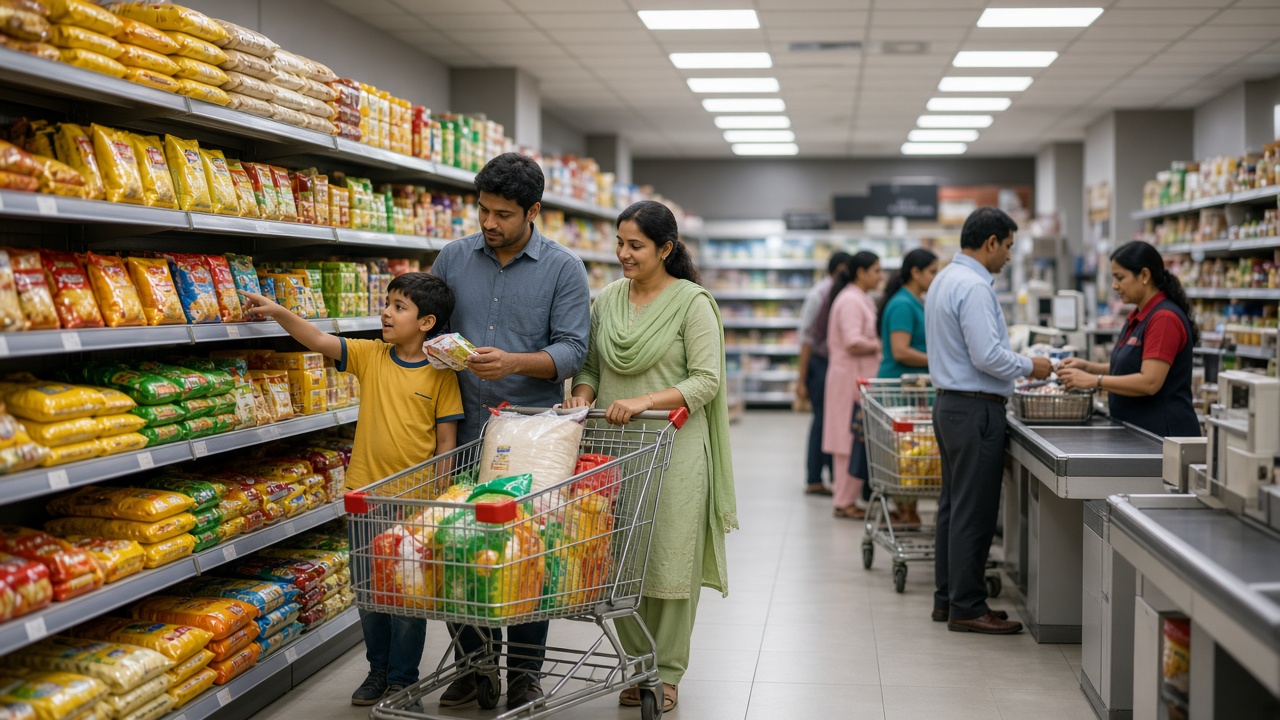
After liberalisation, air-conditioned supermarkets with trolleys, self-service aisles, and barcode checkouts arrived. Families began weekend “monthly shopping” trips for discounts and bulk packs, malls added food courts, and cards joined cash — though the kirana still served most daily needs.
The weekend monthly-shopping trip with a trolley (artistic illustration).
1996–1997: Foodworld (1996) and Subhiksha (1997) start modern grocery chains in Chennai.
2001–2002: Big Bazaar opens its first hypermarket in Kolkata (2001), promising prices lower than the market, and DMart opens in Mumbai (2002).
2006–2007: Reliance Fresh (2006) and More (2007) expand rapidly; traders protest in some states, fearing for small shops.
2000s: Barcodes, loyalty cards, and debit and credit cards become common in city stores; packaged atta, branded rice, and ready-to-eat foods grow.
Technology
Barcode scanners: Faster billing.
Card machines: Cashless payment.
Cold aisles: Frozen and dairy.
Features
Self-service: Pick it yourself.
Discounts: Buy one, get one.
Monthly shopping: Weekend trips.
💻 Online2010 – 2019
Online Grocery & Digital Payments
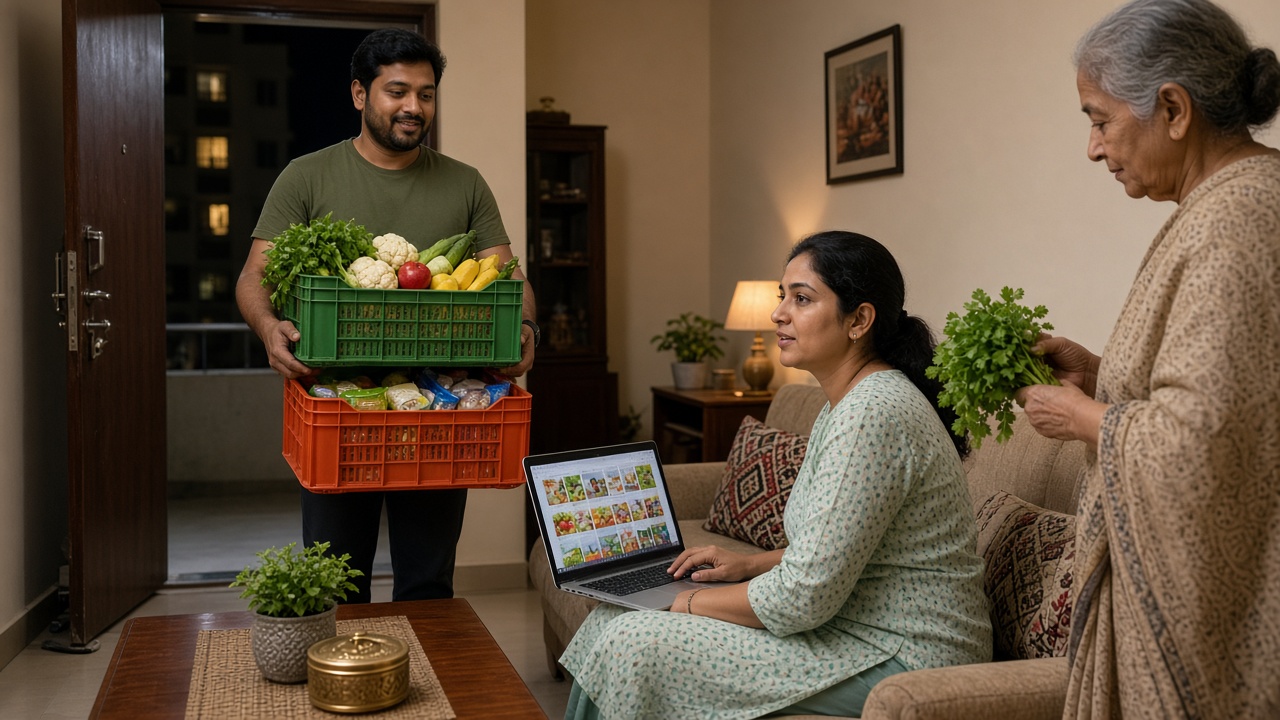
Smartphones and cheap data brought groceries online. Busy families ordered vegetables, staples, and household items on websites and apps for next-day or slot delivery, mobile wallets and UPI replaced cash, and demonetisation in 2016 pushed even vegetable sellers to accept digital payments.
The online grocery order arrives in crates — and grandmother checks the coriander (artistic illustration).
2011–2013: BigBasket (2011) in Bengaluru and Grofers (2013) start online grocery delivery in Indian cities.
2012: The government allows up to 51% foreign investment in multi-brand retail, sparking debate about kiranas and supermarkets.
2016: UPI is launched, and demonetisation in November drives a huge jump in mobile wallets, QR codes, and digital payments at shops.
2019: JioMart begins, and more kiranas start taking orders on WhatsApp and phone with home delivery.
Technology
Grocery apps: Order from home.
UPI and wallets: Pay by phone.
Delivery slots: Planned routes.
Features
Doorstep delivery: No heavy bags.
Cash on delivery: Early trust builder.
QR codes: Even on carts.
⚡ Quick Commerce2020s – Future
Quick Commerce & 10-Minute Delivery
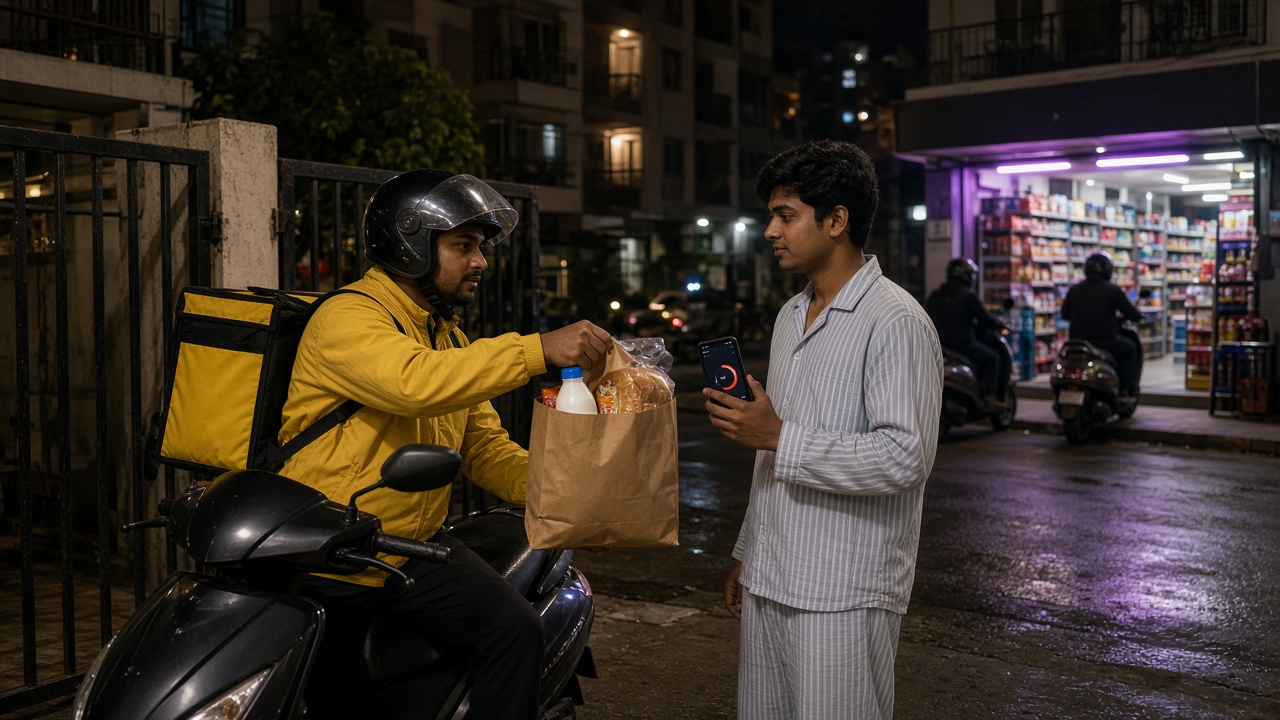
The 2020 lockdown made home delivery a necessity, and quick commerce soon promised groceries in about ten minutes from nearby dark stores. Blinkit, Zepto, and Swiggy Instamart changed city shopping habits, while kiranas fought back with UPI, WhatsApp orders, and open networks such as ONDC.
A late-night grocery order delivered in minutes from a nearby dark store (artistic illustration).
2020: During the lockdown kiranas stay open as essential shops and online grocery demand surges; Swiggy Instamart launches, and PM SVANidhi loans help street vendors go digital.
2021: Zepto launches, and Grofers is renamed Blinkit in December, both promising deliveries in about 10 minutes from dark stores.
2022: The Open Network for Digital Commerce (ONDC) begins pilots so small shops can sell on many apps; Zomato acquires Blinkit.
Future: AI-based ordering, drone and robot delivery, cashier-less stores, and debates over dark stores, gig-worker safety, and kirana livelihoods will shape grocery shopping.
Technology
Dark stores: Warehouses near homes.
Route algorithms: Fastest rider.
ONDC: Open digital network.
Features
10-minute delivery: Anytime needs.
Live tracking: Watch the rider.
Kiranas go digital: Apps and QR codes.
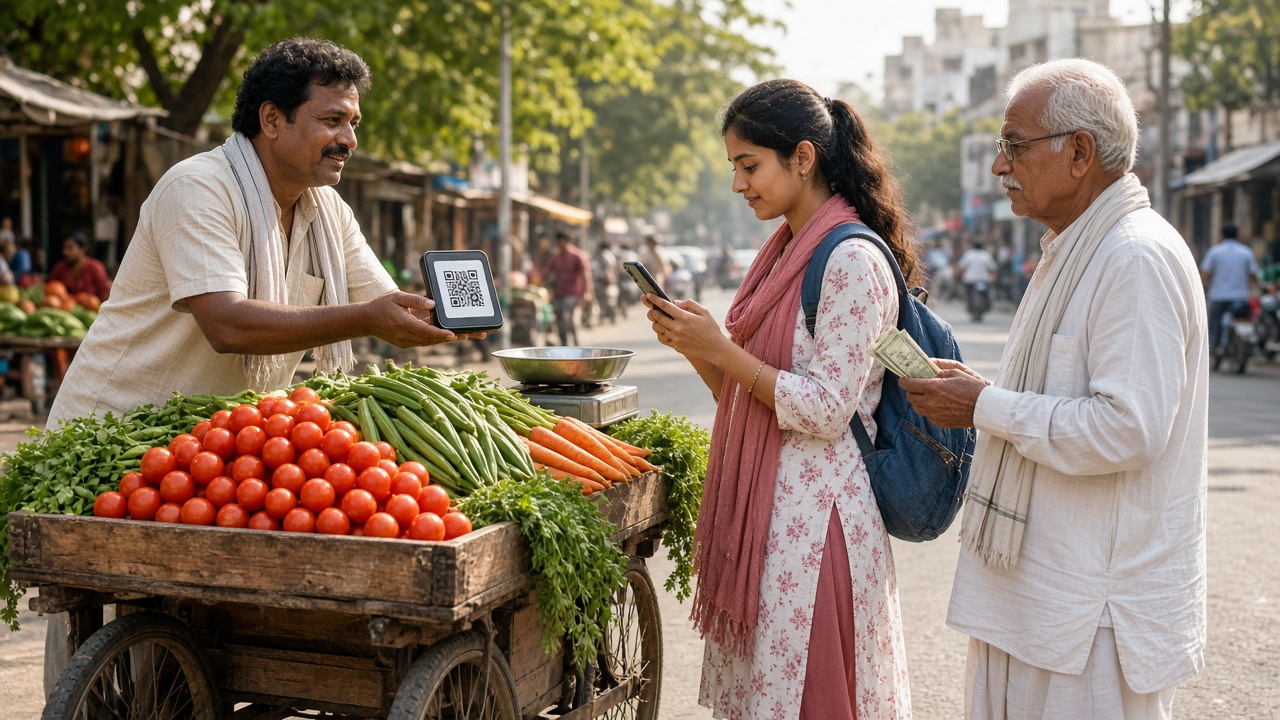
From Udhaar to UPI: How Indians Paid for Groceries
UPI and cash side by side at the vegetable cart (artistic illustration).
Method
Era
How it worked
Barter
Ancient times–1950s (villages)
Grain exchanged for goods and services
Coins and notes
All eras
Cash paid at the counter
Bahi-khata and udhaar
Centuries–now
Credit written in a notebook, paid monthly
Ration card
1940s–now
Subsidised quotas at fair-price shops
Debit and credit cards
2000s
Swiped at supermarket counters
Mobile wallets
2010s
Money stored in an app
UPI and QR codes
2016–now
Scan and pay directly from a bank account
Digital khata apps
2020s
Kirana credit tracked on a phone
Where Indians Bought Their Groceries
Format
Since
Best known for
Village haat
Ancient times
Weekly market day with farm produce
City bazaar
Medieval times
Spices, grain, and wholesale goods
Vegetable mandi
Centuries
Fresh produce and bargaining
Hawkers and carts
Centuries
Vegetables and milk at the door
Ration shop
1940s
Subsidised grain, sugar, and kerosene
Cooperative store
1948 onwards
Fair prices and early self-service
Kirana store
Widespread by the 1970s
Credit, trust, and home delivery
Supermarket / hypermarket
1996 onwards
Trolleys, choice, and discounts
Online grocery
2011 onwards
Scheduled home delivery
Quick commerce
2020 onwards
Delivery in minutes from dark stores
From Seers to Kilograms: How Groceries Were Measured
Traditional units varied from region to region; the values below are the standard British India equivalents.
Unit
Approximate metric value
Typically used for
Tola
About 11.66 grams
Gold, silver, saffron, and spices
Chhatank
About 58 grams (1/16 seer)
Small amounts of spices or ghee
Pav
About 233 grams (1/4 seer)
Vegetables and sweets
Seer
About 933 grams (80 tolas)
Grain, sugar, vegetables, milk
Maund
About 37.3 kilograms (40 seers)
Bulk grain and crops
Kilogram and litre
Metric, from 1958
Everything today, printed on packs with the MRP
Grocery Shopping Timeline Summary
Year / Era
Milestone
c. 2600–1900 BCE
Harappan standard weights
c. 300 BCE
Arthashastra market superintendent
1650
Chandni Chowk bazaar in Delhi
1869
Crawford Market, Bombay
1874
New Market, Calcutta
1940s
Wartime rationing in cities
1948
Apna Bazar cooperative, Bombay
1958
Metric system begins
1963
Kendriya Bhandar
1965
Food Corporation of India
1966
Super Bazar, Delhi
1970s
Kirana stores in every neighbourhood
1974
Mother Dairy milk booths
1986
Consumer Protection Act
1990
MRP printing compulsory
1996–1997
Foodworld and Subhiksha
2001
First Big Bazaar
2002
First DMart
2006–2007
Reliance Fresh and More
2011
BigBasket
2013
Grofers
2016
UPI; demonetisation
2019
JioMart begins
2020
Lockdown delivery surge; Swiggy Instamart
2021
Zepto; Grofers becomes Blinkit
2022
ONDC pilots
Future
AI ordering, drones, cashier-less stores
Test Your Knowledge
20 quick questions from the grocery shopping timeline. Click each question to reveal the answer.
Answer: A traditional weekly or periodic village market.
Answer: The Arthashastra.
Answer: Jahanara, daughter of Emperor Shah Jahan.
Answer: A traditional handwritten account book used by shopkeepers and traders.
Answer: 1958.
Answer: 40 seers.
Answer: Grain, sugar, and kerosene at controlled prices.
Answer: 1965.
Answer: Super Bazar.
Answer: Credit written in a notebook and paid later, often at month-end.
Answer: They let families buy small amounts at a low price.
Answer: Maximum retail price.
Answer: The Consumer Protection Act.
Answer: Kolkata.
Answer: It reads the product code to bill items quickly and accurately.
Answer: BigBasket.
Answer: 2016.
Answer: A small warehouse near customers used only to pack online orders for fast delivery.
Answer: Grofers.
Answer: Open Network for Digital Commerce.
Classroom activity
Students Tasks
Use these prompts for discussion or projects on how Indian families bought their groceries over time.
Timeline understandingMoney and mathsConsumer awarenessLocal economy
Interview a grandparent about where they bought vegetables, grain, and milk as children.
Make a timeline poster: mandi (1950s), kirana (1980s), supermarket (2000s), online grocery (2010s), and quick commerce (2020s).
Visit a local kirana and ask the shopkeeper how their business has changed in the last ten years.
Convert a grandmother’s recipe written in seers and chhataks into grams and kilograms.
Compare the price of one kilogram of rice, dal, and onions at a mandi, a kirana, a supermarket, and an app.
Read the label on five packaged foods and note the MRP, weight, date of packing, and expiry date.
List the ways your family pays for groceries and discuss the safety of each method.
Draw a map of the shops, carts, and markets within walking distance of your home.
Find out what a dark store is and discuss the pros and cons of 10-minute delivery.
Debate: “The neighbourhood kirana is more important than quick-commerce apps.”
Continue exploring
Grocery shopping changed with farm markets, Digital India, banking, and money itself. Explore these connected timelines next.
Click any panel to expand and explore the visual mood.
India’s grocery shopping journey in pictures — the village haat, the 1950s mandi, the neighbourhood kirana, the supermarket trolley, online grocery crates, the UPI vegetable cart, 10-minute delivery, and then versus now.
Village Haat
Market day under the banyan
1950s Mandi
Brass balance and bargaining
Kirana Store
Sacks and the credit notebook
Supermarket
Trolleys and barcodes
Online Grocery
Crates at the door
UPI Cart
Scan to pay the sabziwala
10-Minute Delivery
From the dark store
Then vs Now
Mandi to doorstep
Explore all daily life timelines
Jump to any other daily life timeline on WorldTimelineHub.
Disclaimer: This content is AI-generated for educational purposes and may contain errors or outdated details. For correct and authoritative information, please refer to official and reliable sources such as government publications, manufacturers, museums, and academic references.