Cooking Methods Timeline of India: Chulha → Pressure Cooker → Microwave → Air Fryer → Smart Ovens
In the 1950s most Indian meals were cooked on a smoky mud chulha, with dal simmering for hours. From the 1960s the pressure cooker’s whistle cut that time to minutes, microwaves arrived in
city kitchens in the 1990s, induction cooktops and multi-cookers spread in the 2010s, and in the 2020s air fryers and smart ovens make crispy snacks with a spoonful of oil at the tap of an app.
This timeline covers tandoors, clay pots and dum cooking, mud chulhas and blowpipes, angithis and kerosene stoves, pressure cookers and LPG, solar cookers, cookbooks and TV cooking shows,
microwaves and non-stick pans, induction cooktops, electric kettles and multi-cookers, recipe videos, air fryers, and app-connected smart ovens.
How a meal is cooked decides how long it takes, how much fuel it burns, how healthy it is, and how much smoke the cook breathes. In India the move from the mud chulha to the pressure cooker,
gas, microwave, and air fryer has saved millions of hours of work — mostly for women — while traditional techniques such as tadka, dum, and slow simmering still give Indian food its flavour.
Big picture
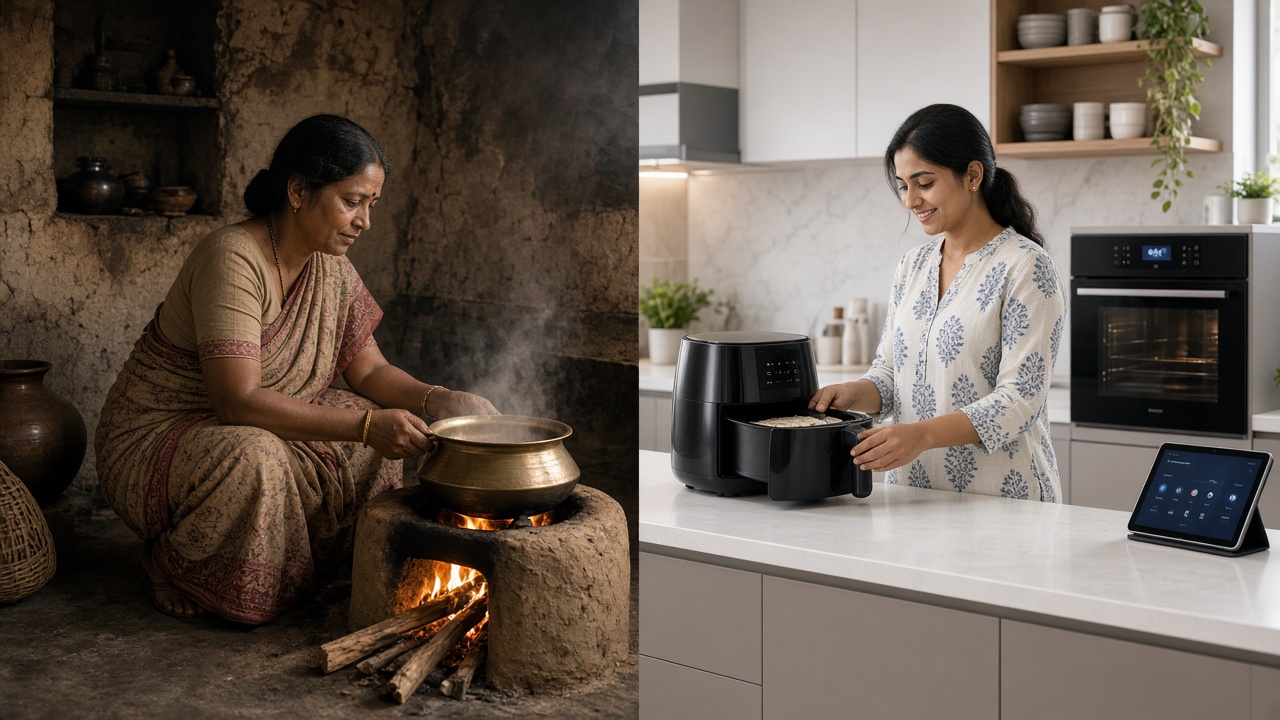
India’s cooking journey in one view
For thousands of years Indians cooked over wood fires in clay pots, tandoors, and chulhas. Kerosene stoves reached towns in the early twentieth century, pressure cookers and LPG changed
daily cooking from the 1960s, microwaves and non-stick pans arrived with liberalisation in the 1990s, induction cooktops and multi-cookers spread in the 2010s, and the 2020s brought air fryers
and smart ovens. Related timelines:
the power grid,
the Green Revolution,
the White Revolution.
1959
Indian-made pressure cookers arrive
1965
Indane LPG cooking gas launched
1990s
Microwaves reach city kitchens
2020s
Air fryers and smart ovens boom
From the smoky mud chulha to the air fryer and smart oven (artistic illustration).
Cooking Then vs Now at a Glance
Feature
Then
Now
Main stove
Mud chulha or angithi
Gas, induction, and electric appliances
Fuel
Firewood, cow-dung cakes, coal
LPG, piped gas, electricity
Lighting the fire
Blowpipe and matches, many minutes
Knob, button, or app
Cooking dal
Simmered for an hour or more
A few whistles in a pressure cooker
Heat control
Adding or pulling out wood
Exact temperature settings
Frying
Deep kadhai of oil or ghee
Air fryer with a spoonful of oil
Reheating
Relight the fire
Two minutes in a microwave
Recipes
Learned from mothers and grandmothers
Cookbooks, TV shows, videos, and apps
Smoke
Filled the kitchen and harmed lungs
Chimneys and smoke-free appliances
Time in the kitchen
Many hours a day
Much less, with ready helpers
🔥 Tandoor & ClayAncient – 1946
Tandoors, Clay Pots & Slow Fire
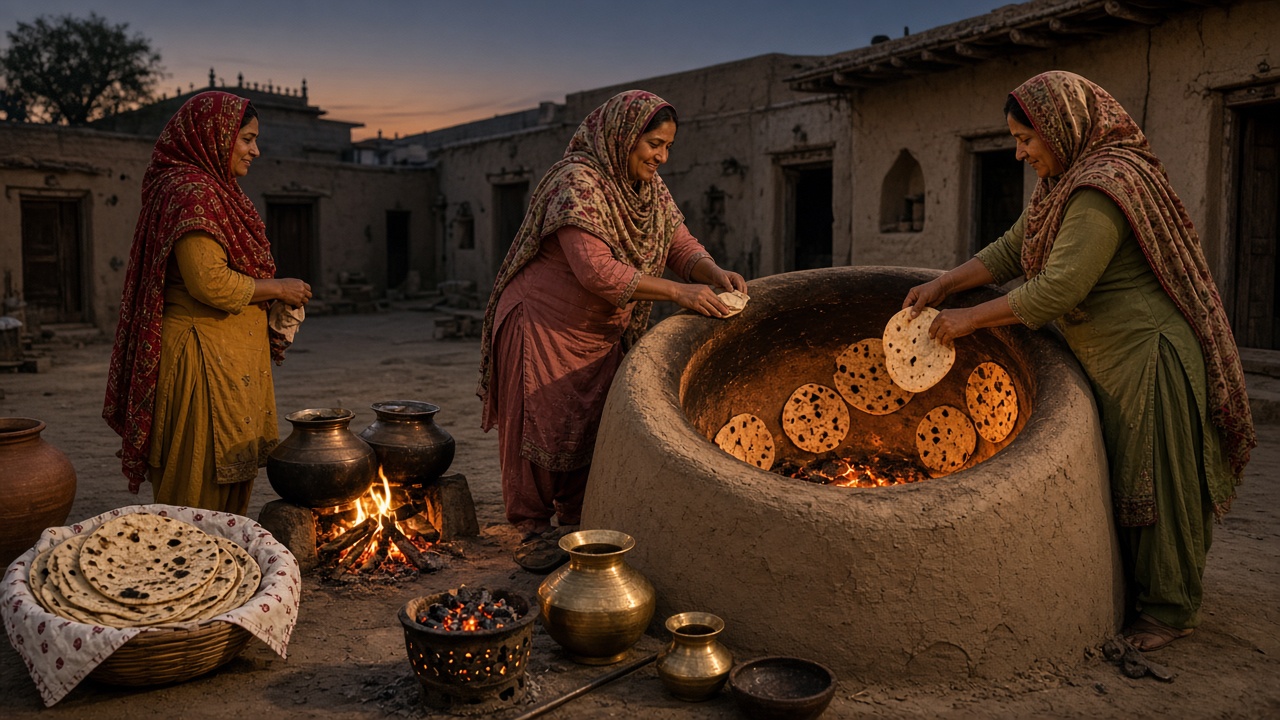
For thousands of years Indians cooked over wood and dung fires. Food was roasted, boiled in clay pots, baked on tawas and in tandoors, steamed, fried, and slow-cooked, and many of these methods — tadka, dum, and bhuna — still define Indian cooking today.
Rotis baked on the walls of a village community tandoor (artistic illustration).
c. 2600–1900 BCE: Harappan homes have hearths and clay ovens; grains, pulses, and meat are roasted, boiled in clay pots, and baked.
10th–12th centuries: The Kannada text Vaddaradhane (920 CE) mentions iddalige, an early form of idli, and the Manasollasa (c. 1130) describes roasting, frying, boiling, and steaming.
16th–18th centuries: Royal kitchens refine slow dum cooking in dough-sealed pots, especially in Awadh; community tandoors (sanjha chulha) serve Punjab villages.
Early 1900s–1940s: Kerosene pressure stoves and aluminium vessels reach towns, but almost every rural home still cooks on a wood-fired chulha.
Technology
Clay tandoors: Very high heat.
Earthen handis: Slow, even cooking.
Iron tawas and kadhais: Rotis and frying.
Features
Tadka: Spices bloomed in ghee.
Dum: Sealed slow cooking.
Fermenting and drying: Batters and papad.
🪵 Chulha1947 – 1959
Mud Chulhas & Kerosene Stoves
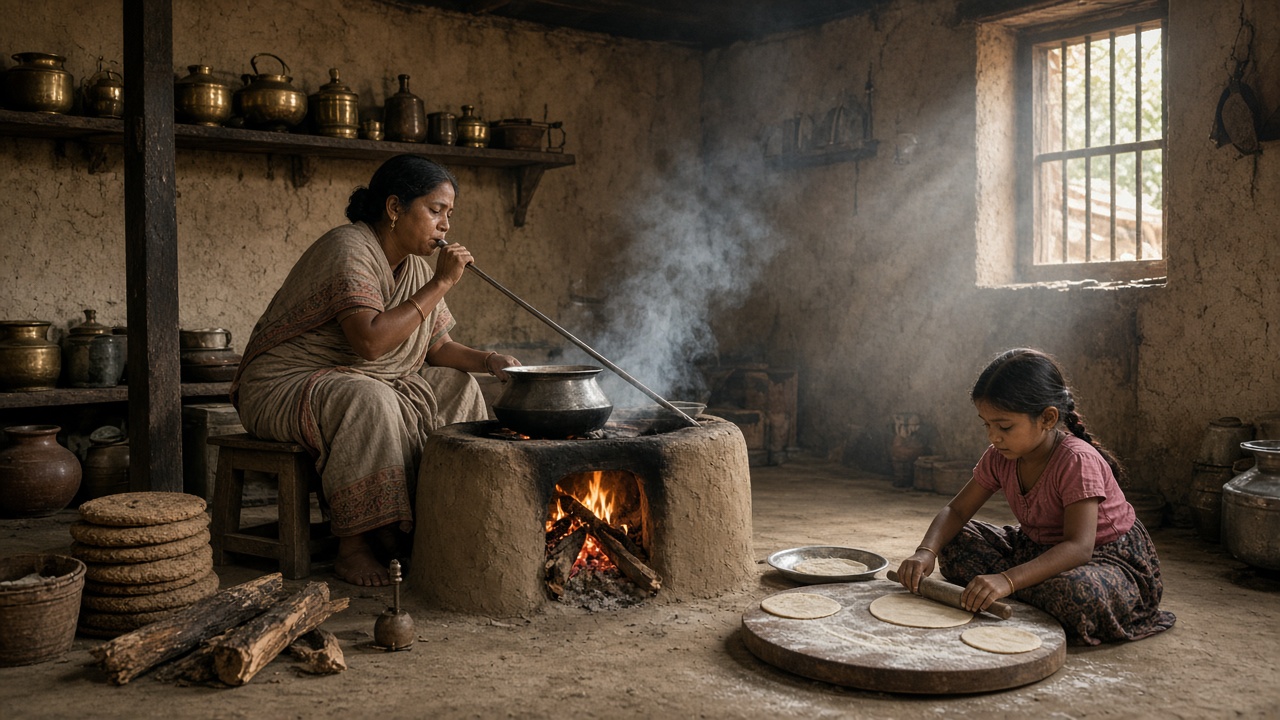
In the 1950s most Indian families cooked on a mud chulha fed with firewood, cow-dung cakes, and crop waste. Women blew on the fire through a metal pipe, the kitchen filled with smoke, and dal and rice took a long time to cook — while town homes began to use kerosene stoves and coal angithis.
Fanning the chulha flame with a blowpipe while a daughter rolls rotis (artistic illustration).
1947–1950s: Most homes cook on mud chulhas; women and girls spend hours every week collecting firewood and making cow-dung cakes.
1950s: In towns, coal angithis and kerosene wick and pressure stoves are common; kerosene is sold through ration shops.
1950s: Daily cooking means slow-simmered dal, rice cooked in open pots, rotis on a tawa over the flame, and ghee tadka at the end.
Late 1950s: Indian companies such as Hawkins and Prestige begin making pressure cookers, which will transform cooking in the next decades.
Technology
Mud chulha: Wood and dung fire.
Blowpipe (phukni): Fanning the flame.
Kerosene stove: Pump for pressure.
Features
Smoky kitchens: Harmful to lungs.
Slow cooking: Hours at the fire.
Floor cooking: Sitting by the stove.
♨️ Pressure Cooker1960 – 1989
Pressure Cookers & LPG
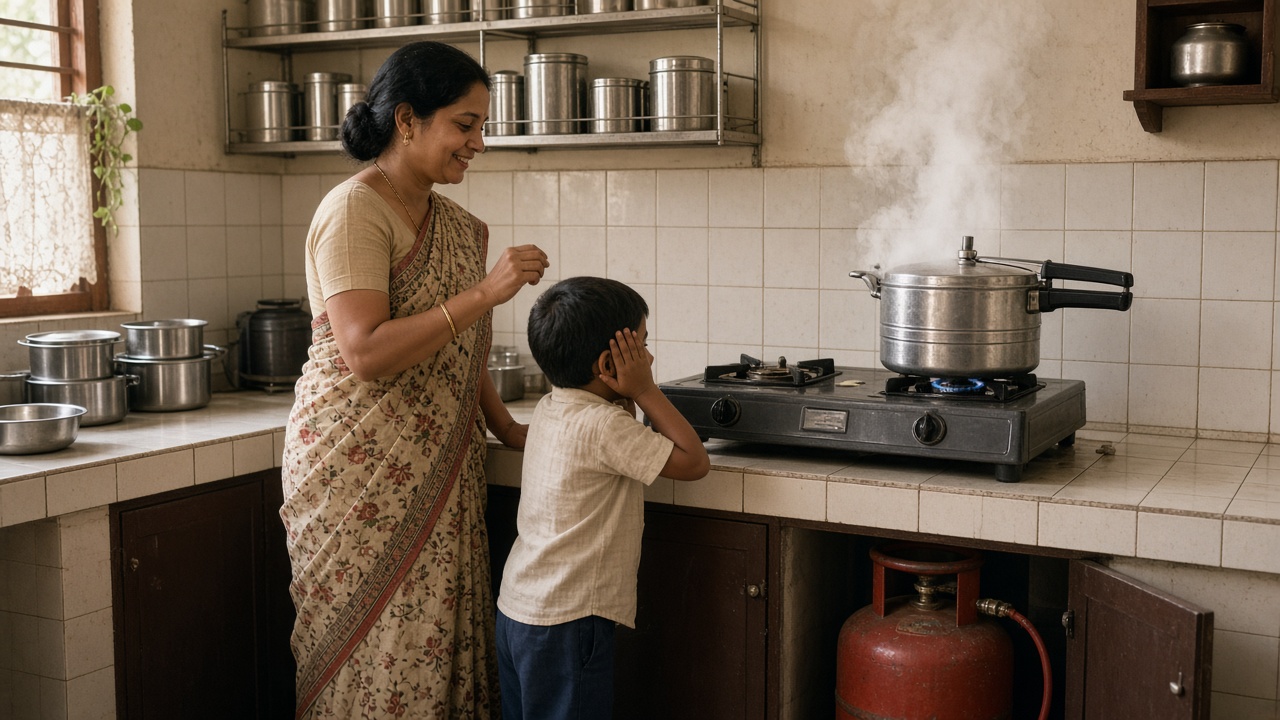
The pressure cooker became the heart of the Indian kitchen. Its whistle told cooks when dal, rice, rajma, or potatoes were ready, it saved fuel, and it became a favourite wedding gift. LPG gas stoves arrived in cities, and cookbooks, instant noodles, and solar cookers added new ways to cook.
Counting whistles on a new LPG stove — the pressure cooker era (artistic illustration).
1960s: Pressure cookers spread in middle-class homes; cooks time dishes by counting whistles, and dal that took an hour cooks in minutes.
1965: Indian Oil launches Indane LPG with the first connections in Calcutta; gas stoves slowly spread to other cities, often after long waiting lists.
1970s: Cookbooks such as Tarla Dalal’s first book (1974) bring recipes from many regions into city kitchens; the “cooker cake” baked in a pressure cooker becomes popular.
1980s: Maggi 2-minute noodles (1983) arrive; the government promotes improved smokeless chulhas and box-type solar cookers; electric toasters and ovens appear in some homes.
Technology
Pressure cooker: Steam at about 120 °C.
LPG stove: Instant, smoke-free flame.
Solar cooker: Free heat from the sun.
Features
Whistle timer: Count and switch off.
Fuel saving: Less gas and wood.
Standing cooking: Platform kitchens.
📦 Microwave1990 – 2009
Microwaves & Non-Stick
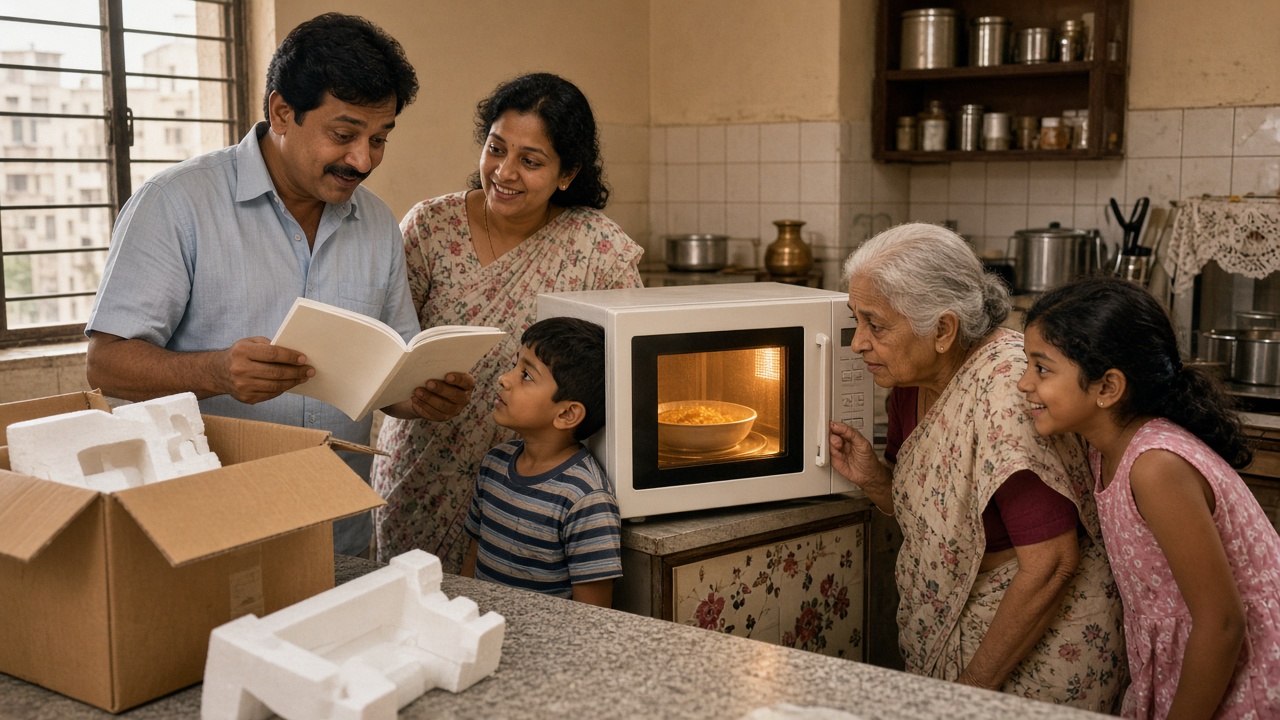
Economic liberalisation in the 1990s brought global appliance brands into Indian homes. Microwave ovens reheated food in minutes and later baked cakes, non-stick pans needed less oil, TV cooking shows taught new dishes, and induction cooktops offered cooking without a flame.
The whole family studies the new microwave oven (artistic illustration).
1990s: After liberalisation, microwave ovens, mixer-grinders, and global kitchen brands reach city homes; the microwave is first used mostly for reheating.
1993: Sanjeev Kapoor’s Khana Khazana begins on Zee TV, making TV cooking shows popular with families.
Late 1990s–2000s: Non-stick cookware, electric rice cookers, and convection microwaves for baking and grilling spread; ready-to-eat meals in retort pouches appear.
2000s: Induction cooktops arrive, useful in small flats, hostels, and during gas shortages; recipe websites and food blogs begin to grow.
Technology
Microwaves: Heat water in food.
Non-stick coating: Less oil.
Convection ovens: Baking at home.
Features
Quick reheating: Leftovers in minutes.
TV recipes: New dishes at home.
Healthier frying: Less oil.
⚡ Induction2010 – 2019
Induction & Multi-Cookers
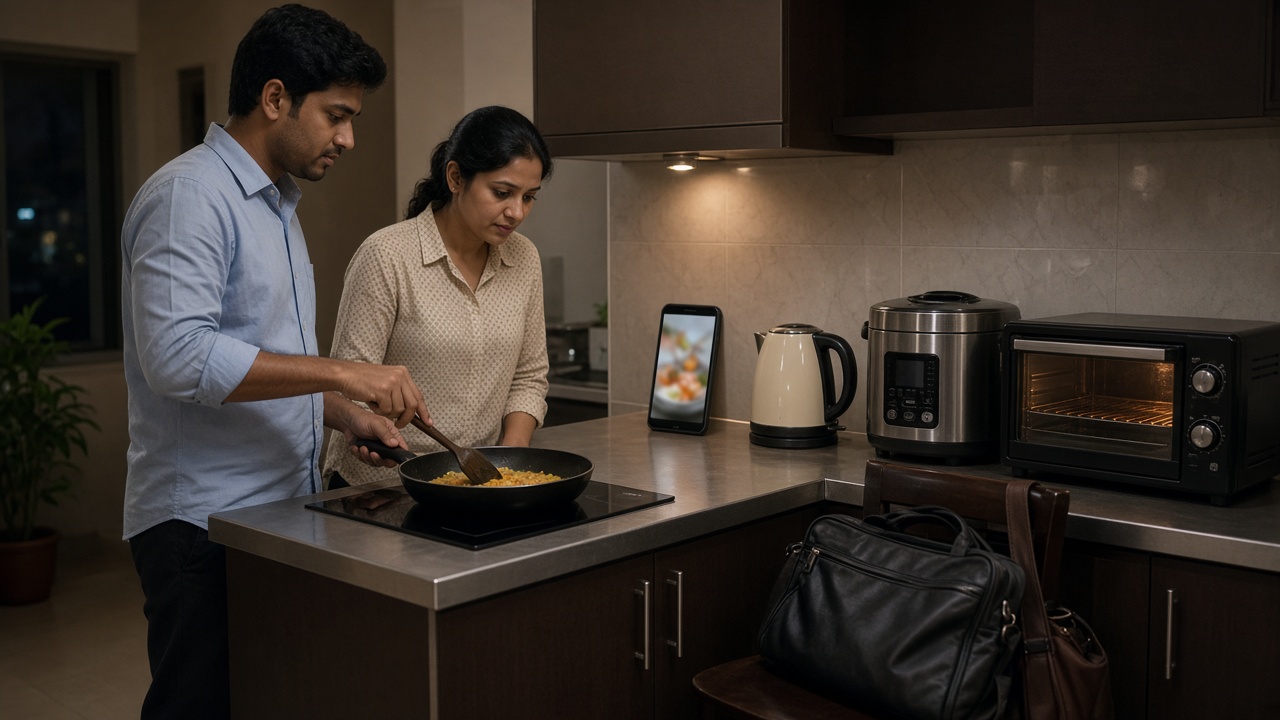
In the 2010s busy working families turned to electric helpers: induction cooktops, electric kettles, oven toaster grillers (OTGs), and one-pot multi-cookers. Recipe videos on smartphones replaced handwritten recipe books, home baking took off, and clean LPG finally reached millions of village homes.
After office: induction cooktop, kettle, OTG, and a recipe video (artistic illustration).
Early 2010s: Induction cooktops, electric kettles, and sandwich makers become common in city homes, hostels, and PG rooms.
2010s: YouTube cooking channels in Hindi and regional languages make recipe videos a daily kitchen guide; OTGs spark a home-baking boom.
2014–2016: Food delivery apps change eating habits in cities, while the Pradhan Mantri Ujjwala Yojana (2016) gives free LPG connections to replace smoky chulhas.
Late 2010s: Electric pressure cookers and multi-cookers with presets for rice, dal, and curries gain popularity.
Technology
Induction: Magnetic heating.
Multi-cookers: One-pot presets.
OTGs: Bake, toast, and grill.
Features
Flame-free cooking: Safer in small flats.
Recipe videos: Learn by watching.
Home baking: Cakes and breads.
🍟 Air Fryer2020s – Future
Air Fryers & Smart Ovens
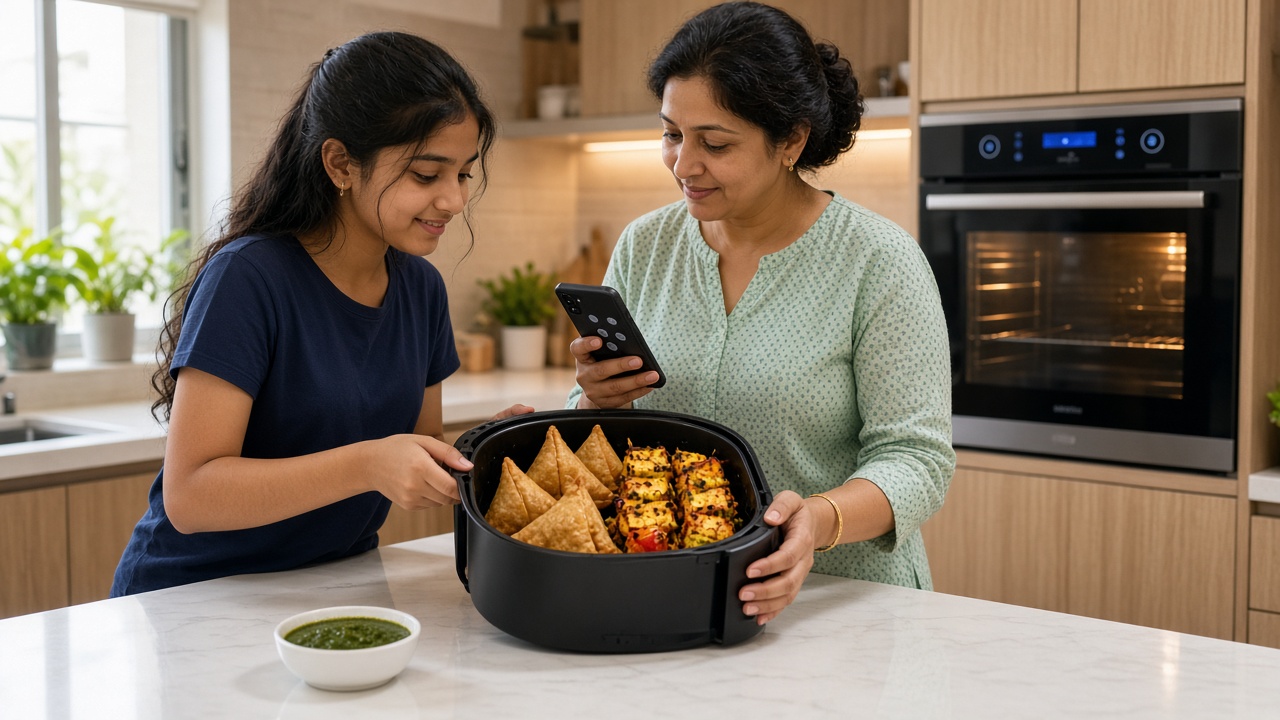
The 2020s began with lockdown home cooking and quickly moved to healthier, smarter appliances. Air fryers crisp samosas and tikkas with a spoonful of oil, smart ovens follow recipes from an app, and electric and solar cooking are promoted as cleaner options for the future.
Crispy samosas and paneer tikka from the air fryer, with a smart oven behind (artistic illustration).
2020: During the lockdown families cook and bake at home more than ever; home-made breads, cakes, and viral recipes such as whipped dalgona coffee trend online.
2020s: Air fryers become a popular purchase for healthier samosas, pakoras, fries, and tikkas; air-fryer ovens combine frying, baking, and grilling.
2021–2022: The government’s Go Electric campaign promotes electric cooking, and Indian Oil unveils the Surya Nutan indoor solar cooktop (2022).
Future: Wi-Fi smart ovens, AI recipe assistants, countertop cooking robots, and efficient induction may make gas flames rare in city kitchens.
Technology
Air fryers: Rapid hot air.
Smart ovens: App and voice control.
Food probes and cameras: Perfect doneness.
Features
Less oil: Healthier snacks.
Guided cooking: Step-by-step presets.
Clean energy: Electric and solar.
Traditional Indian Cooking Techniques, Then & Now
Technique
Traditional tool
Modern tool
Example dishes
Tadka (tempering)
Iron ladle over the chulha
Tadka pan on gas or induction
Dal, sambar, raita
Dum (sealed slow cooking)
Dough-sealed handi on coals
Heavy pot, oven, or multi-cooker
Biryani, dum aloo
Tandoor baking
Clay tandoor
OTG, air fryer, electric tandoor
Naan, tikka, tandoori roti
Bhuna (roast-frying)
Iron kadhai
Non-stick kadhai
Bhuna gosht, masalas
Deep-frying (talna)
Kadhai of oil
Air fryer
Samosa, pakora, puri
Steaming
Cloth over a pot, idli stand
Idli cooker, electric steamer
Idli, dhokla, modak, momos
Slow simmering
Open pot for hours
Pressure cooker
Dal, rajma, nihari
Roasting on coals
Embers of the chulha
Gas flame, grill, air fryer
Baingan bharta, litti, bhutta
Fermenting
Clay pots in a warm corner
Wet grinder and warm oven
Dosa batter, appam, kanji
Sun-drying
Rooftop mats
Food dehydrator
Papad, vadi, dried chillies
From Chulha to Smart Oven: Cooking Devices of India
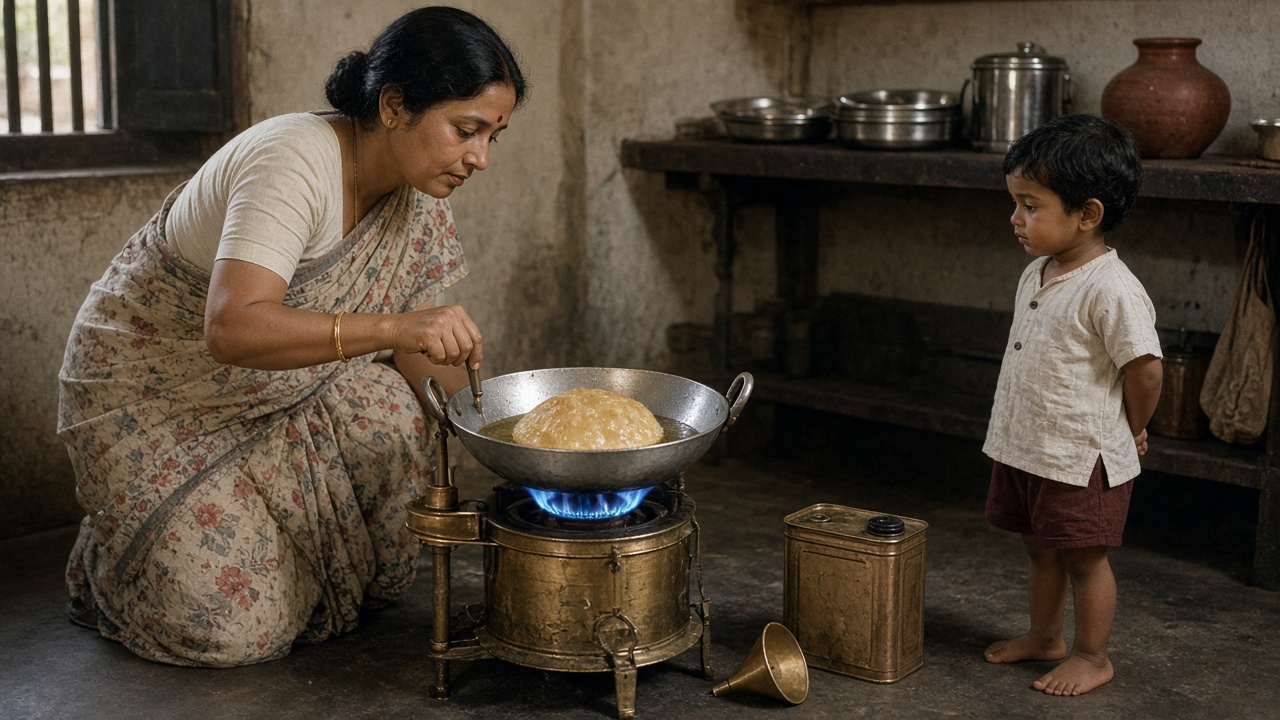
Pumping the brass kerosene stove to fry puris (artistic illustration).
Device
Common from
Energy
Best for
Mud chulha
Ancient times
Wood, dung cakes, crop waste
Rotis, dal, rice
Tandoor
Ancient times
Wood or charcoal
Breads and kebabs
Angithi / sigri
Pre-1900s
Coal or charcoal
Slow cooking and winter warmth
Kerosene stove
Early 1900s
Kerosene
Everyday cooking in towns
Pressure cooker
Late 1950s
Any stove
Dal, rice, beans, meat
LPG gas stove
1965
Cooking gas
All cooking
Solar box cooker
1980s
Sunlight
Slow-cooked rice and dal
Microwave oven
1990s
Electricity
Reheating, quick cooking, baking
Induction cooktop
2000s
Electricity
Fast boiling and frying
Multi-cooker
2010s
Electricity
One-pot meals with presets
Air fryer
2020s
Electricity
Crispy snacks with little oil
Smart oven
2020s
Electricity
App-guided baking and grilling
How Long Did It Take? Cooking Times Then & Now
Approximate times for a family-sized portion; real times depend on the ingredients, the quantity, and the heat.
Task
Old way
Modern way
Lighting the stove
Chulha: 10–15 minutes
Gas or induction: seconds
Cooking toor dal
Open pot: about 1 hour
Pressure cooker: 15–20 minutes
Cooking soaked rajma
Open pot: 2 hours or more
Pressure cooker: 30–40 minutes
Cooking rice
Open pot: 25–30 minutes
Pressure or rice cooker: 10–15 minutes
Reheating a meal
Relight the fire: 15 minutes
Microwave: 2–3 minutes
Boiling water for tea
Chulha: about 10 minutes
Electric kettle: 2–3 minutes
Making samosas crisp
Deep-frying in a kadhai of oil
Air fryer: 12–15 minutes, little oil
Baking a cake
Pressure cooker with sand: about 45 minutes
OTG or smart oven: 30–35 minutes
Cooking Methods Timeline Summary
Year / Era
Milestone
c. 2600–1900 BCE
Harappan hearths and clay ovens
920 CE
Iddalige, an early idli, mentioned in Vaddaradhane
Click any panel to expand and explore the visual mood.
India’s cooking journey in pictures — the village tandoor, the smoky chulha, the kerosene stove, the whistling pressure cooker, the first microwave, induction and recipe videos, the air fryer, and then versus now.
Village Tandoor
Rotis on clay walls
1950s Chulha
Smoke and blowpipe
Kerosene Stove
Pump and roar
Pressure Cooker
Count the whistles
1990s Microwave
The new family gadget
Induction
Recipe videos after office
Air Fryer
Crispy with less oil
Then vs Now
Chulha to smart oven
Explore all daily life timelines
Jump to any other daily life timeline on WorldTimelineHub.
Disclaimer: This content is AI-generated for educational purposes and may contain errors or outdated details. For correct and authoritative information, please refer to official and reliable sources such as government publications, manufacturers, museums, and academic references.