In the 1950s Indian homes kept water cool in clay matkas, grain in mud bins, and mangoes as pickles in sun-warmed jars. Shining steel dabbas filled kitchen shelves in the 1970s, the family fridge
with its embroidered cover became common in the 1990s, double-door fridges and cold chains spread in the 2010s, and in the 2020s smart fridges can show what is inside on a phone.
This timeline covers storage jars and granaries, mud kothis and bamboo baskets, pickling, sun-drying and ghee, imported ice and ice houses, matkas, surahis, hanging slings and mesh cupboards,
steel dabbas, masala boxes and tiffins, the first Indian fridges, stabilisers, frost-free and double-door fridges, cold chains, clay fridges, and app-connected smart fridges.
Keeping food safe decides how much of a harvest reaches the plate, how often families must shop, and how healthy their meals are. In a hot country like India, clever traditions such as pickling,
sun-drying, and clay pots kept food for months long before electricity, and the move to steel, fridges, and cold chains has changed diets, reduced waste, and brought new energy challenges.
Big picture
India’s food storage journey in one view
For thousands of years Indians stored grain in jars, bins, and granaries and preserved food with salt, oil, sun, and spices. Imported ice arrived in 1833, clay pots and mesh cupboards served most
homes after independence, stainless steel dabbas took over in the 1960s and 1970s, refrigerators became common in the 1990s, cold chains and energy-efficient fridges grew in the 2010s, and the
2020s brought smart fridges. Related timelines:
the White Revolution,
agriculture marketing,
the power grid.
1833
First shipment of ice reaches Calcutta
1958
First Indian-made refrigerator
2019
India Cooling Action Plan launched
2020s
Smart fridges with apps and cameras
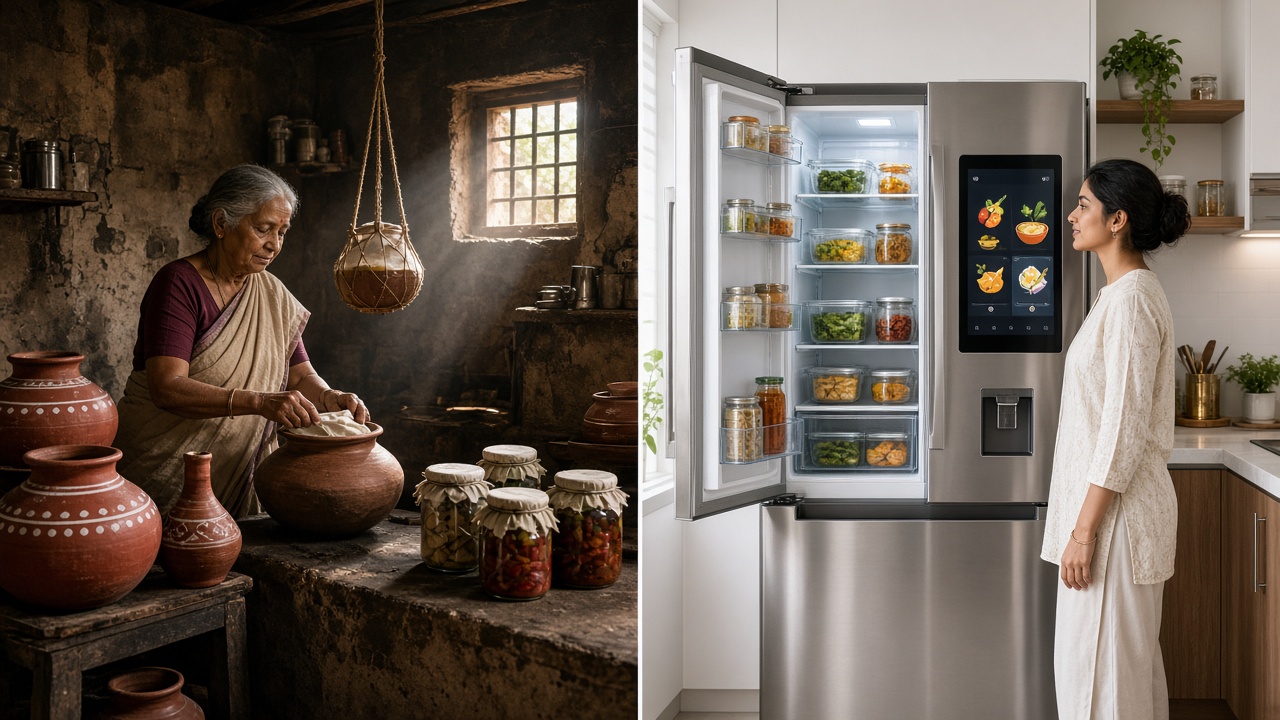
From clay matkas and pickle jars to a smart fridge with a touchscreen (artistic illustration).
Food Storage Then vs Now at a Glance
Feature
Then
Now
Cool drinking water
Clay matka and surahi
Fridge bottles and water dispensers
Grain
Mud kothis, baskets, and sacks
Steel and plastic bins, packaged bags
Milk and curd
Boiled twice a day, curd set in clay
Pouches and cartons kept in the fridge
Leftovers
Eaten the same day or shared
Refrigerated in containers
Vegetables
Bought fresh daily
Weekly shopping or instant delivery
Preserving
Pickles, papads, sun-dried foods
Freezing, vacuum packs, and pickles
Containers
Clay, brass, tin, and baskets
Steel, glass, and plastic
Pest protection
Neem leaves, hanging slings, mesh doors
Airtight lids and sealed packs
Energy
None — sun, air, and clay
Electricity for fridges and freezers
Biggest risk
Heat, damp, insects, and rats
Power cuts, food waste, refrigerant gases
🏺 Jars & BinsAncient – 1946
Storage Jars, Grain Bins & Pickles
Long before electricity, Indians learned to keep food for months. Grain was stored in large jars, mud bins, and baskets protected with neem leaves; fruits and vegetables became pickles and dried snacks; butter was turned into long-lasting ghee; and from 1833 the rich could even buy imported ice.
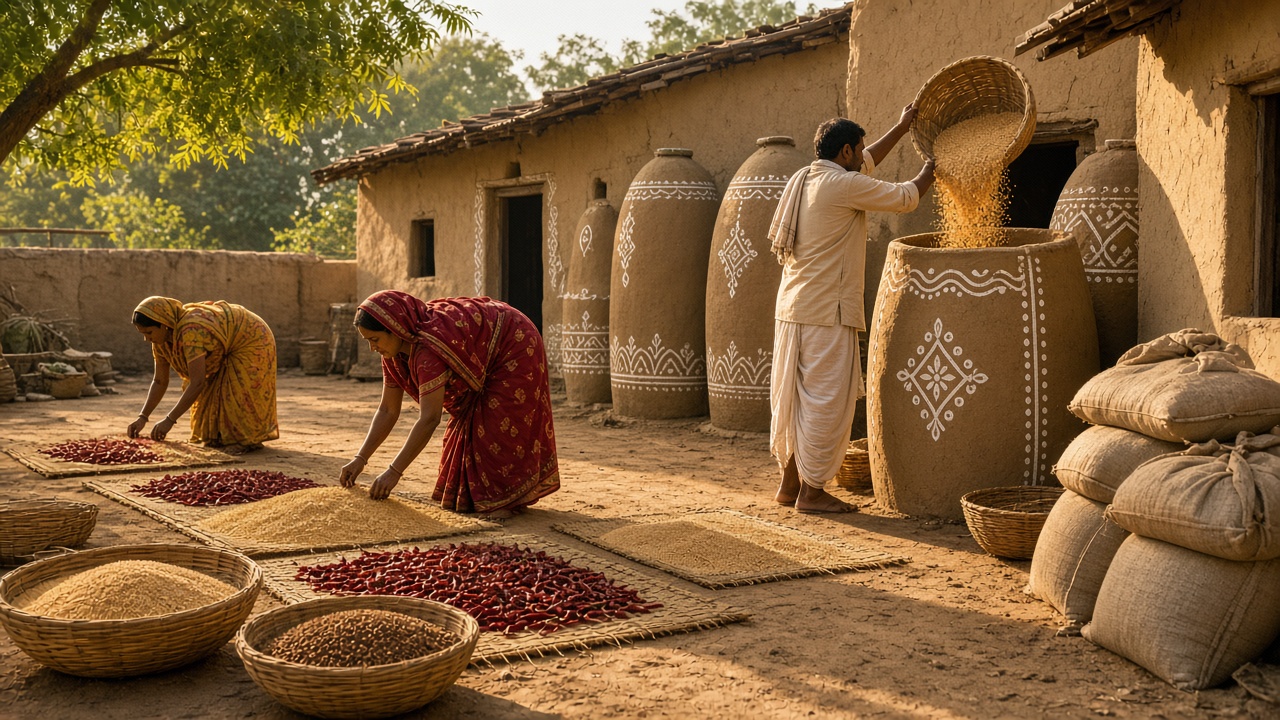
Grain poured into mud kothis while chillies dry in the sun (artistic illustration).
c. 2600–1900 BCE: Harappan cities use large storage jars and big structures often identified as granaries to store grain.
Ancient times onwards: Villages store grain in mud bins (kothi, kuthla) and bamboo baskets, mixing in neem leaves or ash to keep insects away.
Ancient times onwards: Salt, oil, spices, and sunshine preserve food as pickles, papads, vadis, and dried fish; ghee keeps for months without spoiling.
1833: A ship carrying natural ice from America reaches Calcutta; ice houses in Calcutta, Bombay, and Madras store it for the rich until ice factories spread later in the century.
Technology
Mud kothis: Cool, sealed grain bins.
Glazed barnis: Pickle jars.
Ice houses: Insulated storage.
Features
Seasonal preserving: Summer pickles.
Natural pest control: Neem and ash.
Ghee: Long-lasting fat.
🫙 Clay Pots1947 – 1964
Clay Pots & Mesh Cupboards
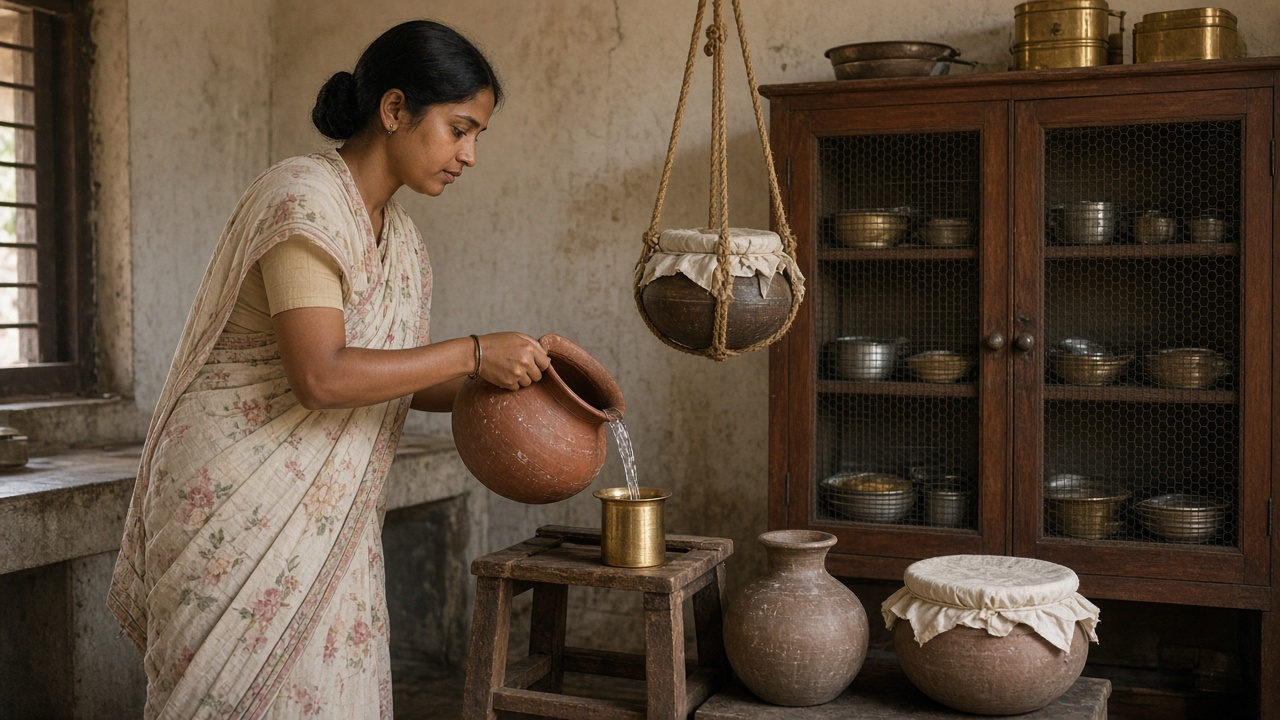
In the 1950s almost no Indian home had a fridge. Water stayed cool in red clay matkas and surahis, curd was set in earthen pots, leftovers went into wooden cupboards with wire-mesh doors or hanging rope slings out of reach of cats and ants, and dry goods were kept in brass and tin boxes.
Cool water from the matka, curd in clay, and leftovers behind wire mesh (artistic illustration).
1947–1950s: Clay matkas and surahis are the household “water coolers”, cooling water by evaporation through their pores.
1950s: Milk is boiled twice a day, curd is set in clay pots, and cooked food is usually eaten the same day because it cannot be kept cold.
1950s: Wooden cupboards with wire-mesh doors (doli or jaali) and rope slings (sikka, chheenka) protect food from insects, cats, and rats.
1958: Godrej makes India’s first indigenous refrigerator, but for years only a few wealthy homes can afford one; ice blocks and ice boxes cool drinks in towns.
Technology
Matka and surahi: Evaporative cooling.
Mesh cupboards: Air in, insects out.
Ice boxes: Blocks of ice.
Features
Daily shopping: Fresh every morning.
Little leftover food: Cook just enough.
No electricity: Natural cooling.
🥫 Steel Dabbas1965 – 1989
Steel Dabbas & Tiffins
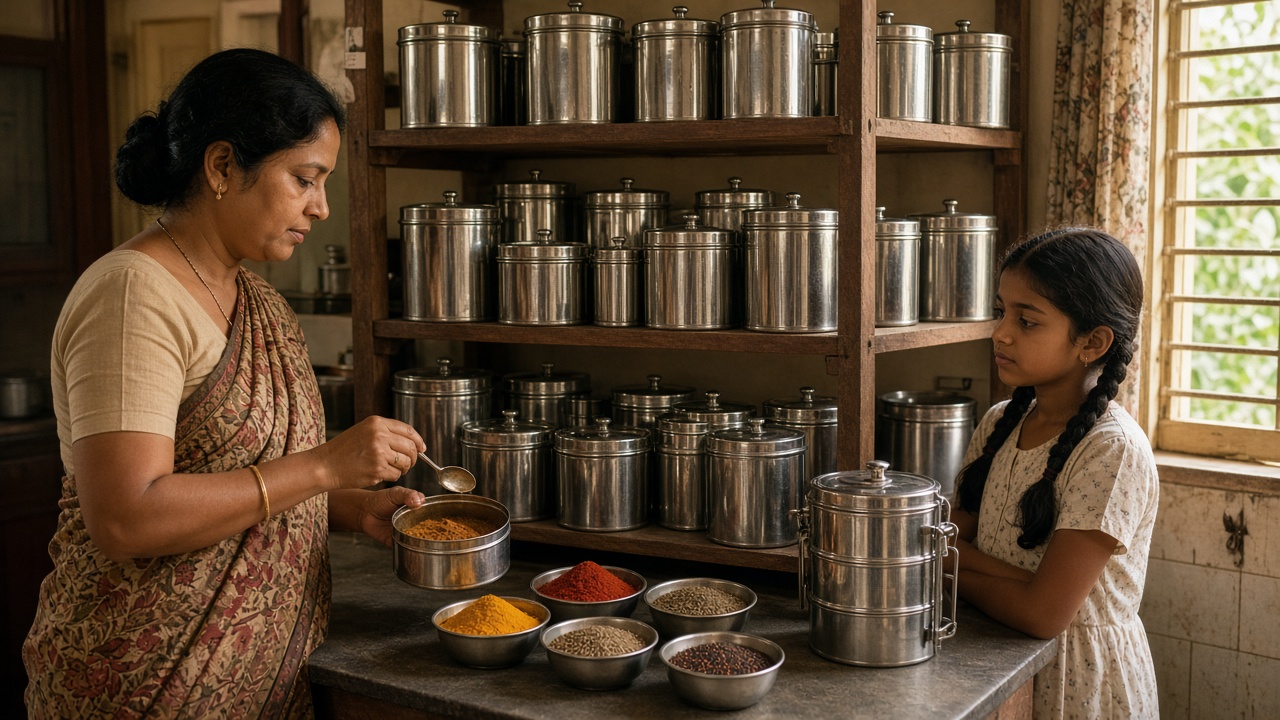
Stainless steel changed the Indian kitchen shelf. Rows of shining dabbas held rice, dal, sugar, and flour, the round masala dabba kept everyday spices by the stove, and stacked steel tiffins carried lunch to offices and schools. Refrigerators were still rare, costly, and treated as a prized status symbol.
Shelves of steel dabbas, the masala box, and the office tiffin (artistic illustration).
1960s–1970s: Affordable stainless steel replaces brass, copper, and tin containers; sets of steel dabbas become popular wedding gifts.
1970s: The masala dabba and stacked steel tiffin become standard; Mumbai’s dabbawalas, running since 1890, deliver home-cooked lunches in tiffins across the city.
1970s–1980s: Fridges from brands such as Godrej and Kelvinator appear in better-off city homes, often with waiting lists; many need a voltage stabiliser.
1980s: Plastic containers and bags begin to enter kitchens, and packaged milk and oils make storage easier in cities.
Technology
Stainless steel: Rust-free and non-reactive.
Single-door fridges: Manual defrost.
Voltage stabilisers: Protect the compressor.
Features
Engraved names: Family dabbas.
Masala box: Spices in one place.
Fridge as status: Shown to guests.
🧊 Fridge1990 – 2009
Refrigerators for Families
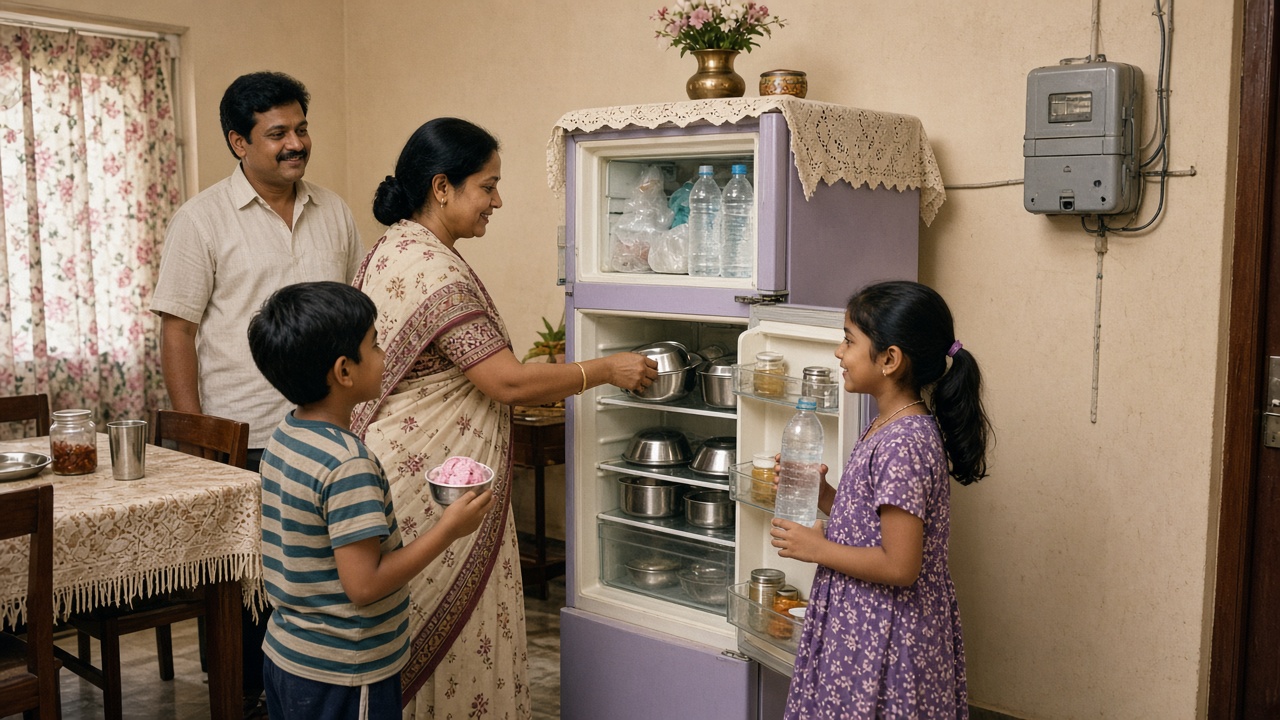
After liberalisation in 1991, more brands, easy instalments, and falling prices brought the refrigerator into middle-class homes. The new fridge got an embroidered cover and a stabiliser, filled up with water bottles, leftovers in steel bowls, and ice-cream, and changed how often families shopped and cooked.
The new family fridge — lace cover, stabiliser, and cold water bottles (artistic illustration).
1990s: Global and Indian brands compete, prices fall, and refrigerators spread quickly in city homes; frost-free models end the chore of defrosting.
1996: Branded airtight plastic containers such as Tupperware arrive in India, joining steel dabbas on kitchen shelves.
2000s: Mansukhbhai Prajapati of Gujarat develops the Mitticool, a clay refrigerator that keeps food cool without electricity by evaporation.
2000s: Supermarkets, frozen foods, and bottled water grow; India phases out CFC refrigerant gases under the Montreal Protocol by 2010.
Technology
Frost-free fridges: No ice build-up.
Freezers: Ice cubes and frozen peas.
Clay fridges: Cooling without power.
Features
Weekly shopping: Fewer market trips.
Leftovers kept: Next-day meals.
Cold treats: Home-made kulfi and ice.
❄️ Cold Chain2010 – 2019
Double-Door Fridges & Cold Chains
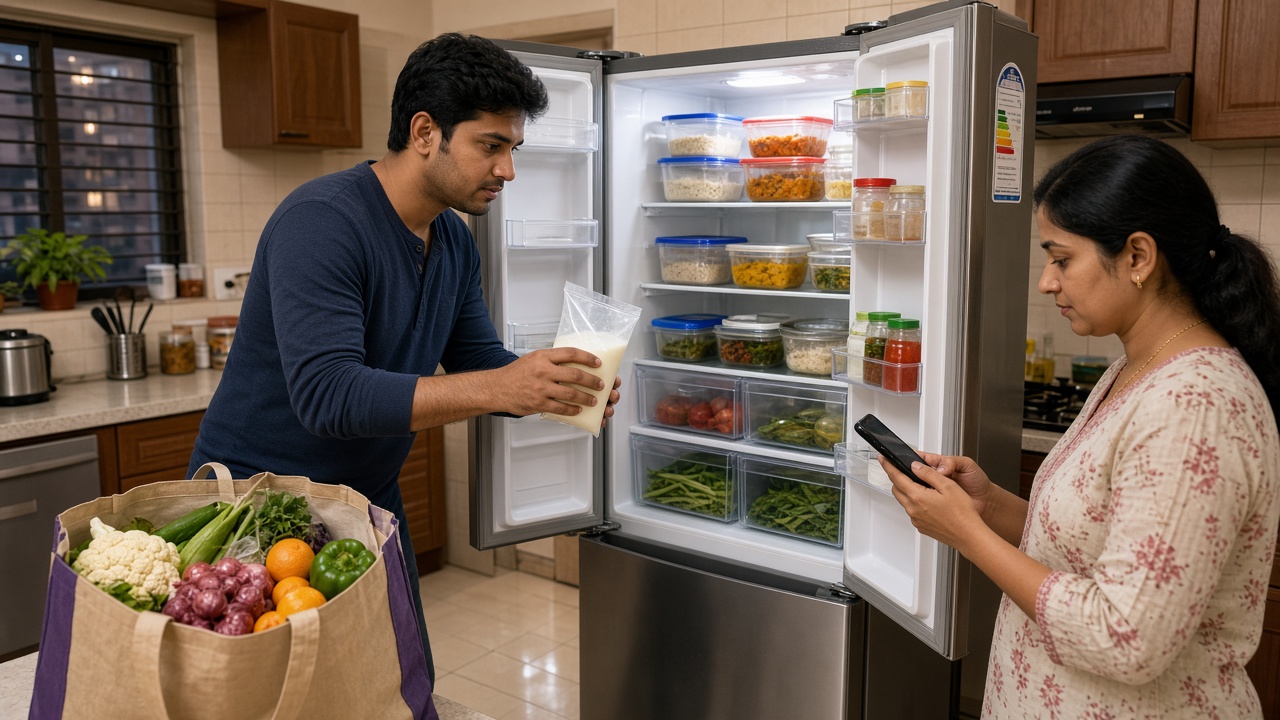
In the 2010s bigger double-door fridges with inverter compressors and star labels became common, online groceries filled them every week, and glass containers joined steel and plastic. Beyond the home, cold stores and refrigerated trucks began linking farms to cities to cut the huge waste of fruit, vegetables, and milk.
Unpacking the weekly online grocery order into a double-door fridge (artistic illustration).
2010: Energy star labels become mandatory for frost-free refrigerators, and Godrej’s ChotuKool, a small low-cost cooler, is launched for rural homes.
2011: The National Centre for Cold-chain Development is set up to build cold stores, pack houses, and refrigerated transport and reduce post-harvest losses.
2010s: Double-door and inverter fridges spread; online groceries, glass and borosilicate containers, and aluminium foil and cling film change home storage.
2016–2019: India agrees to the Kigali Amendment (2016) to phase down HFC refrigerants and launches the India Cooling Action Plan (2019) for efficient, climate-friendly cooling.
Technology
Inverter compressors: Save electricity.
Star labels: Compare efficiency.
Reefer trucks: Cold from farm to city.
Features
Bigger fridges: Separate freezer.
Online groceries: Weekly stocking.
Less waste: Cold chains grow.
📱 Smart Fridge2020s – Future
Smart Fridges & Zero Waste
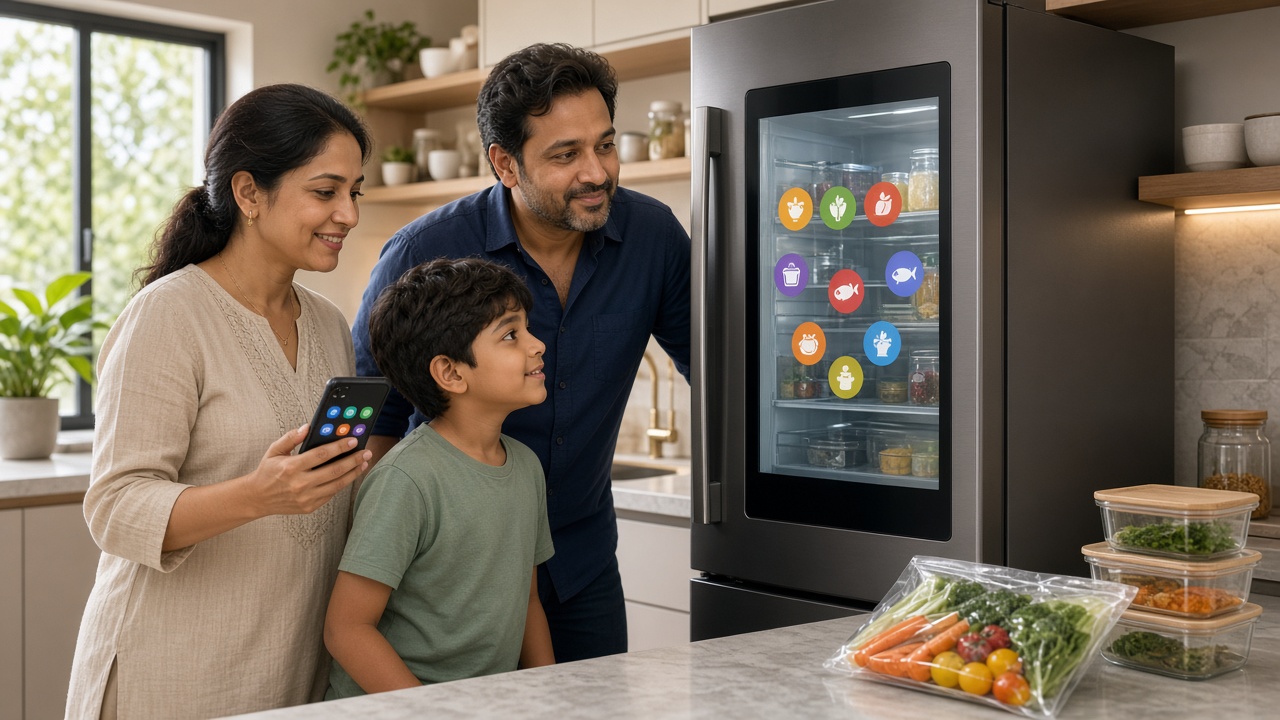
In the 2020s fridges went online. Smart fridges with Wi-Fi, cameras, and touchscreens show what is inside on a phone, convertible freezers adapt to festivals and parties, and vacuum sealers and glass boxes keep food longer — while families also rediscover clay pots, steel, and zero-waste habits.
Checking what is inside on the fridge screen and the phone app (artistic illustration).
2020: During the lockdown families stock up on groceries, and freezers and bigger fridges see strong demand.
2020s: Smart fridges with Wi-Fi, apps, internal cameras, and touchscreens reach Indian stores, along with convertible fridges and vacuum sealers.
2020s: Solar-powered cold rooms help farmers store produce, and clay pots, steel containers, and beeswax wraps return as eco-friendly choices.
Future: Fridges that track expiry dates, sensors that detect spoilage, climate-friendly refrigerants, and AI meal planning may sharply cut food waste.
Technology
Wi-Fi and apps: Remote control.
Internal cameras: See inside from the shop.
Convertible zones: Freezer to fridge.
Features
Door-open alerts: Save energy.
Food tracking: Less waste.
Back to basics: Clay and steel return.
Traditional Ways Indians Preserved Food
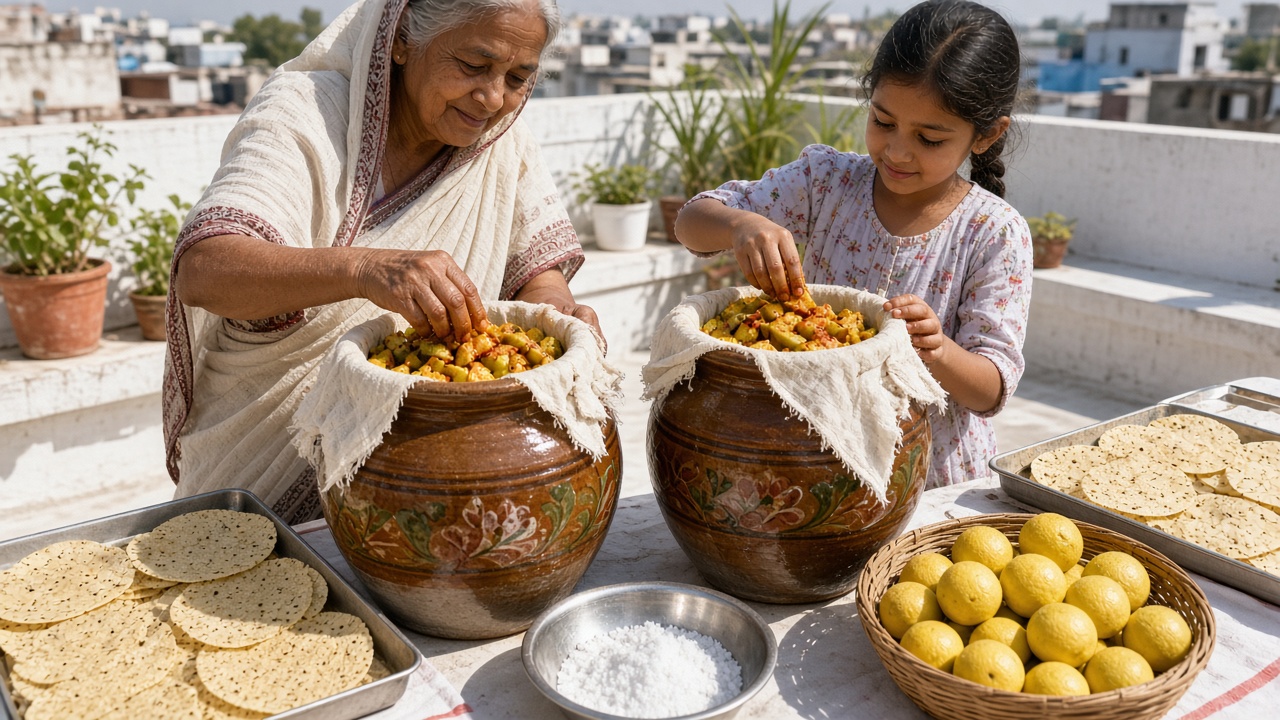
Summer mango pickle in ceramic barnis, with papads drying beside (artistic illustration).
Method
Examples
Why it works
Pickling in oil and salt
Mango, lemon, chilli achaar
Salt removes water; oil keeps out air
Sun-drying
Papad, vadi, chillies, dried fish
Germs cannot grow without water
Salting
Dried fish, salted lemons
Salt draws water out of food
Sugar syrup
Murabba, chikki, jaggery sweets
High sugar stops germs growing
Clarifying butter
Ghee
Removing water and milk solids stops spoiling
Fermenting
Kanji, dosa batter, bamboo shoot
Good bacteria make food sour and safe
Smoking
Smoked meat and fish in the northeast
Smoke dries food and slows germs
Neem leaves and ash
Stored wheat, rice, and dal
Natural insect repellents
Evaporative cooling
Water in matkas, curd in clay
Evaporation takes heat away
Hanging slings
Butter, curd, leftovers
Out of reach of cats, ants, and rats
Kitchen Containers Through Time
Container
Common in
Used for
Clay matka and surahi
Ancient times–now
Cool drinking water
Mud kothi and bamboo baskets
Ancient times–1970s
Grain and pulses
Glazed ceramic barni
Ancient times–now
Pickles
Brass and copper vessels
Medieval–1960s
Water, grain, and ghee
Tin boxes and canisters
1900s–1960s
Biscuits, tea, and sugar
Stainless steel dabba
1960s–now
Rice, dal, flour, and snacks
Masala dabba
1970s–now
Everyday spices
Steel tiffin carrier
1950s–now
Packed lunches
Plastic containers
1980s–now
Leftovers and dry goods
Glass and borosilicate boxes
2010s–now
Fridge and microwave storage
Vacuum and smart containers
2020s
Longer freshness, app tracking
How the Indian Fridge Changed
Type
Common from
What was new
Ice box
Late 1800s
Insulated box cooled by ice blocks
Single-door direct-cool fridge
1958 onwards
Electric cooling; manual defrosting
Fridge with stabiliser
1970s–1990s
Protection from voltage swings
Frost-free fridge
1990s
No ice build-up in the freezer
Clay fridge (Mitticool)
2000s
Cooling without electricity
Double-door fridge
2000s–2010s
Separate freezer, more space
Inverter and star-rated fridge
2010s
Lower electricity bills
Convertible fridge
Late 2010s–2020s
Freezer can switch to fridge
Smart fridge
2020s
Wi-Fi, apps, cameras, and screens
Food Storage Timeline Summary
Year / Era
Milestone
c. 2600–1900 BCE
Harappan storage jars and granaries
Ancient times
Mud kothis, pickling, sun-drying, ghee
1833
First ice shipment reaches Calcutta
Late 1800s
Ice factories and ice boxes
1890
Mumbai dabbawala service begins
1950s
Clay matkas, mesh cupboards, hanging slings
1958
First Indian-made refrigerator (Godrej)
1960s–1970s
Stainless steel dabbas and masala boxes
1970s–1980s
Fridges as status symbols; stabilisers
1980s
Plastic containers and packaged foods
1990s
Fridges spread after liberalisation; frost-free
1996
Branded airtight containers arrive
2000s
Mitticool clay fridge; frozen foods
2010
Star labels for frost-free fridges; ChotuKool
2011
National Centre for Cold-chain Development
2016
Kigali Amendment on HFC refrigerants
2019
India Cooling Action Plan
2020
Lockdown stocking; freezer demand
2020s
Smart and convertible fridges
Future
Spoilage sensors and zero-waste kitchens
Test Your Knowledge
20 quick questions from the food storage timeline. Click each question to reveal the answer.
Answer: A traditional mud bin used to store grain.
Answer: Neem leaves.
Answer: It draws water out of food, and germs cannot grow easily without water.
Answer: Its water and milk solids are removed, so it does not spoil easily.
Answer: 1833.
Answer: Water seeps through tiny pores and evaporates, taking heat away.
Answer: A long-necked clay pot for keeping drinking water cool.
Answer: To keep them away from cats, ants, and rats.
Answer: Godrej, in 1958.
Answer: It does not rust or react with food, needs no tin coating, and is easy to clean.
Answer: A round steel spice box with small bowls for everyday spices.
Answer: Since 1890.
Answer: To protect the compressor from voltage fluctuations.
Answer: Ice build-up, so it does not need manual defrosting.
Answer: A clay refrigerator that works without electricity, developed by Mansukhbhai Prajapati.
Answer: How energy-efficient it is — more stars mean lower electricity use.
Answer: An unbroken chain of refrigerated storage and transport from farm or factory to the consumer.
Answer: The Kigali Amendment to the Montreal Protocol.
Answer: The India Cooling Action Plan.
Answer: Wi-Fi app control and internal cameras (also touchscreens, door alerts, and convertible zones).
Classroom activity
Students Tasks
Use these prompts for discussion or projects on how Indian families kept food fresh over time.
Timeline understandingScience of coolingFood safetyReducing waste
Ask a grandparent how food and water were kept cool before their family had a fridge.
Make a timeline poster: clay pots (1950s), steel dabbas (1970s), fridges (1990s), cold chains (2010s), and smart fridges (2020s).
Compare the temperature of water in a clay pot, a steel bottle, and a plastic bottle kept in the same room for six hours.
Make a simple pot-in-pot cooler with two clay pots and wet sand, and test how long vegetables stay fresh.
List the containers in your kitchen and group them by material: clay, steel, glass, and plastic.
Help an elder make a small batch of pickle and explain the science of each ingredient.
Draw the inside of your fridge and label the best place for milk, vegetables, leftovers, and eggs.
Keep a one-week food-waste diary at home and suggest three ways to reduce it.
Find the star label on a fridge and calculate its yearly electricity cost from the units shown.
Debate: “Traditional food storage was better for the planet than modern fridges.”
Continue exploring
Food storage grew with electricity, the dairy revolution, farm markets, and higher harvests. Explore these connected timelines next.
Click any panel to expand and explore the visual mood.
India’s food storage journey in pictures — mud grain bins, summer pickles, the clay matka, steel dabbas, the first family fridge, double-door fridges, smart fridges, and then versus now.
Grain Bins
Mud kothis and sun-drying
Summer Pickles
Mango in ceramic barnis
Clay Matka
Nature’s water cooler
Steel Dabbas
Shining shelves
1990s Fridge
Lace cover and stabiliser
Double-Door Fridge
Weekly online groceries
Smart Fridge
See inside on your phone
Then vs Now
Clay pot to smart fridge
Explore all daily life timelines
Jump to any other daily life timeline on WorldTimelineHub.
Disclaimer: This content is AI-generated for educational purposes and may contain errors or outdated details. For correct and authoritative information, please refer to official and reliable sources such as government publications, manufacturers, museums, and academic references.