From Feynman’s simulation dream and Shor’s algorithm to NISQ fridges, supremacy debates, error-corrected logical qubits, and India’s National Quantum Mission.
1980s -> PresentQubits -> QECNISQ -> Logical
Quantum Computing Ideas
Quantum computers store information in qubits that can be superpositioned and entangled, aiming to solve some problems faster than classical machines. The field moved from thought experiments and algorithms to superconducting fridges, trapped ions, photonics, and early error-corrected logical qubits.
This timeline covers theory and algorithms, first laboratory qubits, the NISQ hardware race, supremacy claims, and India’s National Quantum Mission—alongside what remains speculative versus demonstrated.
Big picture
Quantum computing evolution in one view
Ideas from the 1980s met algorithms in the 1990s, then noisy hardware in the 2010s. Today labs chase useful, error-corrected machines while cloud access lets students run small circuits remotely.
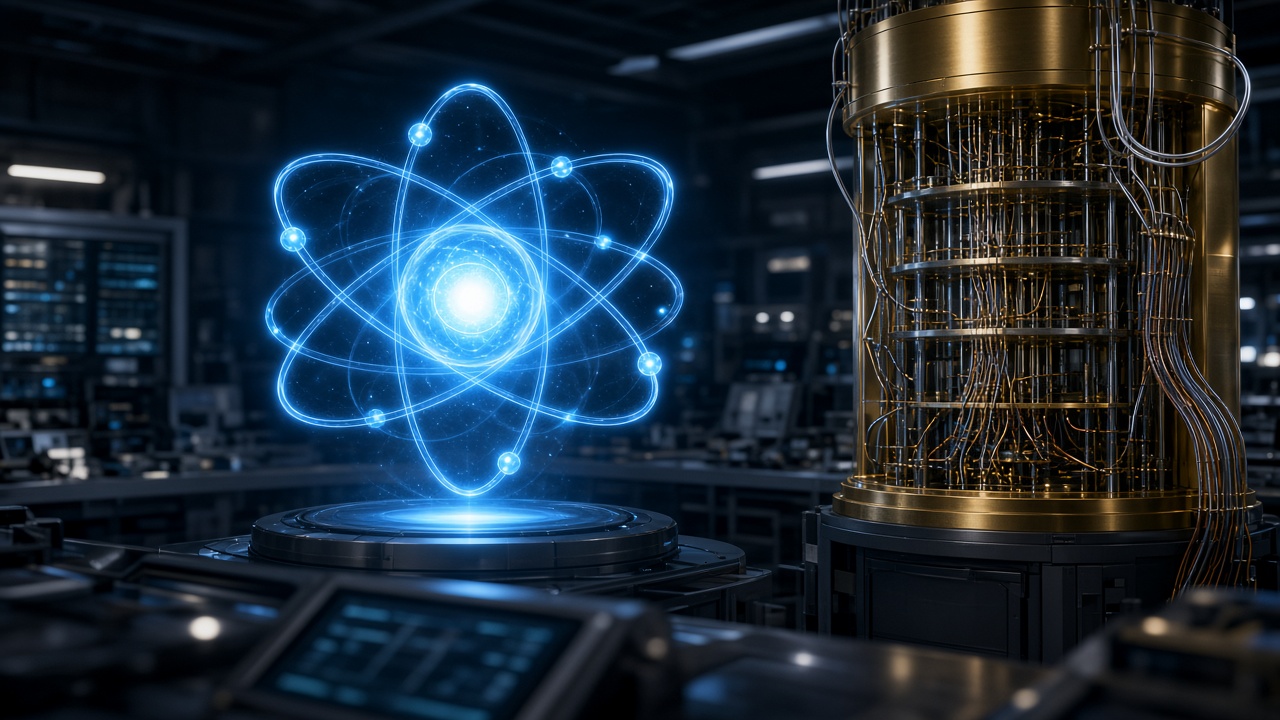
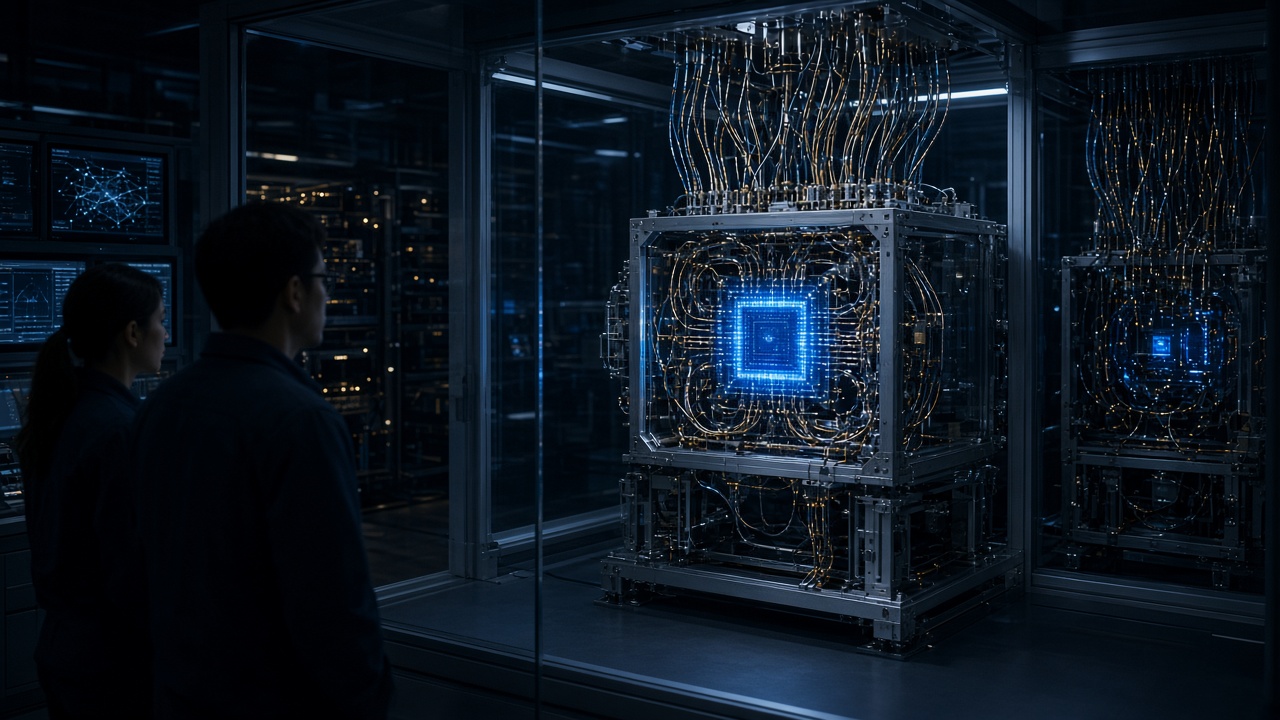
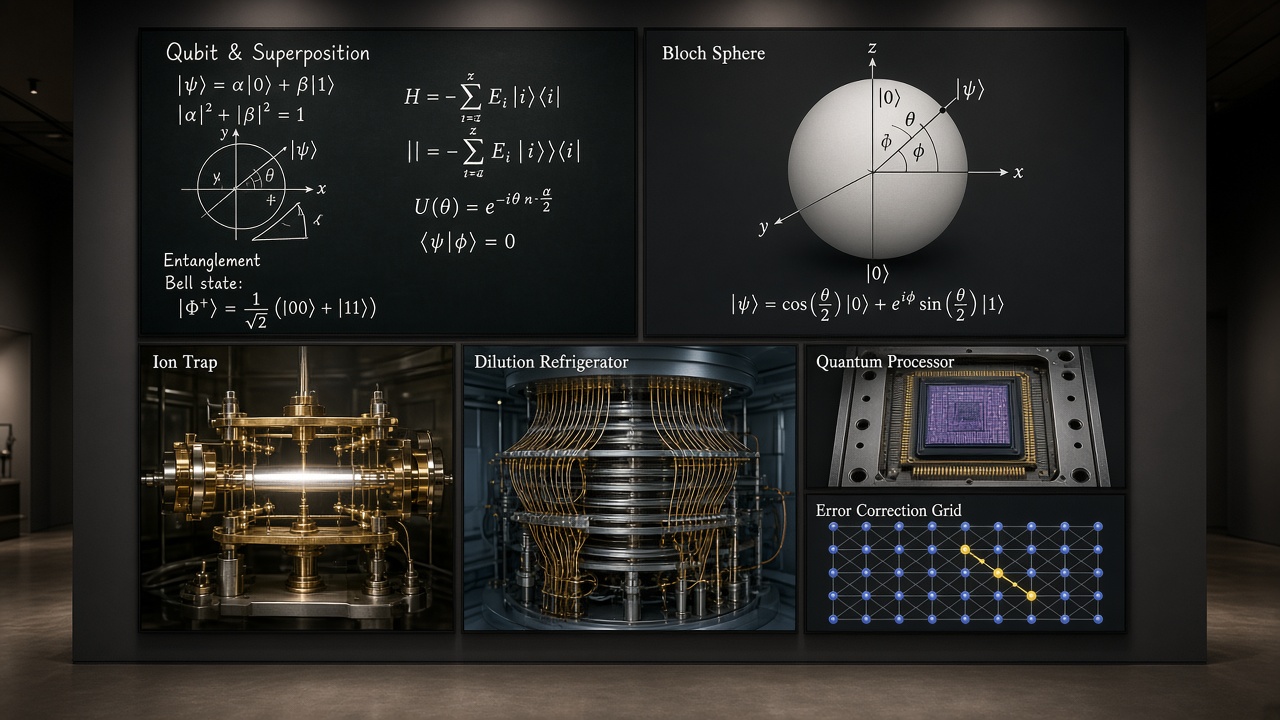
Quantum evolution: from theory and algorithms to cryogenic hardware and error-corrected logical qubits.
Theory1980s - 1993
Foundations of Quantum Computing
Physicists asked whether quantum mechanics could power a new kind of computer. Feynman argued for simulating physics on quantum hardware; Deutsch formalised a universal quantum computer—setting the stage before practical algorithms arrived.
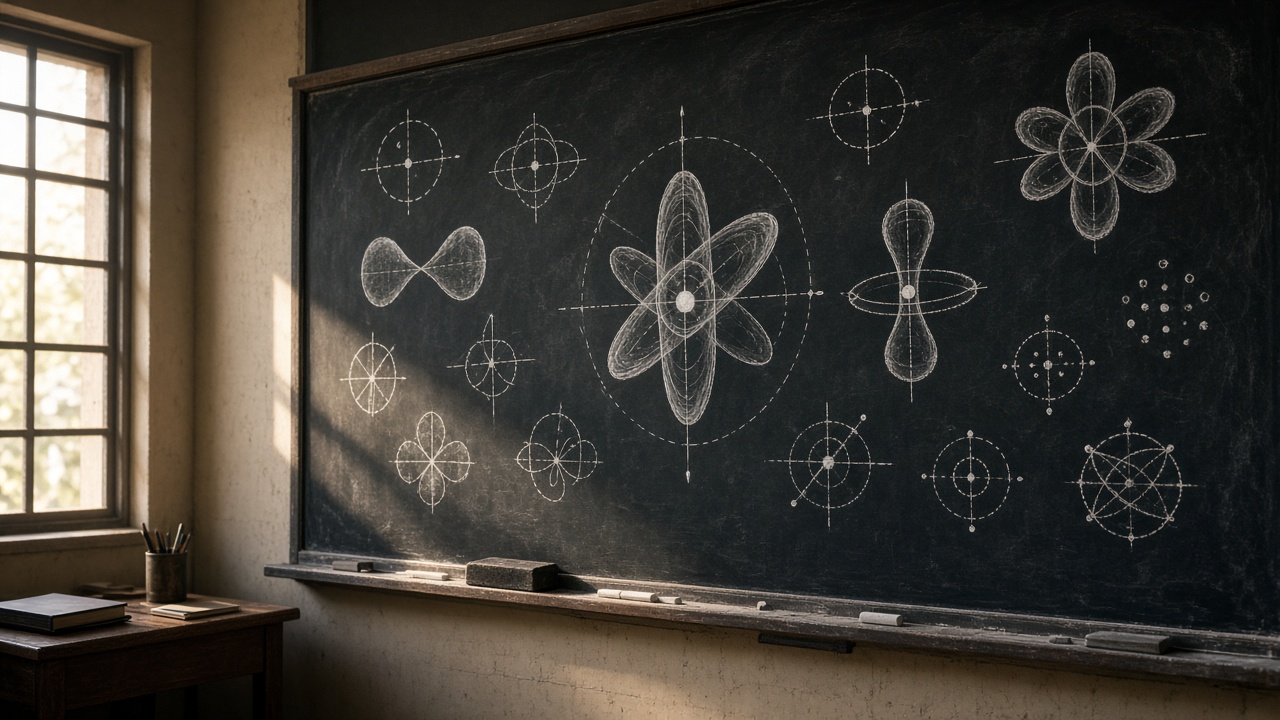
Foundations era: quantum simulation ideas and universal quantum Turing machines.
Feynman (1981–82): simulate physics with quantum systems.
Deutsch (1985): universal quantum computer model.
Qubit as the basic unit of quantum information.
Technology Used
Quantum mechanics: Superposition and interference.
Information theory: Qubits vs classical bits.
Thought experiments: Circuits as unitary operations.
Features
Mostly theory: Little working hardware yet.
New complexity class ideas: BQP emerges later.
Academic focus: Physics and CS meet.
Speedups1994 - 1999
Algorithms That Changed the Stakes
Shor’s factoring algorithm and Grover’s search showed quantum computers could beat classical methods on important tasks—especially cryptography—sparking security research and funding interest worldwide.
Algorithms era: Shor and Grover made quantum advantage concrete on paper.
1994: Shor’s algorithm for integer factoring.
1996: Grover’s unstructured search speedup.
Post-quantum cryptography research begins in response.
Technology Used
Quantum Fourier transform: Core of Shor-style period finding.
Amplitude amplification: Grover iterations.
Circuit model: Gates on qubits.
Features
Cryptography impact: RSA-style assumptions threatened (in theory).
Still far from hardware: Millions of reliable qubits needed for big keys.
Clear motivation: Governments and labs invest.
Lab Qubits1995 - 2009
First Physical Qubits
NMR, trapped ions, superconducting circuits, and photons demonstrated few-qubit gates in laboratories. Error rates were high, but proof-of-principle chips showed quantum control was possible outside pure theory.
Early hardware: trapped ions, NMR, and superconducting loops host a handful of qubits.
Trapped-ion and NMR demonstrations of small algorithms.
Superconducting Josephson junctions emerge as a leading platform.
Decoherence remains the central engineering enemy.
Technology Used
Ion traps: Laser-cooled ions as qubits.
NMR / spins: Molecular spin ensembles.
Superconducting circuits: Microwave control.
Features
Few qubits: Toy problems only.
Cryogenics: Millikelvin fridges for many platforms.
Specialist labs: Not yet cloud-accessible.
NISQ Race2010 - 2018
Scaling Noisy Intermediate-Scale Quantum
Companies and national labs scaled from handfuls to dozens of noisy qubits. Cloud APIs let students submit circuits; the NISQ label captured machines too small for full error correction but large enough for experiments and hybrid algorithms.
NISQ era: dilution refrigerators and microwave wiring become iconic quantum hardware.
Superconducting and ion systems scale qubit counts.
Cloud quantum services appear for remote experiments.
Variational algorithms pair quantum circuits with classical optimisers.
Technology Used
Dilution refrigerators: ~10 mK chip stages.
Microwave control electronics: Pulse shaping.
Cloud SDKs: Circuit languages for remote backends.
Features
Noisy gates: Errors limit circuit depth.
Hybrid workflows: Classical + quantum loops.
Open access: Education and research broaden.
Advantage?2019 - 2022
Supremacy Claims and Debate
Labs announced quantum supremacy or advantage on specialised sampling tasks. Classical teams answered with better simulations, sparking healthy debate: when is a result useful, and when is it a benchmark milestone?
2019+: random circuit sampling milestones announced.
Classical algorithms improve, narrowing some gaps.
Focus shifts toward useful chemistry and optimisation demos.
Technology Used
50–100+ qubit processors: Still noisy.
Cross-entropy benchmarks: Compare to classical sims.
Photonic & other platforms: Parallel approaches.
Features
Headline science: Public attention spikes.
Limited applications: Not yet breaking RSA in practice.
Benchmark wars: Classical vs quantum simulation race.
Logical Qubits2023 - Present
Error Correction and National Missions
Research targets logical qubits protected by error-correcting codes, modular architectures, and utility-scale roadmaps. India launches a National Quantum Mission; industry and academia race on materials, control software, and post-quantum security migration.
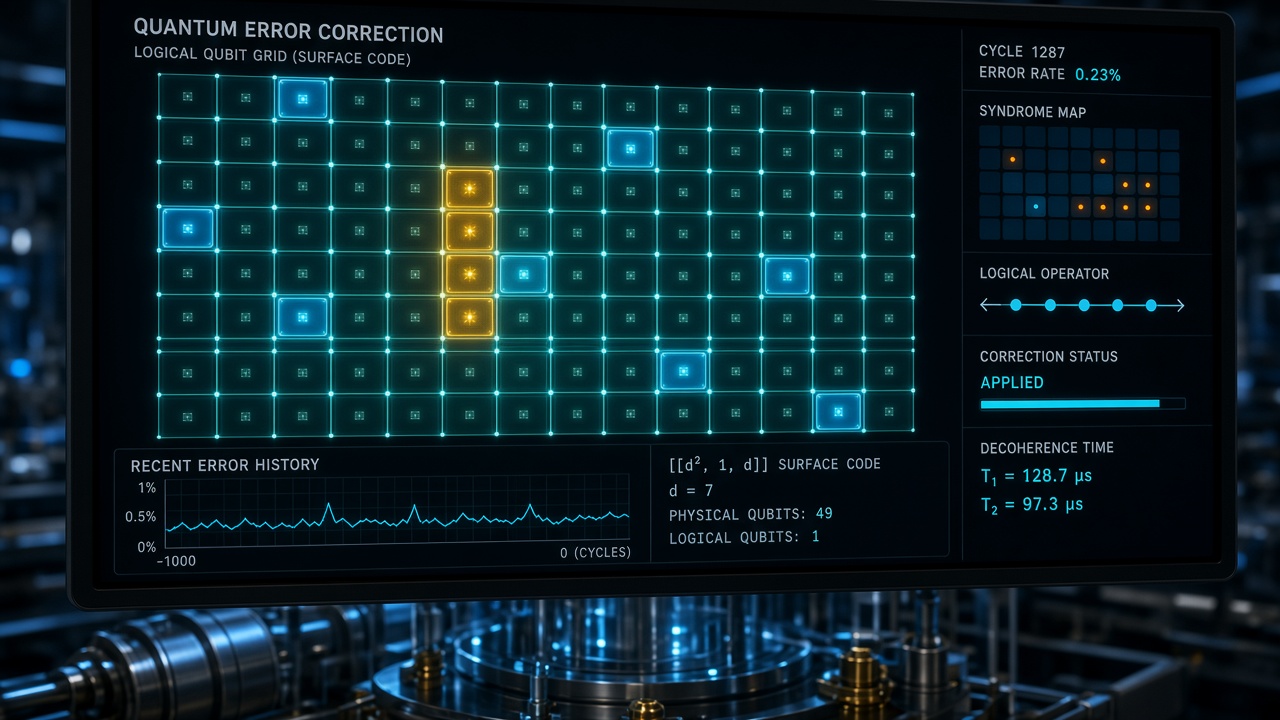
Error-correction era: many physical qubits encode fewer reliable logical qubits.
Surface-code and related experiments improve logical lifetimes.
National programmes fund labs, startups, and workforce training.
Post-quantum cryptography standards roll out for classical systems.
Technology Used
Quantum error correction: Encode logical qubits.
Modular interconnects: Link multiple chips.
Hybrid HPC: Classical supercomputers + QPUs.
Features
Longer road: Useful cryptographically relevant machines still ahead.
Education boom: Courses and cloud backends for learners.
Policy focus: Dual-use export and security rules.
Quantum Timeline Summary
Year / Era
Milestone
Why it matters
1980s
Theory foundations
Quantum computers become a scientific goal.
1994–96
Shor & Grover
Clear algorithmic motivations and crypto impact.
1995–2009
Lab qubits
Proof that gates work in physical systems.
2010s
NISQ scaling
Dozens of noisy qubits + cloud access.
2019–22
Supremacy claims
Benchmarks vs classical simulation intensify.
2020s
Error correction
Path toward reliable logical qubits and missions.
Key Historical Events
Event
Year
Significance
Feynman quantum simulation talks
1981–82
Argue nature needs quantum computers to simulate.
Deutsch universal quantum computer
1985
Formal model of quantum computation.
Shor’s algorithm
1994
Polynomial-time factoring on a quantum computer.
Grover’s algorithm
1996
Quadratic speedup for unstructured search.
Early ion / NMR gate demos
late 1990s
Physical qubits execute tiny circuits.
NISQ concept & cloud backends
2010s
Noisy devices usable for research at scale.
Quantum supremacy announcements
2019+
Specialised tasks claimed beyond classical sim.
Logical qubit / QEC progress
2020s
Error correction experiments improve.
India National Quantum Mission
2023
National funding for tech, sensing, communication.
Post-quantum crypto standards
2020s
Classical systems prepare for future quantum attacks.
Qubit Platforms Compared
Multiple hardware platforms compete—no single winner yet.
Platform
How qubits are made
Strengths
Challenges
Superconducting
Josephson circuits at mK
Fast gates, industry scale
Noise, cryogenics, wiring
Trapped ions
Laser-cooled ions
High fidelity, long coherence
Slower gates, scaling traps
Photonics
Light modes / chips
Room-temp potential, networks
Probabilistic operations
Neutral atoms
Optical tweezers arrays
Large arrays emerging
Control complexity
Spin / silicon
Quantum dots, donors
Chip-industry synergy
Fabrication uniformity
Core Concepts
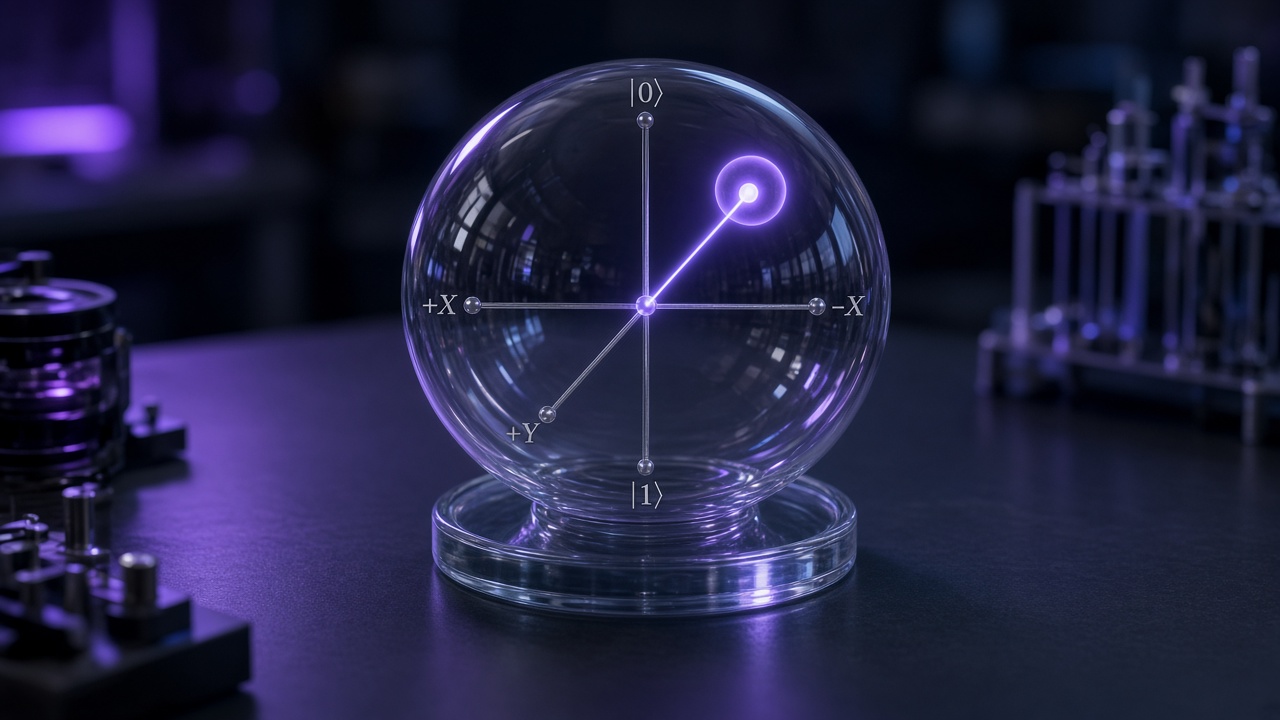
Qubit: Two-level quantum system; can be |0⟩, |1⟩, or a superposition.
Entanglement: Correlated qubits that cannot be described independently.
Interference: Amplitudes cancel or reinforce to favour correct answers.
Decoherence: Environment destroys fragile quantum states.
NISQ: Noisy Intermediate-Scale Quantum devices (tens–hundreds of qubits).
Logical qubit: Error-corrected qubit encoded in many physical qubits.
2028–2032: Modular QPUs linked into larger systems; clearer utility benchmarks.
2030s: Possible cryptographically relevant machines—timeline still uncertain.
Ongoing: Classical post-quantum cryptography protects data before large QPUs arrive.
India spotlight
Quantum Technology in India
Indian institutes long contributed to quantum optics and information theory. The National Quantum Mission aims to build devices, sensors, communication links, and skilled talent across hubs.
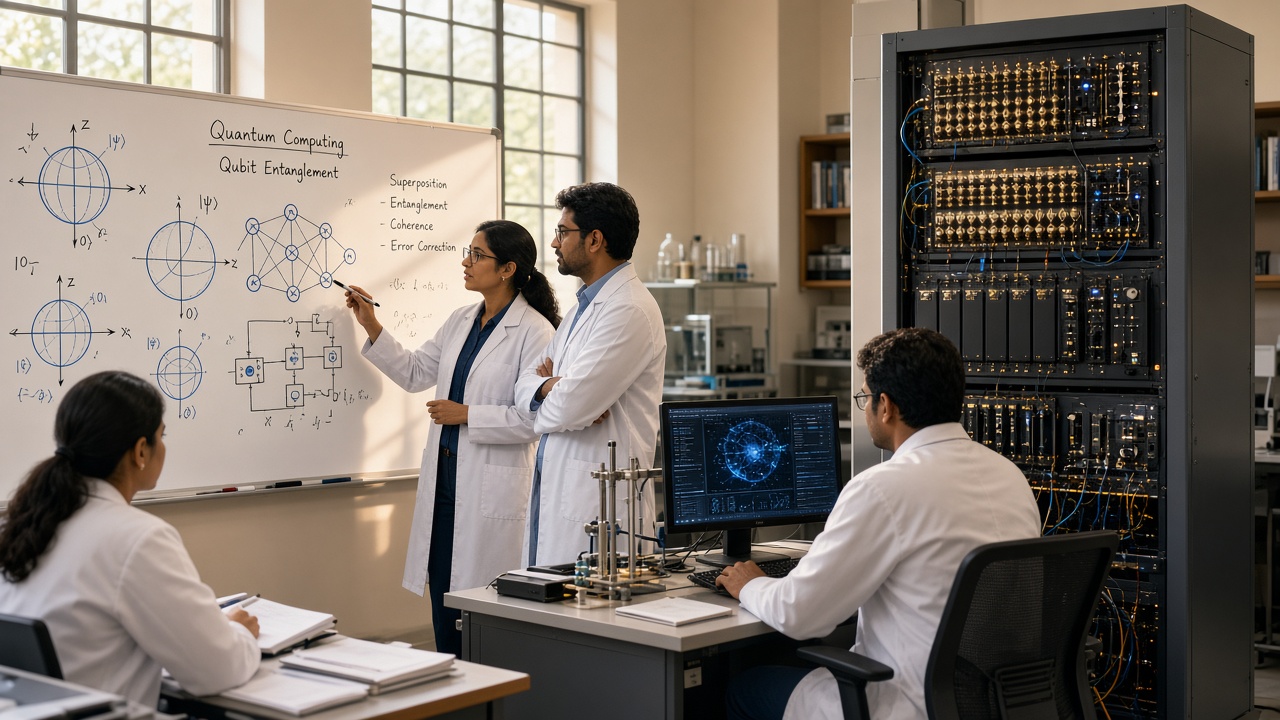
India spotlight: research labs, startups, and the National Quantum Mission.
Pre-2010s
Academic foundations
IITs, IISc, TIFR and others publish in quantum optics and information.
2010s
Lab programmes grow
More groups work on sensing, communication, and early computing prototypes.
2023
National Quantum Mission
Cabinet approves a multi-year mission for quantum tech hubs and deliverables.
2020s
Startups & cloud access
Students use global cloud QPUs; local startups explore software and hardware niches.
Ongoing
Security readiness
Agencies watch post-quantum cryptography for banking and government systems.
Jump to any other technology timeline on WorldTimelineHub.
Disclaimer: This content is AI-generated for educational purposes and may contain errors or outdated details. For correct and authoritative information, please refer to official and reliable sources such as government publications, manufacturers, museums, and academic references.