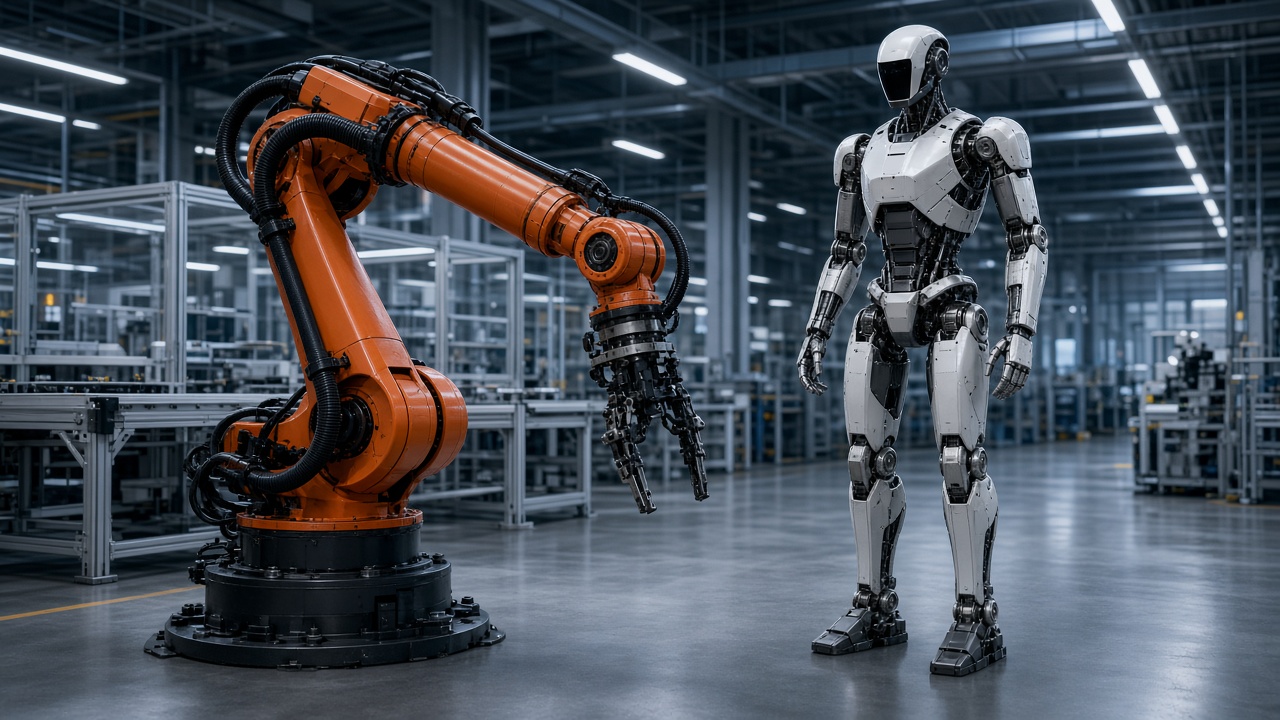
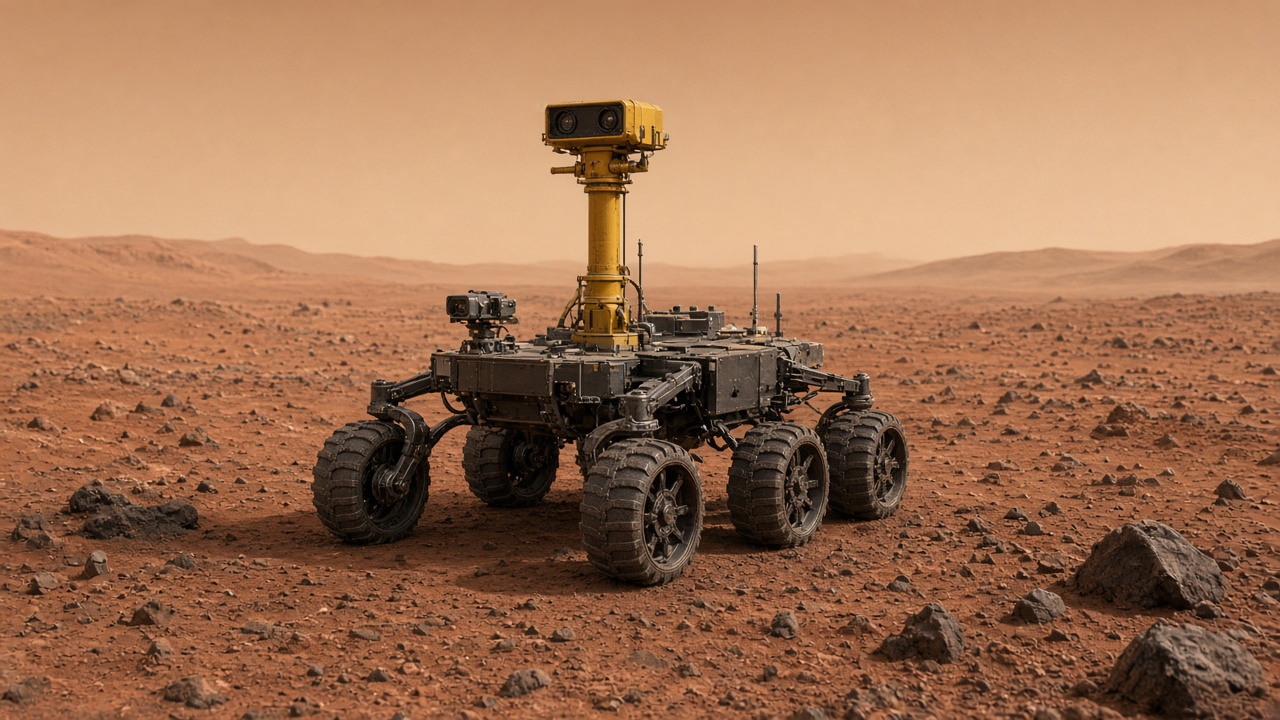
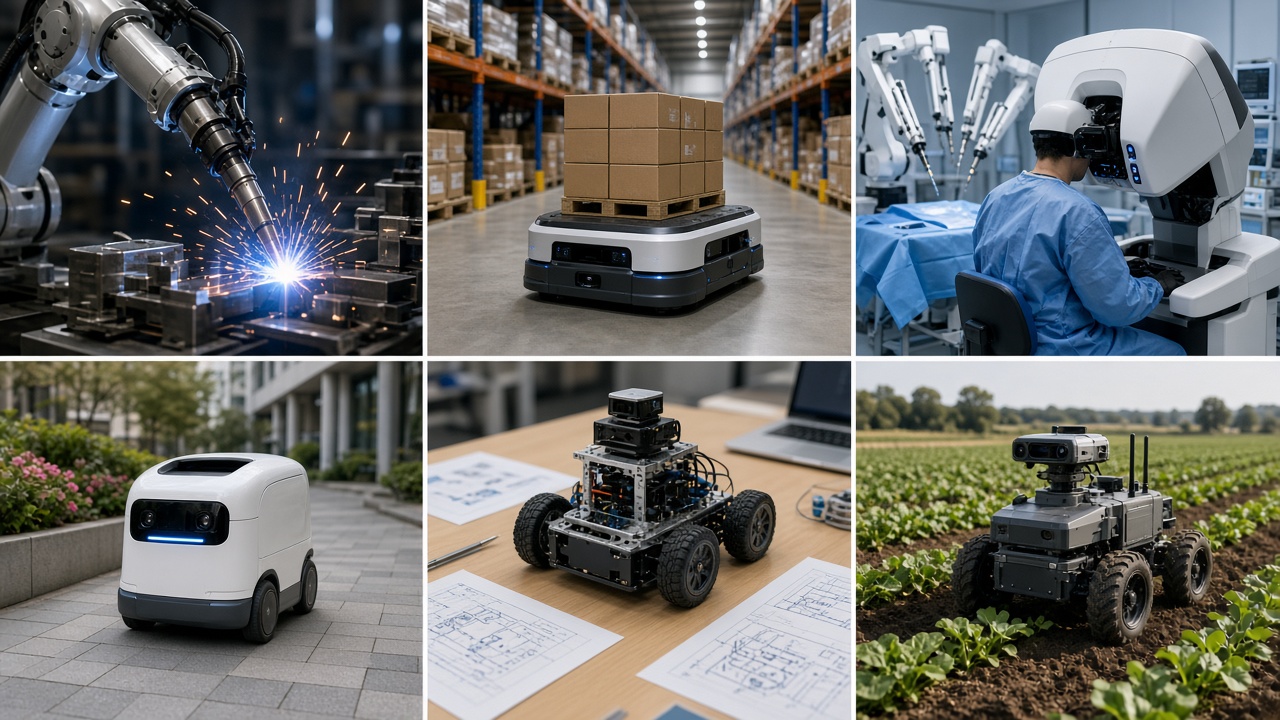
From automata and Unimate’s factory arm to mobile rovers, collaborative cobots, warehouse fleets, and AI-guided robots that sense, plan, and act beside people.
1920s -> PresentArms -> CobotsAI Robots
Robotics Ideas
Robotics combines mechanisms, sensors, control software, and increasingly AI so machines can sense their surroundings, make decisions, and move safely. The field grew from clockwork automata and literary “robots” into industrial arms, mobile platforms, and collaborative helpers.
This timeline tracks that arc from early ideas and Unimate to factory lines, space rovers, cobots, warehouse fleets, and India’s expanding automation story.
Big picture
Robotics evolution in one view
Robots moved from cages on factory floors to shared workspaces, homes, warehouses, and other planets. Microprocessors, cheaper sensors, open software stacks, and AI perception each unlocked a new wave.
Robotics: arms, mobiles, cobots, and AI-guided machines that sense and act.
IdeasTo 1950s
Automata, Fiction and Early Control
Clockwork automata amazed courts for centuries. In 1920 Karel Čapek’s play popularised the word “robot.” Mid-century feedback control and computing set the stage for machines that could follow programmed motion, not only wind-up tricks.
From gears and stories to programmable motion.
Mechanical automata demonstrate sequenced motion.
1920: “robot” enters popular language.
Servo and feedback ideas mature with electronics.
Takeaway: Robotics needed both imagination and control theory before factory arms arrived.
First Arm1950s - 1970s
Unimate and the Industrial Arm
George Devol’s programmable manipulator and Joseph Engelberger’s Unimation company put a hydraulic arm on a car-plant line around 1961. Robots took hot, heavy, repetitive jobs—usually behind safety fences.
Programmable arms enter automotive and heavy industry.
~1961: Unimate works a General Motors die-casting line.
Teach-pendant programming and fixed workcells.
Japan and Europe scale industrial robotics in the 1970s.
Takeaway: The first wave is strength and repeatability inside cages—not humanoid helpers.
Lines1980s
Microprocessors and Factory Automation
Cheaper computers, electric servos, and welding/painting cells turned robots into standard factory tools. Auto and electronics plants linked arms into long automated lines.
Welding, paint, and assembly cells multiply on production lines.
Electric robots replace many hydraulic designs.
Offline programming and cell simulation grow.
Safety standards harden around industrial robots.
Takeaway: Robots become infrastructure for mass manufacturing.
Wheels1990s - 2000s
Mobile Robots, Homes and Space
Wheeled platforms left the fixed cell: planetary rovers proved autonomy under delay, research labs built SLAM navigators, and consumer vacuums brought robots into living rooms.
Mobility + sensing: from Mars to living-room floors.
1997: Sojourner rover on Mars.
Research SLAM and indoor navigation advances.
Early 2000s: mass-market robot vacuums.
Takeaway: Autonomy under uncertainty becomes as important as arm strength.
Share Space2010s
Collaborative, Warehouse and Service Robots
Force-limited cobots work beside people without full cages. Warehouses deploy fleets of mobile robots. Hospitals, hotels, and farms trial service platforms. ROS and open stacks speed research-to-product paths.
Cobots and fleets share space with people and packages.
ISO-style collaborative robot modes expand.
E-commerce warehouses scale AMR fleets.
ROS / ROS 2 become common software glue.
Takeaway: Safety, software, and logistics scale robots beyond the auto plant.
Sense & Act2020 - Present
Vision-Language AI, Humanoids and Fleets
Deep learning perception, sim-to-real training, and foundation models for robotics push manipulation and navigation. Humanoid and quadruped prototypes grab headlines while fleets quietly automate inspection, delivery, and last-metre tasks.
AI perception and planning meet mechanical platforms.
Vision and language models guide robot skills research.
Edge compute and 5G support remote monitoring of fleets.
Takeaway: The hard part is reliable real-world autonomy—not only impressive demos.
Robotics Timeline Summary
Era
Years
Focus
Automata ideas
to 1950s
Gears, fiction, control roots
Industrial arms
1950s-1970s
Unimate, caged factory arms
Factory boom
1980s
Electric robots, auto lines
Mobile & space
1990s-2000s
Rovers, SLAM, home robots
Cobots & service
2010s
Shared space, warehouses, ROS
AI & humanoids
2020-Present
Perception, fleets, demos
Then vs Now
Aspect
Then
Now
Workspace
Fenced cells
Cobots and shared floors (with rules)
Programming
Teach pendants
Offline, ROS, learning from demos
Mobility
Fixed base arms
AMRs, drones, legged platforms
Intelligence
Scripted paths
Vision, planning, AI skills
Breakthroughs
Unimate: Programmable industrial work at scale.
Servo + microprocessors: Precise electric robots.
SLAM / mobile autonomy: Navigate unknown spaces.
Cobots: Safer force-limited collaboration.
Learning + vision: Robots that adapt to variation.
Impact on Daily Life
Cars, phones, and packages often pass robot cells or warehouse AMRs before you see them. Home vacuums and lawn bots are familiar; hospitals trial delivery carts; farms test spraying and picking platforms. Jobs shift toward supervising, maintaining, and programming machines.
Industry, logistics, homes, farms, and research labs all use robots.
India focus
Robotics in India
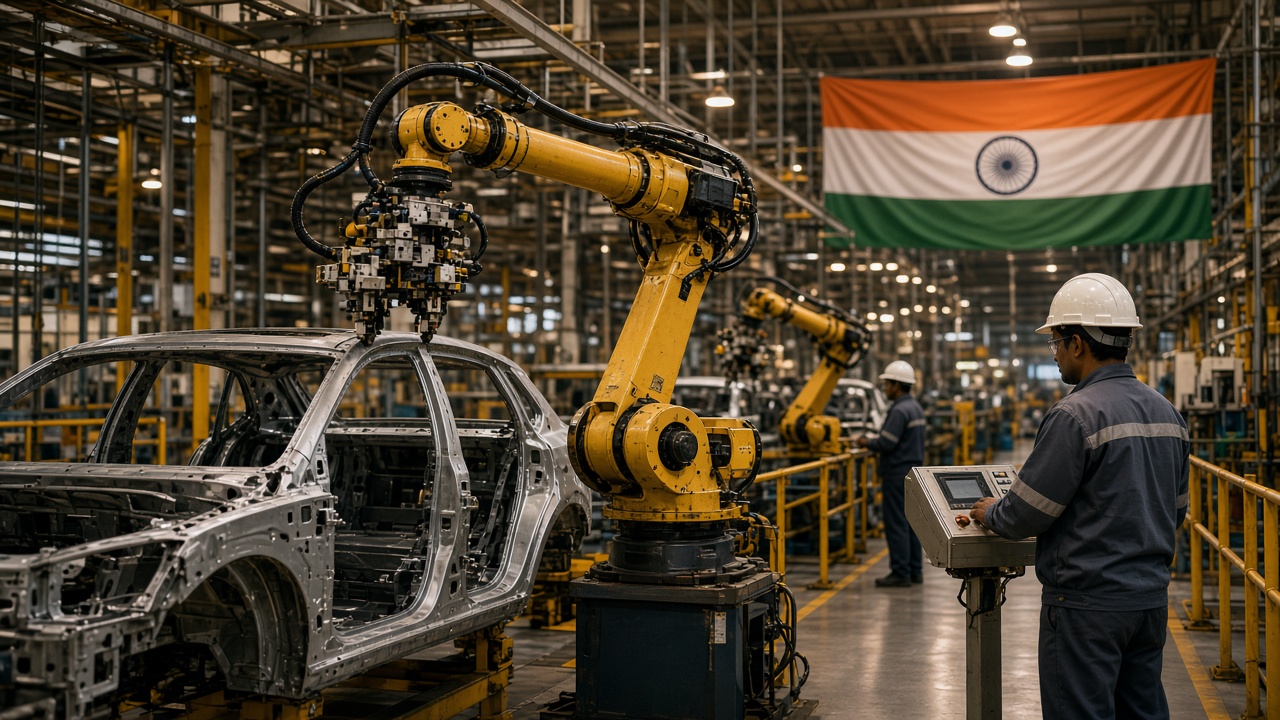
India’s auto, electronics, pharmaceuticals, and e-commerce warehouses steadily add robots. Institutes and startups work on vision-guided arms, agri-bots, and service platforms, while Make-in-India and skill programmes push automation awareness in engineering colleges.
India: factories, warehouses, campuses, and startups adopt robots.
Auto and electronics plants use welding and handling arms.
Warehouse AMRs grow with e-commerce fulfilment.
Agri and inspection robots appear in pilot projects.
Engineering curricula add ROS, mechatronics, and AI modules.
Test Your Knowledge
Twenty quick checks on Unimate, cobots, mobile robots, and AI robotics.
Answer: Karel Čapek (play R.U.R.).
Answer: Around 1961.
Answer: Behind safety fences / cages.
Answer: Program robot motions by teaching points.
Answer: Welding, painting, and assembly tasks.
Answer: Mars rover / mobile robot.
Answer: Map and localise while navigating.
Answer: Collaborative robot.
Answer: Work nearer people with force limits / safety modes.
Answer: Autonomous Mobile Robot.
Answer: A robot software framework / middleware.
Answer: The tool or gripper at the arm tip.
Answer: Independent joint motions of the robot.
Answer: High speed/force made collisions dangerous.
Answer: Perception, planning, and adaptive skills.
Answer: Train in simulation, transfer to real robots.
Answer: Reliable performance in messy real environments.
Answer: Auto, electronics, warehouses, and pilots in agri.
Answer: Local low-latency processing and monitoring.
Answer: From caged arms to mobile, collaborative, AI-guided fleets.
Classroom activity
Students Tasks
Ten prompts on arms, safety, mobile robots, and AI in robotics.
SafetyIndustryMobilityIndia
Explain why early industrial robots needed cages.
Compare a fixed welding arm with a warehouse AMR.
Define end effector with two real examples.
What problem does SLAM solve for a mobile robot?
Debate: should cobots replace all factory fences?
List three sensors a delivery robot might use.
Research one India robotics startup or plant (one page).
How does AI vision help a picking arm?
Design a poster: “Jobs robots take vs jobs robots create.”
Propose a school-lab robot project with ROS or simple kits.
Continue exploring
Robotics links AI, processors, edge compute, and industrial history. Explore these connected stories next.
Jump to any other technology timeline on WorldTimelineHub.
Disclaimer: This content is AI-generated for educational purposes and may contain errors or outdated details. For correct and authoritative information, please refer to official and reliable sources such as government publications, manufacturers, museums, and academic references.