From Morse wires and scarce landlines, to STD/ISD trunk freedom, a prepaid mobile explosion, the Jio 4G data shock, and a nationwide 5G buildout.
Wires -> WavesSTD/ISD & prepaid4G data & 5G
Why Telecom India Matters
India’s telecom story is one of scarcity turning into scale. What began as imperial telegraph lines and waitlisted landlines became the world’s largest mobile data market—powering UPI, OTT video, remote work, and Digital India.
This timeline follows telegraph, landlines, STD/ISD, the mobile revolution, Jio 4G, and 5G rollout as linked turning points.
Big picture
Telecom India in one view
Dots and dashes, rotary dials, trunk-call queues, prepaid SIMs in every pocket, unlimited-feeling 4G video, and 5G towers rising over cities.
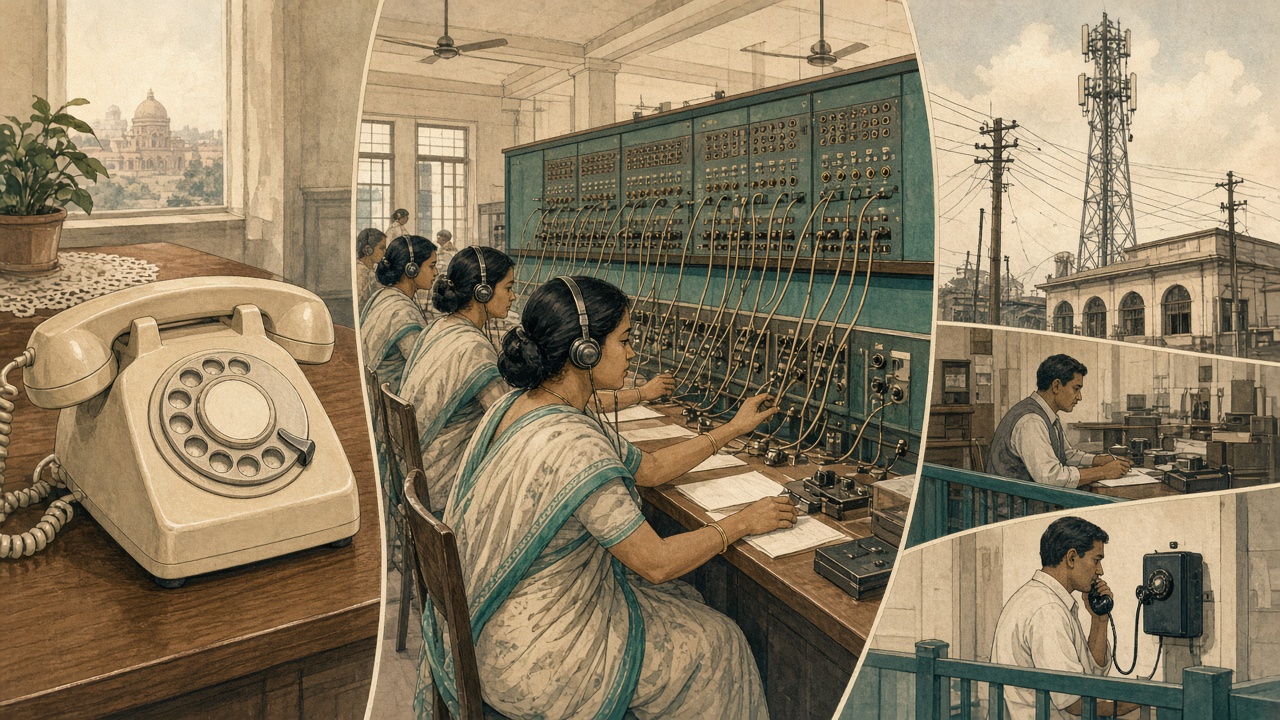
India’s modern telecom begins with the telegraph. From the 1850s, electric wires carried Morse across cities and provinces—shrinking space for government, railways, newspapers, and business. Messages that once took weeks by dak could arrive in minutes.
Telegraph era: the first nationwide instant network.
Lines follow railways and administrative centres.
Press and commerce adopt wired news and orders.
Sets the institutional DNA for Posts & Telegraphs.
Fixed Voice1880s–1990s
Landlines
Telephone exchanges arrived in the late 19th century, but for decades a landline remained a scarce privilege. Waiting lists stretched years; many households shared a neighbour’s phone. Manual boards gave way to automatic exchanges, yet access stayed limited until reform and mobiles.
Landline era: voice as a waitlisted luxury.
DoT / P&T monopoly shapes service culture and shortages.
C-DOT and local R&D push rural exchanges later on.
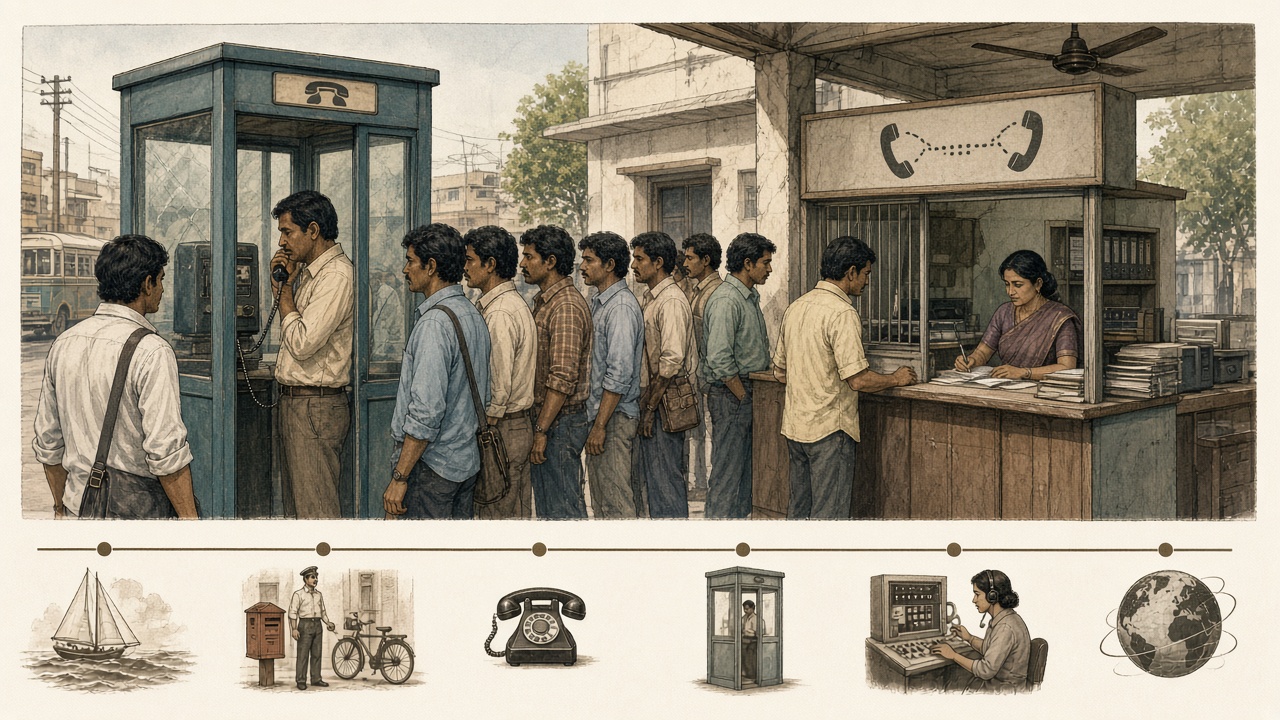
PCOs (public call offices) become community lifelines.
Direct Distance1960s–1990s
STD / ISD
Before STD, long-distance meant booking a trunk call and waiting for the operator. Subscriber Trunk Dialling and International Subscriber Dialling let people dial other cities—and later other countries—directly. STD booths became social hubs; ISD linked diaspora families home.
STD/ISD era: distance dialled, not booked.
Area codes and national numbering systematise the network.
STD/PCO entrepreneurs create local telecom micro-businesses.
High call rates still ration conversation time—until mobiles.
In Every Pocket1995–2015
Mobile Revolution
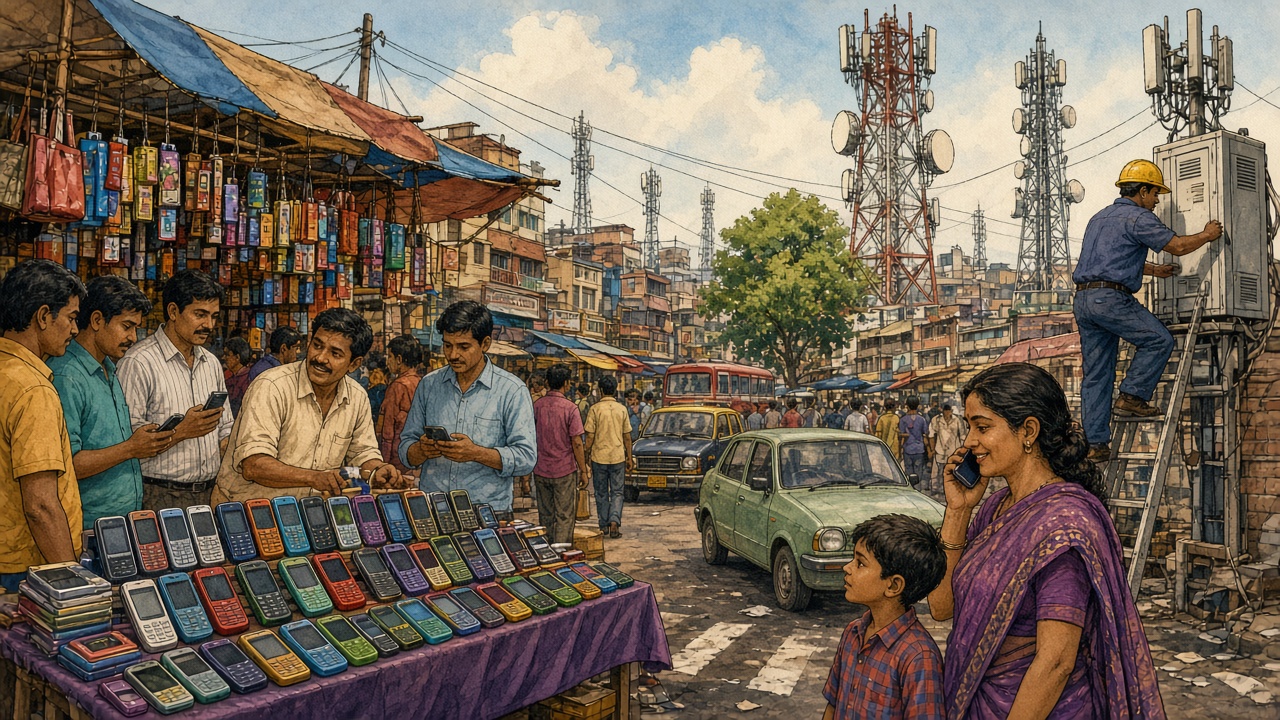
Commercial cellular services launched in the mid-1990s. Liberalisation, private operators, prepaid SIMs, and cheap feature phones turned India into a mobile-first society. Missed-call culture, SMS, and later 2G/3G data rewired family life, business, and politics.
Mobile era: prepaid SIMs leapfrog landline scarcity.
TRAI regulation and competition reshape tariffs.
Rural coverage and tower sharing expand reach.
Smartphones begin replacing feature phones before mass 4G.
Data Shock2016–
Jio 4G
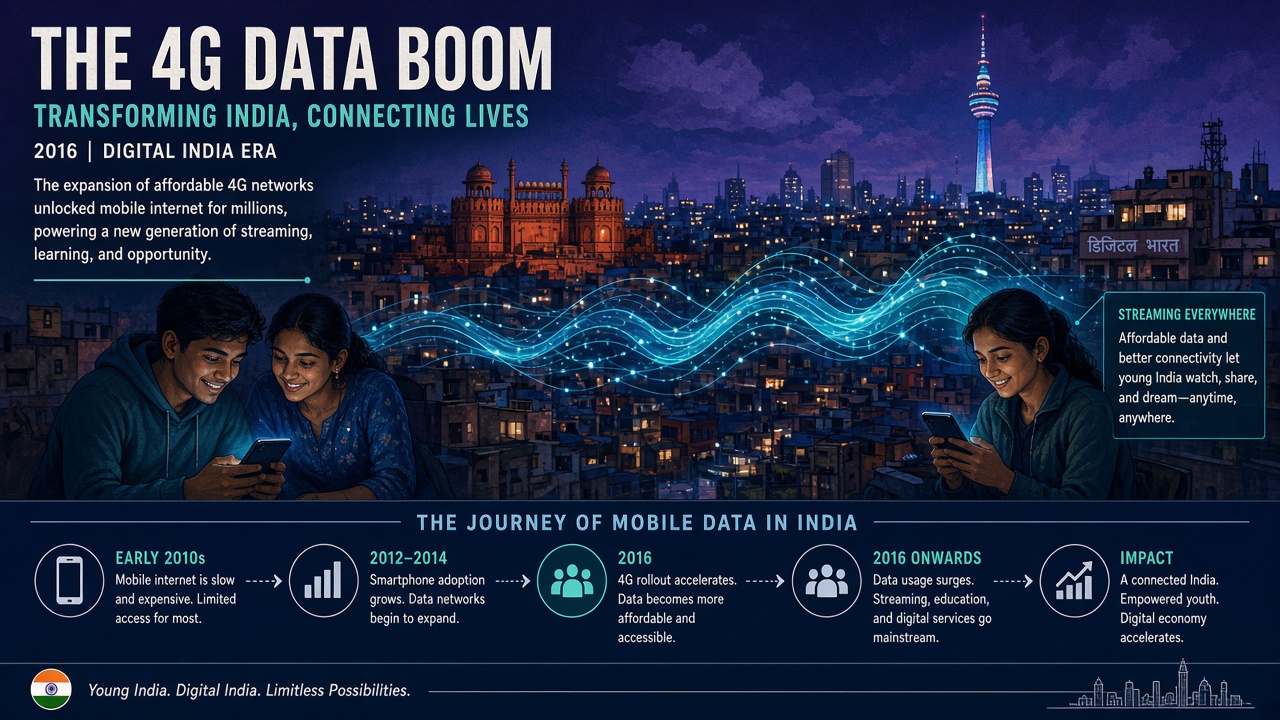
Reliance Jio’s 2016 entry with aggressive 4G pricing and voice-over-LTE offers remade the market. Data stopped being a luxury; video streaming, UPI, online education, and content apps surged. Competitors consolidated; India became a global leader in mobile data consumption.
4G era: from scarce megabytes to everyday streaming.
VoLTE and all-IP networks redefine voice + data.
Industry consolidation leaves fewer large operators.
Digital services ride cheap connectivity at population scale.
Next Generation2022–
5G Rollout
After spectrum auctions, operators began commercial 5G services from late 2022. Cities gained faster mobile broadband; enterprises explore private 5G, IoT, and low-latency uses. Coverage, fibre backhaul, device affordability, and use-cases beyond speed remain the next chapters.
Policy: Spectrum, security, and fair competition stay central.
India spotlight
Institutions & Everyday Life
From P&T and DoT to BSNL, TRAI, and private operators—policy and entrepreneurship together built a network that now carries payments, schooling, entertainment, and governance.
India spotlight: connectivity as public infrastructure.
Colonial
Telegraph state
Wires serve administration, rail, and early press.
P&T / DoT
Public monopoly
Landlines and STD grow slowly under state control.
1990s
Liberalisation
Private cellular and TRAI reshape the market.
2016
Data economy
4G pricing unlocks apps, video, and UPI scale.
2022+
5G India
Next-gen networks for cities, industry, and DPI.
Strength: Scale, competition, and digital public services.
Jump to any other technology timeline on WorldTimelineHub.
Disclaimer: This content is AI-generated for educational purposes and may contain errors or outdated details. For correct and authoritative information, please refer to official and reliable sources such as government publications, manufacturers, museums, and academic references.